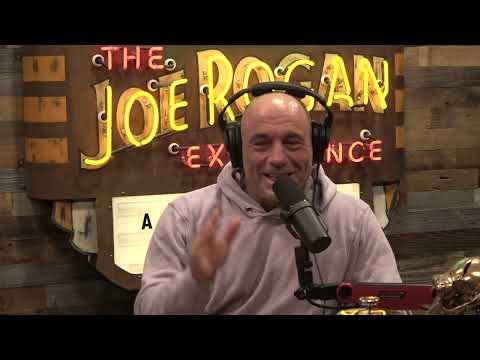
Joe Rogan Experience #1972 - Jim Breuer
Narrator, Narrator, Joe Rogan (host), Jim Breuer (guest), Narrator, Narrator, Narrator, Jim Breuer (guest), Narrator, Narrator, Jim Breuer (guest), Narrator, Narrator
In this episode of The Joe Rogan Experience, featuring Narrator and Narrator, Joe Rogan Experience #1972 - Jim Breuer explores joe Rogan and Jim Breuer riff on life, danger, lies, freedom Joe Rogan and Jim Breuer spend a long, free‑wheeling conversation bouncing between stand‑up comedy, their 30‑year friendship, physical danger, the pandemic narrative, media mistrust, and how modern life diverges from nature.
Joe Rogan and Jim Breuer riff on life, danger, lies, freedom
Joe Rogan and Jim Breuer spend a long, free‑wheeling conversation bouncing between stand‑up comedy, their 30‑year friendship, physical danger, the pandemic narrative, media mistrust, and how modern life diverges from nature.
They discuss martial arts and hard physical work as paths to discipline, trips to Africa and hunting as ways to reconnect with reality, and how cities and welfare systems can trap people in unhealthy, dependent lives.
A major thread is their deep skepticism of institutions: COVID response, media coverage of ivermectin, pharmaceutical incentives, government narratives on war, and corporate blunders like Bud Light’s branding crisis.
They keep returning to themes of personal responsibility, physical courage, and the pull to escape to a ranch or wilderness where you live closer to your food, danger is real, and life feels more honest.
Key Takeaways
Deliberate physical hardship builds transferable life skills.
Rogan argues that doing hard things like jiu-jitsu or construction teaches discipline, adaptation, and problem-solving that carry over into other areas of life and reduce fear.
Get the full analysis with uListen AI
Being close to nature reveals how skewed modern comfort is.
Trips to hunter-gatherer tribes, African safaris, and big-game hunts remind them how fragile and finite life is compared to city living, and why people in harsh environments can still be deeply happy.
Get the full analysis with uListen AI
Institutional narratives during COVID severely eroded public trust.
They highlight media framing of ivermectin as “horse medicine,” the lack of emphasis on vitamin D and health habits, and shifting vaccine claims as examples of coordinated messaging that now make people doubt mainstream information.
Get the full analysis with uListen AI
Corporations can be shockingly out of touch with their own customers.
Their breakdown of Bud Light’s Dylan Mulvaney campaign and the hyper-patriotic ‘course correction’ ad shows how elite marketing decisions can unintentionally insult a core audience and damage brand trust.
Get the full analysis with uListen AI
War and foreign policy are driven by elites, paid for by ordinary people.
They question the narratives around Ukraine, NATO expansion, biolabs, Iraq’s WMDs, and how leaders can lie or maneuver nations into conflicts with no accountability, while soldiers and civilians bear the cost.
Get the full analysis with uListen AI
Modern cities and welfare can trap people in cycles of dependency.
Through anecdotes about Harlem, welfare, and crime, they argue that handouts without hope or opportunity can make people complacent while entire communities remain economically and spiritually stuck.
Get the full analysis with uListen AI
Living ‘closer to your food’ and danger feels more honest and grounding.
Both men fantasize about ranch life, raising livestock, and a ‘podcast ranch,’ seeing it as an antidote to fragile, supply-chain cities where all food, safety, and meaning are outsourced.
Get the full analysis with uListen AI
Notable Quotes
“If what you could get from being a fit, healthy, happy person was available in a medicine, it would be the most popular medicine in the world.”
— Joe Rogan
“They don’t really give a fuck about your health. They give a fuck about you following the rules.”
— Joe Rogan
“Pedophile is too nice of a word to throw around. At the end of the day you are viciously tearing apart a child’s body, soul, and their being.”
— Jim Breuer
“Every media group that exists lied right to your face. And while they were doing it, someone had to be writing going, ‘Oh my God, this is such dick stuff, but I love being a fucking dick.’”
— Jim Breuer
“We’ve created something really weird with cities. The real way to live is to live around your food.”
— Joe Rogan
Questions Answered in This Episode
How much of the COVID-era mistrust in institutions is justified, and what evidence would you need to change your mind either way?
Joe Rogan and Jim Breuer spend a long, free‑wheeling conversation bouncing between stand‑up comedy, their 30‑year friendship, physical danger, the pandemic narrative, media mistrust, and how modern life diverges from nature.
Get the full analysis with uListen AI
If you actually pursued a ‘ranch lifestyle,’ what compromises or trade-offs from modern city life would surprise you the most?
They discuss martial arts and hard physical work as paths to discipline, trips to Africa and hunting as ways to reconnect with reality, and how cities and welfare systems can trap people in unhealthy, dependent lives.
Get the full analysis with uListen AI
Where is the line between responsible skepticism of media/pharma and sliding into conspiratorial thinking about everything?
A major thread is their deep skepticism of institutions: COVID response, media coverage of ivermectin, pharmaceutical incentives, government narratives on war, and corporate blunders like Bud Light’s branding crisis.
Get the full analysis with uListen AI
What practical steps could be taken to fix inner-city crime and despair without simply ‘defunding’ or ‘overfunding’ police?
They keep returning to themes of personal responsibility, physical courage, and the pull to escape to a ranch or wilderness where you live closer to your food, danger is real, and life feels more honest.
Get the full analysis with uListen AI
How can comedians and podcasters responsibly discuss topics like war, pandemics, and trafficking without either soft-pedaling them or sensationalizing them?
Get the full analysis with uListen AI
Transcript Preview
(drumming music) Joe Rogan podcast, check it out.
The Joe Rogan Experience. (drumming music)
Train by day, Joe Rogan podcast by night, all day. (rock music) Jim motherfucking Brewer.
(laughs)
Good to see you, my brother.
You too, man. I feel like I'm- I feel like I'm seeing, um, like a high school friend.
I know.
And I've been out of high school for a long time.
But when we met, we were, like, fresh out of high school.
Yeah.
When we met, we were in our early 20s.
Yeah, we were really young.
Yeah.
We were young.
Bro, we've been friends for, like, 31 years.
Dude. (laughs)
So crazy. Or maybe 32. It might be 32 years.
Yeah, but, well, I've been married-
It's, like, '91?
... 30.
Yeah.
And I wasn't married. I was with the same girl.
Yeah, yeah.
And so that was at least-
So, like-
... 31, 32 years ago.
... at least 31, 32 years ago. Yeah. (laughs)
Bro, and you-
(laughs)
... you cracked me up then and you crack me up now.
We had a good fucking time. We had a good time back then and we had a good time last night, dude. Last night was so much fun. God, that club is just such a fun hang.
I love seeing you enjoy life. I love seeing you enjoy life. And watching you... It's like... What I love about you is, you- you've never changed and you always... You love comedy, you love standup comedy. And to see you just eating, breathing, talking, living, loving standup. Bro, you would- you would- you would fucking go in the- in the main room. I get there, right? And you're cha- crashing, crashing. I'm watching the ba- I'm watching the balcony like a sk- like a- like a 15-year-old going... (laughs) Bro, that felt good for me. You know when you're able to watch a- another guy and laugh your fucking balls off? And then you, and then you come inside and you're talking more comedy with all the dudes in there. And then, and then, and then you go in the little room and you're telling me... 'Cause dude, I'm way out of my element last night. It's p- I was just like this whole time, like, "What the fuck is going on right now?"
(laughs)
Like, "Holy shit."
You slipped right into it. Come on, man.
Well-
You- you felt like you belonged at that place.
... I did, but I was- Huh?
You felt like you th- you belonged at that place. Like immediately, the moment you went on stage.
I, well-
We were in the balcony watching you. I was crying. That was the best impression of me I've ever seen anybody do. (laughs)
Install uListen to search the full transcript and get AI-powered insights
Get Full TranscriptGet more from every podcast
AI summaries, searchable transcripts, and fact-checking. Free forever.
Add to Chrome