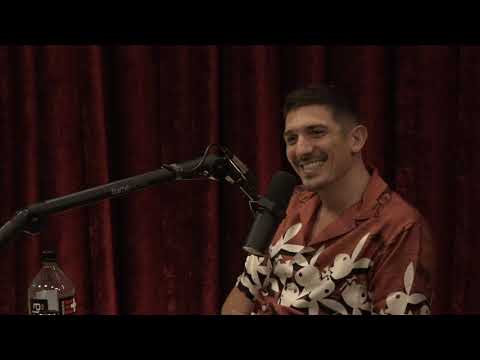
Joe Rogan Experience #1695 - Andrew Schulz
Narrator, Narrator, Joe Rogan (host), Andrew Schulz (guest), Narrator, Narrator, Narrator, Joe Rogan (host), Narrator, Narrator, Narrator, Narrator, Narrator, Joe Rogan (host)
In this episode of The Joe Rogan Experience, featuring Narrator and Narrator, Joe Rogan Experience #1695 - Andrew Schulz explores andrew Schulz, Rogan riff on comedy, chaos, power, and propaganda Joe Rogan and Andrew Schulz spend a long, free‑wheeling conversation bouncing between combat sports, stand‑up comedy, politics, media manipulation, and internet culture. They open with jiu-jitsu and Olympic karate, then segue into Cuomo, Biden, #MeToo, Epstein, and how power is abused and laundered through PR and comedy. Schulz breaks down how audiences, cities, and platforms shape modern stand-up, while Rogan contrasts his need for calm with Schulz’s appetite for chaos and New York energy.
Andrew Schulz, Rogan riff on comedy, chaos, power, and propaganda
Joe Rogan and Andrew Schulz spend a long, free‑wheeling conversation bouncing between combat sports, stand‑up comedy, politics, media manipulation, and internet culture. They open with jiu-jitsu and Olympic karate, then segue into Cuomo, Biden, #MeToo, Epstein, and how power is abused and laundered through PR and comedy. Schulz breaks down how audiences, cities, and platforms shape modern stand-up, while Rogan contrasts his need for calm with Schulz’s appetite for chaos and New York energy.
They dive into conspiracy-adjacent topics like North Korea, Epstein, the military‑industrial complex, and China’s influence on American culture, often using dark humor to process uncomfortable truths. Interspersed are personal stories—near-death surfing, childhood actors, relationships, cars, drugs, and the economics of OnlyFans—used to highlight how incentives drive behavior.
Overall, the episode is less a structured interview than a rolling jam session: two comics testing bits, poking at taboos, and questioning official narratives while emphasizing free speech, skepticism, and the importance of genuinely funny, uncensored comedy.
Key Takeaways
Stand-up is shaped by environment—your own crowd vs. cold club audiences require different muscles.
Schulz explains that when people come specifically for you, they accept your premise and edge; mixed club crowds (e. ...
Get the full analysis with uListen AI
Maximum-effort grappling prepares you better for real conflict than “point” martial arts.
Rogan contrasts jiu-jitsu and full-resistance grappling with Olympic point-karate, arguing that training at 100% resistance conditions you to handle real altercations, whereas light-contact systems can create a false sense of effectiveness.
Get the full analysis with uListen AI
Audience “wokeness” is often social pressure, not genuine morality.
Schulz notes that many New York club crowds groan at “bad words” when they’re with coworkers, but roar at the same material in his theater shows; he sees this as people managing optics rather than their true sense of humor, suggesting comics and clubs should explicitly give permission to laugh.
Get the full analysis with uListen AI
Incentives and power, not ideals, often drive policy and media behavior.
They connect dots between war, defense contractors, Afghanistan, Chinese market pressure on Hollywood, and corporate “rainbow-washing,” arguing that moneyed interests use virtue branding and selective outrage to mask profit-seeking and influence operations.
Get the full analysis with uListen AI
Early fame, especially for children, almost guarantees developmental damage.
Rogan recounts stories of child actors being emotionally manipulated for performances and notes how being treated as special from a young age short-circuits normal social development, which may explain later dysfunction or extreme identity moves in some adult celebrities.
Get the full analysis with uListen AI
Platforms’ rules and algorithms quietly steer what kind of comedy gets made.
Schulz worries that TikTok/YouTube content rules and demonetization push young comics to self-censor to “fit the algo,” risking a repeat of neutered TV comedy—he argues for treating major platforms more like neutral utilities to preserve space for edgy, experimental material.
Get the full analysis with uListen AI
Self-imposed physical hardship can be a tool to manage mental chaos.
Rogan describes using intense workouts, ice baths, and hard sparring as deliberate stressors that quiet his mind and provide perspective, in contrast to Schulz’s preference for external chaos (New York conflict, culture clashes) as creative fuel.
Get the full analysis with uListen AI
Notable Quotes
“Being a madam is way less gross than being a pimp—for some reason it feels like she’s easing everyone’s discomfort, but she’s probably the most savage one in the room.”
— Andrew Schulz
“They don’t care about you because you’re doing great… It’s capitalism. There’s a market for woke outrage, and a lot of these people are just sociopaths monetizing it.”
— Joe Rogan
“If you didn’t get pussy before you were famous, you’re gonna be in some shit. You resent women and you don’t even believe they like you now—that’s when the real scumbag behavior starts.”
— Andrew Schulz
“At the end of every empire, gender becomes a big subject… people get obsessed with dissolving traditional roles when life gets too easy and they start looking for things to nitpick.”
— Joe Rogan (paraphrasing Douglas Murray)
“I’m such a skeptic I’m like, ‘What if South Korea is paying people to say wild shit about North Korea so we think they’re crazy?’ Third eye, bro.”
— Andrew Schulz
Questions Answered in This Episode
How much of modern “wokeness” in entertainment and corporate life is genuine conviction versus a calculated business model?
Joe Rogan and Andrew Schulz spend a long, free‑wheeling conversation bouncing between combat sports, stand‑up comedy, politics, media manipulation, and internet culture. ...
Get the full analysis with uListen AI
Are social platforms functionally public utilities now, and if so, what kind of speech protections or obligations should they have for comedy and political discourse?
They dive into conspiracy-adjacent topics like North Korea, Epstein, the military‑industrial complex, and China’s influence on American culture, often using dark humor to process uncomfortable truths. ...
Get the full analysis with uListen AI
What’s the ethical line between using dark humor to cope with real atrocities (e.g., North Korea, Epstein, war) and trivializing suffering?
Overall, the episode is less a structured interview than a rolling jam session: two comics testing bits, poking at taboos, and questioning official narratives while emphasizing free speech, skepticism, and the importance of genuinely funny, uncensored comedy.
Get the full analysis with uListen AI
How should combat sports organizations and trainers balance the entertainment value of fights with the very real long-term physical and neurological risks fighters face?
Get the full analysis with uListen AI
Given the financial and social incentives around OnlyFans, child stardom, and celebrity culture, what realistic guardrails—if any—could help protect more vulnerable people from exploitation?
Get the full analysis with uListen AI
Transcript Preview
(drumming music plays) Joe Rogan podcast, check it out!
The Joe Rogan Experience.
Train by day, Joe Rogan podcast by night, all day. (rock music plays) And, hello Andrew.
Hello, Joe.
Welcome to Texas.
Aw, thank you so much.
It was good running into you last night. It was funny.
Ah, it was so much fun. Last night was great.
It was, right?
I choked you out, dude.
How about that spot?
Did-
That golden tiger spot?
Like, can we talk about me choking you out? Can we talk about my-
You tried a couple of times. It was interesting.
Yeah.
You got a hold of my neck.
But did you think I had power? Did you think I had like real choke power?
Uh, you could develop it.
(laughs)
I think you can develop some real choke power.
Oh, I got a shot immediately, dude. We're 30 seconds in.
(laughs)
I just got trashed immediately.
You've got a good build for jiu-jitsu. You're a tall guy.
Uh-huh.
You got long limbs.
Okay.
That's really good for jiu-jitsu.
Okay. Nah.
If you see like some of the greatest of all time, like Roger Gracie-
Uh-huh.
... he's got these really long arms and, uh, yeah, there's a lot of guys like that.
Okay, okay, okay.
Yeah.
Okay. But it was fun.
Aurelio De Stema, same build.
Hmm.
Long limbs, good chokes.
I'll be honest, I thought it would be easier. 'Cause I've never tried to choke somebody.
Yeah.
So then when you let me, like, do it, I'm like, "All right. I got this easy." And then I was gonna, like, take it easy on you. I wasn't, you know, gonna really-
Yeah.
... get you outta there. And, um, I was shocked how I couldn't get under your chin.
Yeah.
It, yeah.
Yeah.
That shocked me.
Why was that shocking?
Well, I don't know. I figured your chin is here, I just get the arm under and then once I'm under the chin, it's over. That's how it looks like in all the fights.
You should try it with Gordon. (laughs)
I would definitely take out Gordon.
(laughs)
Gordon was there. Shouts at Gordon, shouts at Gordon. And I was nice to him but I was gonna choke the shit out of him, I told him that. I did tell him that.
You did. You told him today, too.
I told him today and I said, and I pulled him aside and I was like, "Listen, I understand your girl is here."
(laughs)
"And outta respect for her, I'm not gonna choke the shit outta you." But he was getting his blood test and I almost choked the shit out of him. I told him.
Install uListen to search the full transcript and get AI-powered insights
Get Full TranscriptGet more from every podcast
AI summaries, searchable transcripts, and fact-checking. Free forever.
Add to Chrome