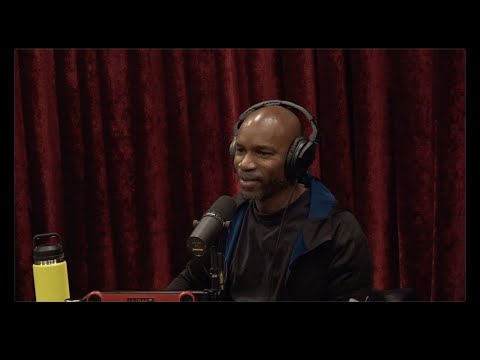
Joe Rogan Experience #2383 - Ian Edwards
Narrator, Ian Edwards (guest), Joe Rogan (host), Joe Rogan (host), Narrator, Narrator, Narrator, Narrator, Narrator, Narrator, Narrator, Narrator
In this episode of The Joe Rogan Experience, featuring Narrator and Ian Edwards, Joe Rogan Experience #2383 - Ian Edwards explores joe Rogan and Ian Edwards Deconstruct Comedy, Fighting, and Corruption Joe Rogan and Ian Edwards spend a long-form conversation tracing their 30-year friendship in stand-up, breaking down how comics develop, survive, and sometimes burn out. They dissect the grind of stage time, flow state, and the difference between naturally funny 'cheat code' comics and hard writers, plus the role of clubs like The Comedy Store and the Mothership. The discussion veers into combat sports, brain damage, and the brutal economics of fighting, then widens out into war, government deception, surveillance, and how power and money shape public narratives. Throughout, they contrast the relative freedom and longevity of comedy with the physical and moral costs of other systems built on extraction—whether entertainment, war, or industry.
Joe Rogan and Ian Edwards Deconstruct Comedy, Fighting, and Corruption
Joe Rogan and Ian Edwards spend a long-form conversation tracing their 30-year friendship in stand-up, breaking down how comics develop, survive, and sometimes burn out. They dissect the grind of stage time, flow state, and the difference between naturally funny 'cheat code' comics and hard writers, plus the role of clubs like The Comedy Store and the Mothership. The discussion veers into combat sports, brain damage, and the brutal economics of fighting, then widens out into war, government deception, surveillance, and how power and money shape public narratives. Throughout, they contrast the relative freedom and longevity of comedy with the physical and moral costs of other systems built on extraction—whether entertainment, war, or industry.
Key Takeaways
Stage time volume and honesty are the real accelerators of comedy growth.
Rogan and Edwards stress that massive, frequent sets—often in brutally honest communities like New York—force comics to confront weaknesses, shed hack ideas, and gradually reach that ‘passenger ride’ flow state on stage.
Get the full analysis with uListen AI
Not all success is talent; some comes from being a distinctive persona.
They describe comics like Joey Diaz, Theo Von, Katt Williams, and William Montgomery as 'walking comedy'—people whose voices, looks, and rhythms are inherently funny, and who become lethal when they add strong writing.
Get the full analysis with uListen AI
Modern platforms can transform a career overnight, but only if you’re ready.
Shows like Kill Tony and clubs like Rogan’s Mothership offer unprecedented breakout chances—a single great minute can change someone’s life—but bombing or arriving unprepared can be soul-crushing.
Get the full analysis with uListen AI
Fighting is a brutal, time-limited career that demands full commitment and financial discipline.
Through stories of fighters like Ali, Meldrick Taylor, Cormier, and Schaub, they show how one fight or even sparring can permanently damage a career and brain, making it essential to save money and know when to quit.
Get the full analysis with uListen AI
War often functions as a business model and wealth-transfer mechanism.
They connect Vietnam, Afghanistan, and Ukraine to resource control, drug trade, and defense-industry profit, arguing that the public is routinely manipulated with noble narratives while elites capture the gains.
Get the full analysis with uListen AI
Surveillance and institutional power have quietly expanded under reassuring branding.
From NSA mass surveillance exposed by Snowden to NASA being reclassified for intelligence functions, Rogan suggests that agencies are repurposed and rebranded while their core mission shifts toward spying and control.
Get the full analysis with uListen AI
Contracts and platforms can own your work—or your voice—if you let them.
They highlight predatory deals where networks or labels take over artists’ social media or catalogs, contrasting that with owning your own specials on YouTube or resisting clauses that give corporations perpetual rights.
Get the full analysis with uListen AI
Notable Quotes
“I feel like there’s a gear left in me that I’m having trouble accessing.”
— Ian Edwards
“A bad joke that offends everyone and a great joke both come from the same place: I’m just trying to make you laugh.”
— Joe Rogan (paraphrasing Patrice O’Neal)
“Some people will take that switch and turn it off. Mine is still on.”
— Ian Edwards
“War is a racket, and people are only just now figuring out how deep that goes.”
— Joe Rogan (referencing Smedley Butler)
“We’re lucky we picked a thing that doesn’t give you brain damage and you can keep doing forever.”
— Ian Edwards
Questions Answered in This Episode
What specific habits or practices could help a comic reliably enter the 'flow state' they describe, rather than waiting for it to happen by accident?
Joe Rogan and Ian Edwards spend a long-form conversation tracing their 30-year friendship in stand-up, breaking down how comics develop, survive, and sometimes burn out. ...
Get the full analysis with uListen AI
How should young fighters or comedians balance the need to be ‘all in’ with protecting their long-term health, finances, and relationships?
Get the full analysis with uListen AI
To what extent is it ethical for governments or corporations to frame wars and economic crises in simplified moral terms when the underlying motives are resource and wealth control?
Get the full analysis with uListen AI
Given the way platforms and labels capture value, what realistic paths exist today for musicians and comics to build sustainable, independent careers without giving up their rights?
Get the full analysis with uListen AI
How can audiences critically consume media and political narratives to avoid being manipulated, while still staying informed enough to act responsibly as citizens?
Get the full analysis with uListen AI
Transcript Preview
(drum roll) Joe Rogan podcast, check it out.
The Joe Rogan Experience.
Train by day, Joe Rogan podcast by night, all day. (instrumental music) Joe Rogan: Ta da.
What's up, son? (laughs) Joe Rogan: (laughs) How is it possible that you haven't been here in the five years I've been h- living here? Oh, shit. It's been five years? Joe Rogan: Yeah, man. It's been five years. That's pretty fucking crazy. Joe Rogan: That's crazy. Yeah. Joe Rogan: That doesn't make any sense. It doesn't. I like it, though. Joe Rogan: Thank you. It's like, uh, shit, it's got the sauna walls and shit. (laughs) Joe Rogan: (laughs) It's very close to what the old one was. Instead of brick, we went with wood, 'cause the- we were kinda faking it with the brick in the old place. It was fake brick? Joe Rogan: It wasn't fake brick. It was real brick, but what they do is they take, like, um, a mesh- Uh-huh. Joe Rogan: ... and then they take real bricks and they slice them thin, and then they put up the cement and they glue the real bricks in place. Oh, okay. Joe Rogan: But it's not really a brick wall. Right. Joe Rogan: It just looks like a brick wall. Uh-huh. Joe Rogan: I feel like a real brick wall should only be the- the only brick wall that you show. Right. Joe Rogan: You sh- y- like, I went to a pool hall the other day, and they had a plastic brick wall, and I got deeply disappointed. (laughs) Yeah. You touched it? Joe Rogan: Like, I touched it. I was like, "Oh, this is a fake brick wall." (laughs) Joe Rogan: "This is bullshit. This is plastic." Yeah. I mean, it's- it's a push to have, like, a f- half-fake brick wall. Joe Rogan: Yeah. But to have, like, a plastic brick wall? Joe Rogan: That's- that you're going too far. Did you just leave the pool hall? Like, "Fuck this place?" Joe Rogan: No. No, I didn't. No? Joe Rogan: No, I'm a junkie. (laughs) Joe Rogan: I stayed. But the- the- the brick used to bother me, that it was fake brick at the other studio. Right. Joe Rogan: I'm like, "We're kinda bullshitting here." Some people have, like, uh, some comedy clubs or somebody fake a comedy spot. Joe Rogan: Oh, yeah. They have the- it's just a sheet. Joe Rogan: Yeah. Uh, uh, like a- it's not a curtain, but... Joe Rogan: A brick sheet? A brick sheet. Joe Rogan: (laughs) They're like, "Bro, just what- what you got back there? Let's just show that." Joe Rogan: (laughs) "Just show whatever's back there." Yeah. Joe Rogan: It's weird how that became the backdrop for a comedy club, a brick wall. Why? Joe Rogan: It's a good question. I don't know when it start- maybe it started with Evening at the Improv. What was Evening at the Improv's backdrop? Was that a brick wall? It might've been that simple. All right. So- Joe Rogan: 'Cause back in the 1980s...
Install uListen to search the full transcript and get AI-powered insights
Get Full TranscriptGet more from every podcast
AI summaries, searchable transcripts, and fact-checking. Free forever.
Add to Chrome