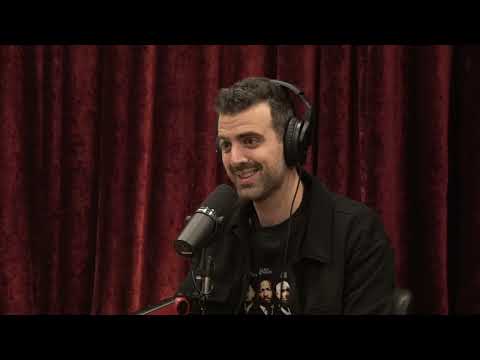
Joe Rogan Experience #2103 - Sam Morril
Sam Morril (guest), Narrator, Joe Rogan (host), Narrator, Narrator, Narrator, Narrator, Narrator, Narrator, Narrator
In this episode of The Joe Rogan Experience, featuring Sam Morril and Narrator, Joe Rogan Experience #2103 - Sam Morril explores sam Morril, Joe Rogan dissect comedy, greatness, violence, and future tech Joe Rogan and comedian Sam Morril spend a long, freewheeling conversation moving between stand-up craft, elite athletes’ psychology, violence in sports and society, and the looming impact of AI and brain–computer interfaces.
Sam Morril, Joe Rogan dissect comedy, greatness, violence, and future tech
Joe Rogan and comedian Sam Morril spend a long, freewheeling conversation moving between stand-up craft, elite athletes’ psychology, violence in sports and society, and the looming impact of AI and brain–computer interfaces.
They compare clubs, theaters, and arenas, talk about the current comedy boom driven by YouTube and Netflix, and unpack how comics actually build an hour—using the road, bombing, and audience feedback as an editing tool.
They dive into sports stories (Jordan, Tiger Woods, LeBron’s son, Kimbo Slice), the brutality and origins of greatness, and how hunger and upbringing shape performance.
The episode also explores media censorship (Jon Stewart, Apple, China), deepfakes and surveillance, future brain chips, and the ethics of tech, all while circling back to why stand-up and live clubs still matter so much.
Key Takeaways
Clubs remain the best laboratory for stand-up, even for theater-level comics.
Both Rogan and Morril emphasize that clubs are more intimate and unforgiving than theaters or arenas, letting comics see individual reactions, tighten material, and truly test what works before recording a special.
Get the full analysis with uListen AI
Knowing who you are—on stage or on a team—is the core competitive advantage.
They connect basketball roles (defender, three‑point specialist) to comedy personas, arguing that understanding your strengths and what’s ‘funny about you’ is crucial to becoming a better performer or teammate.
Get the full analysis with uListen AI
Elite greatness often comes from obsessive early conditioning and/or deep hunger.
Stories about Tiger Woods’ father, Michael Jordan manufacturing grudges, and fighters from tough backgrounds illustrate how extreme focus and the psychological need to win separate the truly elite from the merely talented.
Get the full analysis with uListen AI
You can’t be one-dimensional anymore—comics must diversify their output.
They note that in modern comedy you can’t just do stand-up; you’re expected to podcast, develop shows, shoot specials, and create online content, both to stay relevant and to keep yourself creatively engaged.
Get the full analysis with uListen AI
The current comedy boom is powered by direct-to-audience platforms, not TV.
Rogan points out that YouTube and Netflix have created the biggest comedy boom ever, allowing many more comics to tour and sell tickets without relying on Comedy Central-style gatekeepers or sitcom deals.
Get the full analysis with uListen AI
Tech platforms quietly shape what can be said, especially around geopolitics.
The Jon Stewart–Apple example shows how corporate dependence on markets like China can lead to soft censorship around AI, China, and controversial topics, even for high-profile satirists.
Get the full analysis with uListen AI
AI, brain chips, and surveillance will blur the line between thought and action.
Discussion of brain-controlled wheelchairs, future payment systems, and intercepted private messages suggests we’re heading toward a world where thoughts can be monitored or predicted, raising Minority Report–style ethical questions.
Get the full analysis with uListen AI
Notable Quotes
“Knowing who you are is all of it, really.”
— Sam Morril
“The crowd is really part of the editing process. Scorsese’s not work-shopping his shit in Omaha.”
— Sam Morril
“This is Barbie for men, ladies. John Wick is Barbie for men.”
— Joe Rogan
“We’re the only type of entertainment where the crowd is really part of the editing process.”
— Sam Morril
“If you’re going to link up, you have to commit to one year, ’cause you’re contributing to the grid.”
— Joe Rogan
Questions Answered in This Episode
How does the constant need to produce content—specials, podcasts, clips—change the way comics write and live compared to earlier generations?
Joe Rogan and comedian Sam Morril spend a long, freewheeling conversation moving between stand-up craft, elite athletes’ psychology, violence in sports and society, and the looming impact of AI and brain–computer interfaces.
Get the full analysis with uListen AI
Is the kind of obsessive, sometimes traumatic upbringing that creates a Tiger Woods or a Michael Jordan ethically justifiable if it produces greatness?
They compare clubs, theaters, and arenas, talk about the current comedy boom driven by YouTube and Netflix, and unpack how comics actually build an hour—using the road, bombing, and audience feedback as an editing tool.
Get the full analysis with uListen AI
At what point does corporate influence on speech (like Apple and Jon Stewart) become a freedom-of-expression problem rather than just a business decision?
They dive into sports stories (Jordan, Tiger Woods, LeBron’s son, Kimbo Slice), the brutality and origins of greatness, and how hunger and upbringing shape performance.
Get the full analysis with uListen AI
How should society balance the benefits of brain–computer interfaces and AI with the risks of thought surveillance and predictive policing?
The episode also explores media censorship (Jon Stewart, Apple, China), deepfakes and surveillance, future brain chips, and the ethics of tech, all while circling back to why stand-up and live clubs still matter so much.
Get the full analysis with uListen AI
Do you agree that the audience should be part of the editing process in stand-up, or does that risk pushing comics toward pandering and away from personal truth?
Get the full analysis with uListen AI
Transcript Preview
(drumming) Joe Rogan podcast, check it out. The Joe Rogan Experience.
Train by day, Joe Rogan podcast by night, all day. (rock music)
Smoke some weed, son?
I don't really like weed.
Do you like cigars?
I like alcohol and I like coffee.
Hm. You want-
I'm not a big cigar guy.
Do you want, uh, alcohol?
I'll have it maybe in, like, second half of the show.
Second half of the show.
I like, I like to feel the caffeine.
Let's prepare glasses with ice-
(laughs)
... for the second half of the show when things-
(laughs)
... once things start getting a little sideways.
Yeah.
So what's happening, brother? How you doing?
Great, great. I, uh, I've been on the road just going pretty hard with this hour, and, uh, I love it.
Yeah.
I lo- I still romanticize the road. I still love it, and I did, I did theaters last year for the first time ever, just a theater run, so that now I'm back in clubs to just tighten it, but it's-
Mm.
I love it, man.
Yeah, uh, clubs are the best. It's the best experience. Yeah, arenas are pretty nice.
Yeah.
They're fun. In the round, they're really fun.
They look fun.
Theaters are fun, but it's s- slightly removed from a club. Club is better than a theater.
Yeah, it's pretty cool. I mean, theaters, I forgot how intimate clubs were just doing theaters-
Yeah.
... last year and being like, "Oh, shit, I can see when a dude's frowning."
(laughs)
You know? I can see one person having a bad time now.
(laughs)
So that, I forgot about that, but, uh, there was a guy in Dallas over the weekend who just kept doing this to me, and I'm like, "What the fu-" And I was like, "Oh, your girlfriend's a fan." He's not-
Oh.
He doesn't like me. His girl... He was just a drunk.
Oh, wow.
And I peeled out that he was drunk on rum, too, which is the fun- To me, it's, like, funny-
That's a funny. That's a Jimmy Buffett drunk. (laughs)
It's just not... You don't see a lot of white dudes with goatees who are rum drunk, so I was like, "All right." But, uh-
He's eccentric.
Yeah, he was m- He was just a... He was a bad drunk. But she was cool as hell.
Well, sometimes guys have a real hard time with their girlfriend being a fan of a guy.
I feel like most of the people who like me are dudes, but, uh-
Yeah, me too.
When I see women out there, I'm like, "Great."
Yeah.
I'm ha-
Yeah, we love you ladies.
Install uListen to search the full transcript and get AI-powered insights
Get Full TranscriptGet more from every podcast
AI summaries, searchable transcripts, and fact-checking. Free forever.
Add to Chrome