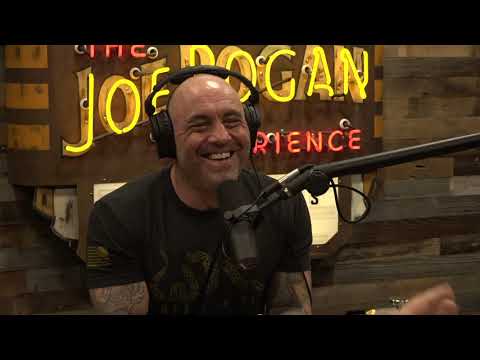
Joe Rogan Experience #1657 - Mayor Steve Adler
Joe Rogan (host), Steve Adler (guest)
In this episode of The Joe Rogan Experience, featuring Joe Rogan and Steve Adler, Joe Rogan Experience #1657 - Mayor Steve Adler explores austin’s Mayor on Crises, Homelessness, and Keeping a City ‘Weird’ Joe Rogan interviews Austin Mayor Steve Adler about the realities of running a fast‑growing city through multiple overlapping crises: bombings, extreme weather, COVID, and a mounting homelessness problem.
Austin’s Mayor on Crises, Homelessness, and Keeping a City ‘Weird’
Joe Rogan interviews Austin Mayor Steve Adler about the realities of running a fast‑growing city through multiple overlapping crises: bombings, extreme weather, COVID, and a mounting homelessness problem.
Adler explains Austin’s weak-mayor system, political and legal constraints on city governance, and how those structures complicate attempts at big-picture reforms like land-use changes and transit.
A major focus is homelessness: why visible street camping exploded, what went wrong with past policies, and the emerging multi-year plan to scale housing plus “wraparound” services before Austin reaches West Coast–level problems.
They also discuss Austin’s unique culture, its appeal to creatives and tech workers, COVID policy tradeoffs, and the tension between personal responsibility and community obligation in public health and social services.
Key Takeaways
Weak-mayor systems demand consensus-building, not top-down directives.
In Austin, the city manager wields executive power and the mayor has only one vote, which means big initiatives require careful coalition-building and cannot be rammed through by a single leader.
Get the full analysis with uListen AI
Crises expose both the limits and importance of local leadership.
From bombings to ice storms and water failures, Adler described his role as “translator” between law enforcement or experts and the public, setting risk expectations and maintaining trust under uncertainty.
Get the full analysis with uListen AI
Housing supply constraints drive affordability problems and ignite ‘density’ culture wars.
Austin’s rapid price appreciation is linked to tight zoning; efforts to increase density through a new land development code were stalled by legal requirements for a supermajority and neighborhood resistance to change.
Get the full analysis with uListen AI
Homelessness grows when it’s hidden and under-resourced, not just when it’s ‘tolerated.’
Mayors from West Coast cities told Adler that suppressing visible encampments without scaling housing and services allows the problem to grow to an unmanageable scale; visibility forces earlier, actionable responses.
Get the full analysis with uListen AI
Housing plus targeted services (“housing first”) is cost-effective for the most chronic cases.
Adler cites data showing that 250 of Austin’s most chronically homeless each cost the community ~$$220K/year in ER, jail, and emergency responses; permanent housing with wraparound services both improves outcomes and significantly reduces long-run costs.
Get the full analysis with uListen AI
Veteran-focused programs offer a replicable template for broader homelessness solutions.
Austin successfully housed its homeless veterans by combining federal vouchers, landlord risk pools, and prioritized services; the political challenge is extending that same urgency and funding to non-veterans.
Get the full analysis with uListen AI
Public health outcomes hinge on both policy and population health habits.
Austin’s COVID mortality was less than half the Texas and U. ...
Get the full analysis with uListen AI
Notable Quotes
“There are some issues that are societal issues that are so big, I don't know what you do with. But homelessness, we know exactly what works and it's purely a question of, is a community serious enough about putting the resources against it to fix it?”
— Steve Adler
“As I explained to people, there's only one way to really stop a city from growing: bring in crime. Make it an undesirable place to live.”
— Steve Adler
“We were about seven days away from adopting a new land development code, and then the court stopped us.”
— Steve Adler
“It is inappropriate, it is wrong to have people tenting on our streets or in our overpasses. That is not a good place for them... but if somebody is in the woods or down by the streams, they're not interacting with anybody else. So you have hundreds of women that are getting assaulted every night as the price to be able to live in that environment.”
— Steve Adler
“The hard asses amongst us would look at this and say, 'This is a personal accountability issue, and these people need to get their shit together.' ... But then the more compassionate would look at maybe those 250 people that keep getting arrested over and over again and saying, 'How much would it cost to talk to those 250 people and work with those 250 people?'”
— Joe Rogan
Questions Answered in This Episode
How sustainable is Austin’s plan to rapidly scale housing and services for the homeless, and what metrics should residents watch to judge whether it’s working?
Joe Rogan interviews Austin Mayor Steve Adler about the realities of running a fast‑growing city through multiple overlapping crises: bombings, extreme weather, COVID, and a mounting homelessness problem.
Get the full analysis with uListen AI
Should cities reconsider weak-mayor structures and open-meeting constraints if they consistently impede decisive responses to fast-moving crises?
Adler explains Austin’s weak-mayor system, political and legal constraints on city governance, and how those structures complicate attempts at big-picture reforms like land-use changes and transit.
Get the full analysis with uListen AI
Where is the right balance between protecting public spaces from encampments and avoiding criminalization that entrenches homelessness?
A major focus is homelessness: why visible street camping exploded, what went wrong with past policies, and the emerging multi-year plan to scale housing plus “wraparound” services before Austin reaches West Coast–level problems.
Get the full analysis with uListen AI
How can cities replicate the political will and funding that exist for veteran homelessness to cover other vulnerable groups without that symbolic status?
They also discuss Austin’s unique culture, its appeal to creatives and tech workers, COVID policy tradeoffs, and the tension between personal responsibility and community obligation in public health and social services.
Get the full analysis with uListen AI
What specific long-term health initiatives (beyond emergency mandates) should cities invest in to reduce vulnerability in the next pandemic or public health crisis?
Get the full analysis with uListen AI
Transcript Preview
(drumbeats) Joe Rogan podcast, check it out.
The Joe Rogan Experience.
Train by day, Joe Rogan podcast by night. All day. (instrumental music plays) Thanks for doing this, man. Appreciate it.
No, I appreciate being invited.
What was it like being the mayor of Austin?
You know, it's a- it's a- it's a real trip.
(laughs)
Uh. (laughs)
If you could go back and do it again, would you?
I, uh, I keep, I keep reminding Dianne that we volunteered to do this.
(laughs)
Yeah. I mean, 'cause there's so many things about it that are, that are spectacular. Um, but it is also the most frustrating thing I've ever done.
Have you ever done anything in public service before this?
Not in any kind of elected office.
What m- what, what gave you the motivation to do it?
You know, I was in and around politics, uh, but, um, you know, I've worked on some campaigns. I had a friend who became a state senator and I took some time off helping him set up his office. I think, you know, really it was, uh, you know, literally the- the city had been real good to me. Uh, you know, I came here as a pretty poor student passing through town, never left. Stayed here for the music and the breakfast tacos.
(laughs)
And, you know, 40 years later it's, uh, yeah, I've achieved so many things that I didn't even know existed, and it was a chance to, to give back. This is the classic case of no good deed goes unpunished.
(laughs) Well, and then, you know, uh, the way it stands now... It's such a strange time, right? Like, everything was fine. W- I mean, so many mayors across the country had, m- you know, you have your standard mayor problems. But then COVID hits and you have everything is exacerbated. And like, what- what- what kind of, like, massive change has this been for you?
You know, it actually starts before that. You know, you, let's go back. We've had, we've had three 100-year storms in my seven years where people have died. We had a, um, a bridge wash out way north of here sending silt downstream and we ended up having to do a water boil in Austin. Uh, and this was at a time-
Water boil mean people had to boil their tap water?
Had... Yeah. You, you-
So the processing wasn't working?
In a city of a million people you couldn't drink the water. I mean, that never happens. But yet in my time as mayor in seven years it's happened twice. (laughs)
(laughs)
We had a, we had a bomber that was-
Oh, yeah.
... putting bombs on people's porches. Mailing people and people were, were dying. Uh, you know, we had 1,000 law enforcement agents here in the city.
Install uListen to search the full transcript and get AI-powered insights
Get Full TranscriptGet more from every podcast
AI summaries, searchable transcripts, and fact-checking. Free forever.
Add to Chrome