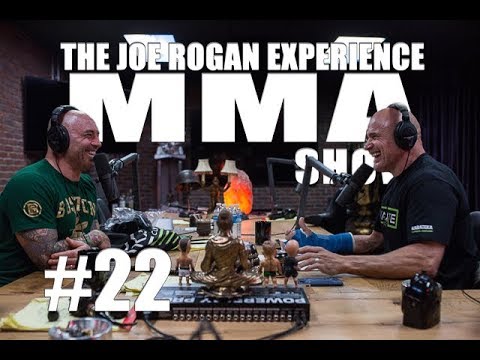
JRE MMA Show #22 with Bas Rutten
Joe Rogan (host), Bas Rutten (guest), Narrator, Narrator, Narrator
In this episode of The Joe Rogan Experience, featuring Joe Rogan and Bas Rutten, JRE MMA Show #22 with Bas Rutten explores bas Rutten, Karate Combat, And The Brutal Realities Of Fighting Joe Rogan and Bas Rutten swap stories about injuries, surgeries, and the long-term physical toll of combat sports, from spinal fusions and staph infections to nerve damage and atrophy.
Bas Rutten, Karate Combat, And The Brutal Realities Of Fighting
Joe Rogan and Bas Rutten swap stories about injuries, surgeries, and the long-term physical toll of combat sports, from spinal fusions and staph infections to nerve damage and atrophy.
They spend significant time discussing emerging and alternative striking promotions—especially Karate Combat and Glory—covering rules, production, and why high‑level kickboxing and Muay Thai remain niche in the U.S.
The conversation dives into MMA history and evolution: early UFC, Pride, Pancrase, pro wrestling crossovers, legendary fights and fighters, and how commentary and media around combat sports have changed.
They also touch on modern controversies and personalities—Conor McGregor’s bus incident, Jon Jones’ drug test issues, USADA and tainted supplements—framing them within fame, consequences, and fighter responsibility.
Key Takeaways
Grappling often causes more severe long-term damage than striking.
Rutten and Rogan highlight examples like fused spines, nerve damage, and arm atrophy in wrestlers and grapplers (e. ...
Get the full analysis with uListen AI
Emerging formats like Karate Combat aim to simplify striking for mainstream audiences.
Karate Combat uses a pit instead of a cage, extended striking exchanges with limited groundwork, and cinematographic production plus live biometrics to make techniques easy to see and understand for fans who find MMA’s ground game confusing.
Get the full analysis with uListen AI
Rule details dramatically shape how fights look and feel.
Small changes—like allowing only long hooks, limiting low kicks below the knee, banning elbows, or permitting five seconds of ground striking after a throw—produce very different pacing, strategies, and levels of bloodiness, which promoters tailor for audience appeal and TV viability.
Get the full analysis with uListen AI
Commentary is a specialized craft distinct from fighting expertise.
They differentiate play‑by‑play (traffic control, TV timing, ad reads) from color commentary (technical analysis), noting that many fans misunderstand the roles and that elite broadcasters like Mauro Ranallo, Kenny Rice, and Mike Goldberg work incredibly complex, pressured jobs.
Get the full analysis with uListen AI
Tainted supplements and strict liability put fighters at constant risk.
Discussing Jon Jones, Yoel Romero, and Tim Means, they stress that even trace contamination from shared manufacturing vats can trigger bans; legally and reputationally, fighters are responsible for every substance they ingest, no matter the intent.
Get the full analysis with uListen AI
Inconsistent enforcement of fouls encourages dangerous habits.
Rogan argues that automatic point deductions for eye pokes, groin shots, and fence grabs—regardless of intent—would quickly reduce these fouls, since current warning‑heavy approaches let fighters gamble with little downside while opponents absorb real damage.
Get the full analysis with uListen AI
Fame plus weak boundaries can accelerate self-destructive behavior.
Using Conor McGregor and Jon Jones as examples, Bas frames many bad decisions as products of sudden wealth, constant yes‑men, and lack of pushback, suggesting that only real consequences and stronger personal discipline can break that pattern.
Get the full analysis with uListen AI
Notable Quotes
“I’m nice, nice, nice, nice, nice… and then I realize, wait a minute. I’m doing this for you. I’m protecting you right now. That’s why I don’t want to fight.”
— Bas Rutten
“Wrestlers are all fucked up… they’ll blame it on punching and kicking, but all my worst injuries are from grappling and wrestling.”
— Joe Rogan
“Every product that you take as a professional athlete is your responsibility.”
— Bas Rutten
“The UFC is very mainstream. Glory right now is still very fringe, unfortunately.”
— Joe Rogan
“If you’re in the MMA business and you’re offended by jokes like that, get out. We all think like me—they just don’t say it.”
— Bas Rutten
Questions Answered in This Episode
How much can new formats like Karate Combat realistically grow striking sports in markets where MMA already dominates attention and broadcast slots?
Joe Rogan and Bas Rutten swap stories about injuries, surgeries, and the long-term physical toll of combat sports, from spinal fusions and staph infections to nerve damage and atrophy.
Get the full analysis with uListen AI
If automatic point deductions were implemented for all fouls, how would that change current UFC champions’ styles and game plans?
They spend significant time discussing emerging and alternative striking promotions—especially Karate Combat and Glory—covering rules, production, and why high‑level kickboxing and Muay Thai remain niche in the U.S.
Get the full analysis with uListen AI
Should major promotions move away from cages entirely in favor of pits or rings to improve action and visibility, or does the cage still offer essential safety advantages?
The conversation dives into MMA history and evolution: early UFC, Pride, Pancrase, pro wrestling crossovers, legendary fights and fighters, and how commentary and media around combat sports have changed.
Get the full analysis with uListen AI
Given the prevalence of tainted supplements, is strict liability fair for fighters, or should anti‑doping agencies adjust standards and procedures?
They also touch on modern controversies and personalities—Conor McGregor’s bus incident, Jon Jones’ drug test issues, USADA and tainted supplements—framing them within fame, consequences, and fighter responsibility.
Get the full analysis with uListen AI
What responsibilities do managers, coaches, and promotions have to intervene when a star’s fame begins to fuel destructive behavior outside the cage?
Get the full analysis with uListen AI
Transcript Preview
Whew. Three, two, one. Boom! And we are live with El Guapo as he tries to na- navigate his phone with his left hand. What did you punch with your right hand?
A table. A table that, uh, was stronger than me. Like-
(laughs)
Yeah, this size table, never said it got away.
Why, why did you punch a table?
Okay. So I was in three states in six days. I slept four hours per night. I just came from Chicago. And this whole thing, I had to get up at 4:00. And then the, uh, I had a shoot, a commercial shoot for my body action system starting at 10:00. And this happened at 10:30 PM. So I was 12 and a half hours in and I already said, "Okay, you know what? I'm not gonna do it anymore." Because I, I couldn't retain information anymore. I, I had some lines to, lines to remember, you know. They were feeding me lines. I couldn't do it anymore. I said, "Uh, this is it. Like, I, I, I stop." But then they said, "Yeah, but if you can do this little thing." "Okay. I'll try that one more time." And, of course, it didn't work and I said, "You know what? I threw out my pho- uh, my gloves." And somehow, this is how stupid you are, you throw off your glove and two seconds after I took it off, I hit the table somehow. I still needed to hit something and I decided to do it without a glove instead of with a glove, a solid thing. Guess what's gonna lose?
(laughs)
My pinky knuckle. And they incapacitate your entire arm for that pretty much, I think. Just for a pinky knuckle. They call it a boxing fracture, fracture.
Yeah. This, these-
Yeah.
... these two are like, that's like the old school, bringing us back to karate combat. Old school karate days, they would always recommend that you punch like this.
You know what I did? And, and, and I know, and I was going to do that. But the amount of force I was using at this moment, I, I... Really fast, in milliseconds and you had to go. It's like, it's better to spread out the impact even more because I was-
'Cause you're hitting it so hard?
I, I, yeah, I knew I was gonna break the big one too, if I would do it.
Ah.
Yeah. Uh, it was just one of those stupid thing.
You just lost your marbles.
Ju- and, and five seconds because I hit, boom. They look at me, everybody's freaking out and I go, "No, it's over." He says, "You know pain?" I said, "No pain, but this broke." He said, "How do you know?" I said, (laughs) "Uh, trust me. I can feel it." So I was, right away I was calm again. Everything was good. Nobody died that night.
Install uListen to search the full transcript and get AI-powered insights
Get Full TranscriptGet more from every podcast
AI summaries, searchable transcripts, and fact-checking. Free forever.
Add to Chrome