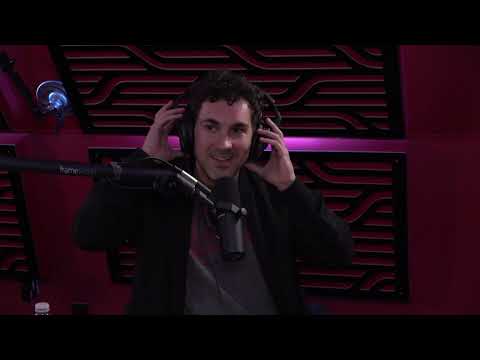
Joe Rogan Experience #1587 - Mark Normand
Narrator, Narrator, Narrator, Mark Normand (guest), Joe Rogan (host), Narrator, Narrator, Narrator, Narrator
In this episode of The Joe Rogan Experience, featuring Narrator and Narrator, Joe Rogan Experience #1587 - Mark Normand explores joe Rogan and Mark Normand dissect comedy, cancel culture, and ego Joe Rogan and Mark Normand spend the episode talking shop about stand-up comedy: the addiction to performing, bombing, writing, and how the pandemic exposed who’s truly committed to the craft.
Joe Rogan and Mark Normand dissect comedy, cancel culture, and ego
Joe Rogan and Mark Normand spend the episode talking shop about stand-up comedy: the addiction to performing, bombing, writing, and how the pandemic exposed who’s truly committed to the craft.
They dig into cancel culture, offense, and ‘punching up’ versus ‘punching down,’ arguing that stand-up is an art of saying the unsayable and that online outrage—often led by weaker comics—misunderstands this.
The conversation ranges through relationships, marriage, divorce law, fame, body image, identity politics, and social media, often using dark humor and personal anecdotes to illustrate how people avoid hard truths about themselves.
Throughout, they return to a core theme: honest self-critique, resilience after failure, and valuing merit and hard work over victimhood or identity-based shortcuts—whether in comedy, careers, or life.
Key Takeaways
Use bombing and criticism as fuel, not a shield.
Both argue that if a comic bombs and immediately blames the crowd, they lose the ‘gift’ of pain that forces them to rewrite, improve, and evolve. ...
Get the full analysis with uListen AI
If you want to be good, be ruthlessly honest with yourself.
Rogan describes ‘ruthlessly examining everything with no charity’—hating bad ad reads and imperfect sets—because that honesty is what keeps him improving even after massive success. ...
Get the full analysis with uListen AI
Stand-up needs room to be offensive or it stops being stand-up.
They compare stand-up to Tarantino films and rap lyrics: audiences accept extreme violence and misogyny in other art forms as fiction, but demand moral purity from comics. ...
Get the full analysis with uListen AI
Beware building identity around victimhood or ‘stack of coins’ status.
Rogan’s ‘stack of coins’ metaphor describes how people front-load arguments with identity (gender, race, etc. ...
Get the full analysis with uListen AI
Marriage is a romantic bond wrapped in a legal minefield.
Their divorce talk—Kelly Clarkson, Tom Arnold, Phil Hartman’s fears, Rogan’s friend paying an ex for longer than they were married—highlights how marriage blends love with state contracts. ...
Get the full analysis with uListen AI
Community matters: isolation makes artists and people weird.
They emphasize how hanging with other comics (green room hangs, Chappelle’s shows, road buddies) keeps you socially ‘greased’ and creatively sharp. ...
Get the full analysis with uListen AI
Social media outrage is a bad metric for artistic decisions.
They note that Twitter is dominated by unhappy, often marginal comics and activists whose loudness doesn’t match real audience reactions. ...
Get the full analysis with uListen AI
Notable Quotes
“If you don’t hate things you do that suck, then you don’t feel that sting of bombing—and you miss your chance to get better.”
— Joe Rogan
“It’s not punching up, it’s not punching down, it’s all play fighting.”
— Mark Normand (quoting Colin Quinn, then agreeing with it)
“If we don’t keep joking about the wrong things, then the idea of joking about the wrong things will go away.”
— Joe Rogan
“Four million sperm didn’t make it. You made it. And this is how you’re gonna spend it—on Twitter?”
— Mark Normand
“For that good feeling of dishonesty—‘yeah, fuck them’—you ruin your opportunity for growth.”
— Joe Rogan
Questions Answered in This Episode
Where should the line be drawn—if anywhere—between ‘just a joke’ and genuinely harmful stand-up material?
Joe Rogan and Mark Normand spend the episode talking shop about stand-up comedy: the addiction to performing, bombing, writing, and how the pandemic exposed who’s truly committed to the craft.
Get the full analysis with uListen AI
How can comics (or any creatives) balance the need to be offensive or transgressive with the realities of modern cancel culture and online dogpiles?
They dig into cancel culture, offense, and ‘punching up’ versus ‘punching down,’ arguing that stand-up is an art of saying the unsayable and that online outrage—often led by weaker comics—misunderstands this.
Get the full analysis with uListen AI
Is marriage, as a legal contract, still a rational choice for most people given the incentives and horror stories they describe?
The conversation ranges through relationships, marriage, divorce law, fame, body image, identity politics, and social media, often using dark humor and personal anecdotes to illustrate how people avoid hard truths about themselves.
Get the full analysis with uListen AI
To what extent is identity politics a necessary corrective to past injustices versus a new way of avoiding personal responsibility and merit?
Throughout, they return to a core theme: honest self-critique, resilience after failure, and valuing merit and hard work over victimhood or identity-based shortcuts—whether in comedy, careers, or life.
Get the full analysis with uListen AI
How can non-comedians apply Rogan and Normand’s approach to bombing—embracing failure and brutal honesty—to their own careers or personal lives?
Get the full analysis with uListen AI
Transcript Preview
(drumbeats) Joe Rogan podcast, check it out.
The Joe Rogan Experience.
Train by day, Joe Rogan podcast by night. All day. (rock music) Good morning, man. How are you?
Hey, hey. Good to be here.
But you in Texas.
I know, I feel good. I got tested, I feel great.
Yes, you're clean, you're clean of cooties.
I've got to be honest, I'm shocked. I thought I'd been super spreading for weeks.
(laughs)
I just felt like that in my body, like, "Ah, I must be hurting people."
Well, there's a wave going through New York right now.
Oh, yeah.
A lot of comics got it.
Everybody's got it. I don't want to say names. I don't know what's out, but holy shit.
Yeah. I don't know what's out either.
And it was all, it got all the funny ones, too.
Mm-hmm.
It wasn't like, the hacks didn't die. And it's just like real comics, you know, they get Patrice, they get Mitch Hedberg, they get Geraldo. Same with corona.
Yeah. Well, you know, the one, those are the ones that are hanging out.
Yeah, good point.
You know?
Funny people hang out with funny people.
Yeah. That, that is a, like when a comic stops hanging out with comics, never turns out well.
Yeah.
When they kind of alienate themselves-
Ooh, good point.
... from other comics. You, you've noticed, right?
Good point. And-
They get weird.
And we don't care about scandals or anything. If you're funny, we'll still hang out with you.
We don't care at all.
(laughs)
No one cares at all. Like, Louis was back like that. (fingers snap)
Right, right.
You know? I see Bryan Callen, I give him a hug.
There you go.
You know? It's like, it's, uh, when you're, uh, in that weird little group, you gotta real... Like, I think comics want to think that they're independent in some sort of way.
Mm-hmm.
That they don't need other comics. And you could survive without other comics, but those are like, uh, army issue MREs.
Yeah.
Like, you can kind of get by eating them.
Right.
You can li- but you're not, are you really living?
Ah, that's good. Yeah.
You know? Like, you can survive on like dehydrated food.
Right.
You can live, but-
Because-
... are you gonna enjoy it?
Well, the pandemic's a bitch 'cause you can't do standup, but when you get that moment when you're hanging out with the other guys again, you're like, "Oh, this is what I've been missing. I've been going crazy. I felt like a weirdo in my apartment."
Well, I've been doing these shows in town with Chappelle, and, uh, I did one of 'em with him, uh, like three weeks ago. Well, I did one with Tony Hinchcliffe at the Vulcan Gas Company like four weeks ago.
Install uListen to search the full transcript and get AI-powered insights
Get Full TranscriptGet more from every podcast
AI summaries, searchable transcripts, and fact-checking. Free forever.
Add to Chrome