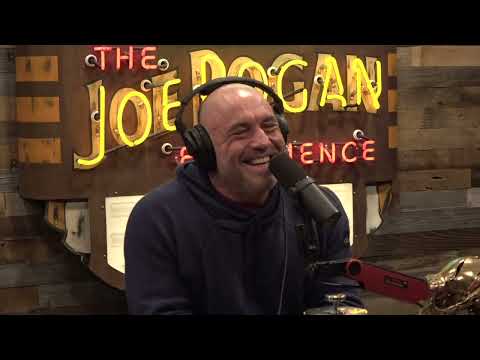
Joe Rogan Experience #1971 - Howie Mandel
Narrator, Joe Rogan (host), Howie Mandel (guest), Narrator, Howie Mandel (guest), Narrator, Narrator, Narrator, Narrator, Narrator
In this episode of The Joe Rogan Experience, featuring Narrator and Joe Rogan, Joe Rogan Experience #1971 - Howie Mandel explores howie Mandel, Joe Rogan Explore Comedy, Mental Health, AI, UFOs, Future Joe Rogan and Howie Mandel trace the evolution of stand-up comedy from The Comedy Store and TV-era gatekeepers to today’s podcast-driven, Austin-centered ecosystem, with Rogan’s Comedy Mothership framed as the new Mecca for comics. Mandel recounts his accidental rise in comedy, his breakout on HBO’s Young Comedians Special and St. Elsewhere, and how his onstage persona grew directly from real panic, OCD, and lifelong mental health struggles.
Howie Mandel, Joe Rogan Explore Comedy, Mental Health, AI, UFOs, Future
Joe Rogan and Howie Mandel trace the evolution of stand-up comedy from The Comedy Store and TV-era gatekeepers to today’s podcast-driven, Austin-centered ecosystem, with Rogan’s Comedy Mothership framed as the new Mecca for comics. Mandel recounts his accidental rise in comedy, his breakout on HBO’s Young Comedians Special and St. Elsewhere, and how his onstage persona grew directly from real panic, OCD, and lifelong mental health struggles.
They dive into the craft of stand-up—authenticity vs. written jokes, the necessity of clubs as ‘gyms,’ and how podcasts and social media now let comics bypass traditional TV paths to sell out arenas. Mandel admires the freedom Rogan and other modern comics have, while wrestling with his own constraints as a network TV personality who still craves darker, raunchier material.
A large portion of the conversation examines AI, holograms, deepfakes, and the possibility of a ‘digital god,’ weighing potential benefits against societal risks like job loss, manipulation, and existential threats. They also touch on UFO encounters, simulation ideas, fragmented media ecosystems, and how to stay sane, present, and productive in an increasingly chaotic digital world.
Key Takeaways
Authenticity and lived experience can be stronger than perfectly written jokes.
Mandel’s original act came from genuine panic and OCD-driven behavior onstage, which audiences found compelling; Pryor, Carlin, and others similarly turned raw personal history into powerful comedy.
Get the full analysis with uListen AI
Clubs remain essential as ‘gyms’ for comedians, even in the arena era.
Rogan stresses you can’t build or refine an hour in arenas; intimate rooms like The Comedy Store and the Comedy Mothership are where cadence, timing, and new material are stress-tested.
Get the full analysis with uListen AI
The path to success in comedy has shifted from TV gatekeepers to digital ecosystems.
Where Carson and development deals once controlled careers, comics now leverage podcasts, YouTube specials, and social media to build massive audiences and tour independently.
Get the full analysis with uListen AI
Mental health struggles can coexist with high performance, but require active management.
Mandel openly describes being medicated, fearing quiet time, running daily as meditation, and using constant activity and stand-up as ways to keep dark obsessive thoughts at bay.
Get the full analysis with uListen AI
AI’s trajectory demands preparation, not denial, from individuals and institutions.
They argue schools and society aren’t ready for rapid AI and automation, which will erase many jobs; learning to use AI as an augmenting tool (and understanding coding/tech) will be crucial.
Get the full analysis with uListen AI
Deepfakes and AI voice models are already blurring identity and ownership.
Rogan notes unauthorized commercials and podcasts of “him,” while Mandel licenses his likeness in hopes of retaining control; both highlight how hard it is to police misuse across shell entities.
Get the full analysis with uListen AI
Media consumption is siloing reality, making open conversations more valuable.
They criticize politicized news and coordinated scripts, emphasizing how bubbles and propaganda distort people’s sense of what’s real; long-form dialogue across disagreements helps recalibrate perspective.
Get the full analysis with uListen AI
Notable Quotes
“You created a new pathway. You’re the new Mitzi with less hair.”
— Howie Mandel
“Everything I was ever expelled for, gotten in trouble for, paid for… is what I get paid for today.”
— Howie Mandel
“Clubs are our gym. You can’t work out in arenas.”
— Joe Rogan
“My whole existence is about being in the moment, because I can’t let my mind wander.”
— Howie Mandel
“I think we’re the last of the regular people… kids aren’t even going to understand this time.”
— Joe Rogan
Questions Answered in This Episode
How would stand-up comedy look today if podcasts and YouTube hadn’t disrupted the old Tonight Show–driven model?
Joe Rogan and Howie Mandel trace the evolution of stand-up comedy from The Comedy Store and TV-era gatekeepers to today’s podcast-driven, Austin-centered ecosystem, with Rogan’s Comedy Mothership framed as the new Mecca for comics. ...
Get the full analysis with uListen AI
Where should the ethical line be drawn for using AI versions of a performer’s voice or likeness in ads, shows, or fan projects?
They dive into the craft of stand-up—authenticity vs. ...
Get the full analysis with uListen AI
What practical steps can someone with intense anxiety or OCD take from Mandel’s experience to function in a high-pressure career?
A large portion of the conversation examines AI, holograms, deepfakes, and the possibility of a ‘digital god,’ weighing potential benefits against societal risks like job loss, manipulation, and existential threats. ...
Get the full analysis with uListen AI
If AI does become a kind of ‘digital god,’ who—if anyone—should be allowed to set its values and guardrails?
Get the full analysis with uListen AI
Does long-form conversation like this actually reduce polarization, or does it mostly reach people who are already open to nuance?
Get the full analysis with uListen AI
Transcript Preview
(drum roll) Joe Rogan podcast, check it out. The Joe Rogan Experience. Train by day, Joe Rogan podcast by night. All day. (rock music)
Hey, what up?
Can you hear me?
I hear you perfect.
Okay.
Hello, Howie Mandel.
Hi, Joe Rogan.
Good to see you, my friend.
I know.
Very good to see you.
I know. And a- and amazing to see you. Before you start anything, I've gotta tell you how exci- are you ... uh, uh, uh, uh, did we start?
No. Yeah, we're starting.
Okay.
Yeah.
Uh, I gotta tell you how excited I am to see you. I am the biggest fan. If, if there's one thing that I'm a fan of, it's innovation.
Mm.
And I think that you have become the comedy innovator. And, and, um, uh, I'm blowing smoke up your ass r- right at the beginning of this. And I, I gotta say, what I've seen from the outside, you know? In 1978, I came down to The Comedy Store, and I, I got up on a lark. Mike Binder got me up there on a lark. I, I, I was not pursuing it. I had gone on at Yuk Yuk's in Toronto, and I fell in love with this. Mitzi gave me my biggest break. Um, and there was a guy by the name of George Foster who was in the audience that night that said, "Hey, do you wanna do TV?" And I said, "Yeah." And then he hired me to do Make Me Laugh, which I did with Binder and a bunch of other-
Wow.
... people. And with no intent of making this a, um, a, a career, you know? I, I didn't, I didn't pursue comedy. I knew nothing about comedy. I was a fan of comedy. I watched comedy, stand-up. I, even when I went to Yuk Yuk's, I had never, you know... I don't know. Uh, uh, let me get back to you, and then I'll talk about, I'll talk about me. But-
(laughs)
... the, the thing is that I'm aware of the history of comedy. And when I was a kid, it was in New York. Everybody went to New York. That's where Lenny Bruce was working. You just showed me a picture of Lenny Bruce. And then when Carson made his way out to California, there was a shift where everybody had to come to California, you know? And you had to get on at The Comedy Store or maybe the Improv with the intent of maybe, if you were lucky, getting a spot on The Tonight Show.
Mm.
Right?
Yeah.
And I, I don't know. How old are you?
55.
55, you're a kid.
How old are you?
(laughs) I'll be 68 this year.
You look fucking great.
Thank you.
Install uListen to search the full transcript and get AI-powered insights
Get Full TranscriptGet more from every podcast
AI summaries, searchable transcripts, and fact-checking. Free forever.
Add to Chrome