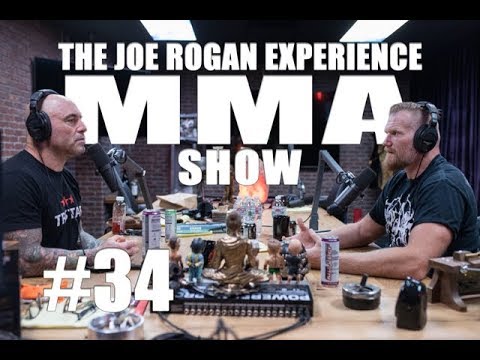
JRE MMA Show #34 with Josh Barnett
Joe Rogan (host), Josh Barnett (guest), Narrator, Narrator
In this episode of The Joe Rogan Experience, featuring Joe Rogan and Josh Barnett, JRE MMA Show #34 with Josh Barnett explores josh Barnett on manhood, USADA battles, social media and meaning Josh Barnett joins Joe Rogan to talk about life after leaving the UFC, his plans to return to MMA, and his current work as a commentator and coach. They dive into pro‑wrestling’s resurgence, muscle cars, and the appeal of “manly” pursuits like manual transmissions and real barbecue. The conversation broadens into social commentary on performative toughness, masculinity, social media narcissism, beauty standards, and how technology amplifies insecurity and violence.
Josh Barnett on manhood, USADA battles, social media and meaning
Josh Barnett joins Joe Rogan to talk about life after leaving the UFC, his plans to return to MMA, and his current work as a commentator and coach. They dive into pro‑wrestling’s resurgence, muscle cars, and the appeal of “manly” pursuits like manual transmissions and real barbecue. The conversation broadens into social commentary on performative toughness, masculinity, social media narcissism, beauty standards, and how technology amplifies insecurity and violence.
Barnett details his protracted dispute with USADA over a tainted supplement, arguing the anti‑doping system became more about ‘winning’ cases than fairly protecting athletes. They finish with a long philosophical stretch: Nietzsche, Huxley vs. Orwell, social media’s impact, war and fighting as peak human experience, and how suffering, risk and adversity are essential for growth and a meaningful life.
Key Takeaways
Performative toughness has replaced real risk in much of modern masculinity.
Barnett argues that leather jackets, bikes, and curated ‘tough’ aesthetics often signal toughness without the underlying hard work or danger, reflecting a culture more focused on appearances than lived experience.
Get the full analysis with uListen AI
Social media amplifies insecurity and drives exaggerated self‑presentation.
They describe how platforms prey on insecurity, rewarding attention‑seeking behavior (filters, selfies, body-part branding) and magnifying both the user’s anxiety and the audience’s distorted expectations.
Get the full analysis with uListen AI
Beauty standards are increasingly engineered and mathematically rationalized.
Discussion of fillers, lip injections, and the facial ‘golden ratio’ highlights how people chase an abstract ideal of symmetry while often developing body dysmorphia and detaching from how they actually look.
Get the full analysis with uListen AI
Anti‑doping systems can become more about optics than athlete fairness.
Barnett’s tainted‑supplement case shows how, even when contamination and lack of performance benefit are demonstrated, agencies may still push for heavy suspensions to appear effective, forcing athletes into costly arbitration.
Get the full analysis with uListen AI
Technological progress and social media may fuel modern alienation and violence.
They connect rising mass shootings to social media–driven resentment, isolation, and constant exposure to others’ curated lives, combined with medication, access to weapons, and a lack of real community.
Get the full analysis with uListen AI
Fighting and war reveal a rare peak state of human aliveness.
Barnett describes combat as a temporary, almost unreachable state where every sense is heightened and consequences are immediate, offering a level of presence and meaning ordinary modern life rarely matches.
Get the full analysis with uListen AI
Suffering, failure, and adversity are essential to growth and self‑knowledge.
They frame mistakes, KO losses, and life hardship as necessary ‘suffering’ that teaches, builds resilience, and prevents the dull, risk‑free existence that leaves many people unfulfilled despite material comfort.
Get the full analysis with uListen AI
Notable Quotes
“People are attempting to appear tough all the time without actually living tough lives anymore.”
— Josh Barnett
“You don't have to look perfect to be a beautiful person.”
— Josh Barnett
“I’m not taking punishment for contamination. Nobody is doping, I’m not even fighting.”
— Josh Barnett
“If you don’t ever dare, how can you fuck up?”
— Josh Barnett
“The one poison in life is to live a dull life.”
— Joe Rogan
Questions Answered in This Episode
How should anti‑doping agencies balance aggressive enforcement with genuinely fair treatment of athletes caught by tainted supplements?
Josh Barnett joins Joe Rogan to talk about life after leaving the UFC, his plans to return to MMA, and his current work as a commentator and coach. ...
Get the full analysis with uListen AI
In what ways does social media–driven ‘performative toughness’ impact young men’s understanding of real competence and responsibility?
Barnett details his protracted dispute with USADA over a tainted supplement, arguing the anti‑doping system became more about ‘winning’ cases than fairly protecting athletes. ...
Get the full analysis with uListen AI
Can modern life realistically offer the same sense of aliveness and meaning that Barnett associates with fighting and war, without the physical danger?
Get the full analysis with uListen AI
How do we encourage healthy body image in a world where filters, fillers, and ‘golden ratio’ aesthetics are normalized and monetized?
Get the full analysis with uListen AI
Are we, as Huxley suggested, being pacified by comfort and entertainment into giving up freedom and responsibility without even noticing it?
Get the full analysis with uListen AI
Transcript Preview
Boom, ladies and gentlemen. Josh Barnett, youngest ever UFC heavyweight champion. And now re- uh, retired? Sort of, semi?
Uh, no.
No?
Not retired.
No.
Just, um, I'm, uh, free in the wind. I'm like a bald eagle. I'm just-
Ah.
... out there.
Soring.
Just riding on that freedom.
Ah. That's America.
Just, uh, just, uh, I decided to leave the fold of the UFC-
Mm-hmm.
... and, uh, chase my, my own futures, uh, by my own hands.
Are you actively competing or going to be actively competing?
Um, there'll be some grappling stuff this year, but, uh, I'm figuring by the start of next year, I'll get back into the MMA circuits. Uh, mainly because it's just gonna take some time to set up camps, managers, the structure of everything.
Right.
Where I have, uh, proper sparring partners and all that.
And-
So-
... in the meantime, we were talking about you're doing commentary for New Japan Pro-Wrestling with Jim Ross.
Mm-hmm.
And you do it on AXS TV, right?
That's right, every Friday night at 8:00, uh, you can see me sit down and, and run my mouth about wrassling.
Yeah.
But, uh, we just did, uh, the live show up at the Cow Palace in San Francisco. Which they've been having sporadic, uh, wrestling events there, but it was, it was a big draw in that building in, like, the '60s and '70s I guess. So, it's, uh, a bit of a historical, uh-
It feels like wrestling, pro-wrestling's making a renaissance. It's, like, making a return.
Yeah. Uh, I think that, um, there's a certain audience of, uh, of a certain age gap that, or age group, that has come into flourishing and, and, and into the internet and other ways to which to go ahead and, and, and bring wrestling back up there. And show that wrestling, whether it's the biggest company like the WWE, all the way to, say, you know, number two would be New Japan, and then there's all these independent companies all over the place that, uh, some of them have, you know, quite a decent following as well.
You know, uh, Billy Corgan from The Smashing Pumpkins?
Huge wrestling fan.
He owns... What, what is the company that he owns?
The NWA.
Yeah, NWA.
The National Wrestling Alliance. Yeah.
Yeah.
So, he owns-
It's hard. N-W-A. Is NWA the rap group?
It's that too.
You mean. That's what I hear, when I hear NWA.
I'm, I'm sure there's some attitude involved with-
I'm sure there's attitude.
... the wrestling NWA.
Yeah.
Can't speak about the rest of it. But, uh, um, NWA was... Is, I guess, still? It was... It's a legendary, um, sanctioning body. And so it wasn't any one particular company, but it was a, um, a sanctioning body that would then oversee certain titles. And so if you're gonna be on this show at this time, you're gonna defend the NWA championship, the NWA commission would get involved and, and they had their specifications as to how the title matches would be run and whether or not you could lose by disqualification or not, or if, you know, you could go over the top rope would be a DQ, and little stuff like that.
Install uListen to search the full transcript and get AI-powered insights
Get Full TranscriptGet more from every podcast
AI summaries, searchable transcripts, and fact-checking. Free forever.
Add to Chrome