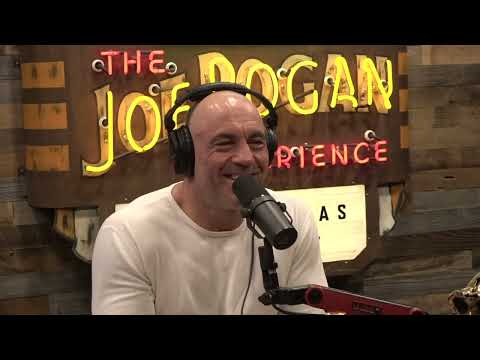
Joe Rogan Experience #1881 - Rick Rubin
Narrator, Narrator, Joe Rogan (host), Rick Rubin (guest), Narrator, Narrator, Narrator
In this episode of The Joe Rogan Experience, featuring Narrator and Narrator, Joe Rogan Experience #1881 - Rick Rubin explores rick Rubin and Joe Rogan Deconstruct Creativity, Success, and Authentic Art Rick Rubin traces his accidental rise from NYU punk kid to pivotal hip‑hop and rock producer, emphasizing that he always just chased what he loved rather than any plan for success.
Rick Rubin and Joe Rogan Deconstruct Creativity, Success, and Authentic Art
Rick Rubin traces his accidental rise from NYU punk kid to pivotal hip‑hop and rock producer, emphasizing that he always just chased what he loved rather than any plan for success.
He and Joe Rogan dig into how new genres emerge, why the best work initially confuses or repels people, and how commercial imitation quickly dilutes originality.
Rubin outlines his philosophy from his book *The Creative Act*: treat life itself as a creative practice, trust your own taste, ignore external validation, and create environments where artists can be vulnerable and free.
They also explore discipline and embodiment—diet, sauna, cold exposure, intense training, and near-death experiences—as tools to stay sane, grounded, and creatively sharp amid fame and pressure.
Key Takeaways
Follow taste, not trends: make what you personally love.
Rubin insists everything he’s done—Def Jam, Slayer, Johnny Cash, Chili Peppers—came from simply wanting to hear something that didn’t exist yet, never from guessing what would sell or what others might like.
Get the full analysis with uListen AI
The most impactful work often feels wrong or confusing at first.
From early hip-hop and Public Enemy to Cypress Hill, NWA, and Dice’s *The Day the Laughter Died*, the projects that later proved revolutionary were initially rejected, bombed, or attacked because people had no frame of reference.
Get the full analysis with uListen AI
Imitation and chasing stardom are dead ends for artists.
Both men argue that trying to sound like existing hits or pandering to an audience may bring short-term attention but never leads to lasting art; the only durable path is expressing your own odd, specific perspective.
Get the full analysis with uListen AI
Environment and safety are crucial to deep creative work.
Rubin makes studios feel like protected, low-pressure spaces—minimal people, no deadlines talk, sometimes recording in mansions or on mountaintops—so artists can be vulnerable, experiment, and push into new territory.
Get the full analysis with uListen AI
Disciplined physical hardship stabilizes the mind under fame and stress.
Rogan leans on brutal workouts, sauna, cold plunges, and occasional psychedelics to shrink everyday anxieties, while Rubin describes how serious training, diet change, and extreme sauna/ice transformed his health and mood.
Get the full analysis with uListen AI
True collaboration means serving the work, not your ego.
Rubin distinguishes between fighting to get your idea in and real cooperation, where everyone wants the best idea—whoever’s it is—to win; that orientation, he says, changes bands, writers’ rooms, and any creative team.
Get the full analysis with uListen AI
Creativity is noticing and acting on signals from the world.
Rubin views life as ongoing collaboration with the universe—overheard lines, random book phrases (like the Bible line that became the bridge of System of a Down’s “Chop Suey! ...
Get the full analysis with uListen AI
Notable Quotes
“You can’t second guess your own taste for what someone else is gonna like. We’re not smart enough to know what someone else is gonna like.”
— Rick Rubin
“Often the best things are the ones you first hear and you might not like, because you don’t understand them at first.”
— Rick Rubin
“If your goal is to make money, go work on Wall Street. If you’re gonna do it in art, it’s different.”
— Rick Rubin
“The only way we ever know it’s any good in comedy is with the audience. Until you have an audience, you don’t have any idea how the bit really comes together.”
— Joe Rogan
“It’s remarkable how these things that want to be— that the universe wants to happen now— come through us. And if we don’t do it, maybe someone else will.”
— Rick Rubin
Questions Answered in This Episode
How can an aspiring artist practically train themselves to ignore external validation and trust their own taste without becoming delusional or closed off to feedback?
Rick Rubin traces his accidental rise from NYU punk kid to pivotal hip‑hop and rock producer, emphasizing that he always just chased what he loved rather than any plan for success.
Get the full analysis with uListen AI
What specific habits or daily practices best cultivate the kind of open, receptive awareness Rubin describes—where “the universe” can feed you ideas?
He and Joe Rogan dig into how new genres emerge, why the best work initially confuses or repels people, and how commercial imitation quickly dilutes originality.
Get the full analysis with uListen AI
In a social media era that rewards imitation and quick trends, how can musicians or comedians protect the long, messy process of finding a unique voice?
Rubin outlines his philosophy from his book *The Creative Act*: treat life itself as a creative practice, trust your own taste, ignore external validation, and create environments where artists can be vulnerable and free.
Get the full analysis with uListen AI
What kinds of environments—physical, social, or contractual—most often kill creativity in the studio or writers’ rooms, and how can they be redesigned?
They also explore discipline and embodiment—diet, sauna, cold exposure, intense training, and near-death experiences—as tools to stay sane, grounded, and creatively sharp amid fame and pressure.
Get the full analysis with uListen AI
How should audiences and critics rethink their initial resistance to new, uncomfortable art so they don’t miss the next genre-defining shift?
Get the full analysis with uListen AI
Transcript Preview
(drum music) Joe Rogan podcast, check it out.
The Joe Rogan Experience.
Train by day, Joe Rogan podcast by night. All day. (rock music) Rick Rubin, ladies and gentlemen. It's a pleasure to finally make your acquaintance.
Same.
Yeah.
Happy to be here.
I'm happy to have you here, man.
Happy to be in this-
I'm excited to talk to you.
... beautiful place.
Thank you. And it's fun.
It's inspiring.
You see shooting stars across the ceiling, you're not tripping.
Okay.
Every, like, 40 seconds or something.
Cool.
A star shoots across the ceiling. So what's happening, man?
Just hanging.
You wrote a book.
I wrote a book.
I'm excited to read it, man.
Yeah, I'm excited for you to see it.
You've had a wild life, brother.
It's, uh, continues to surprise me on a regular basis.
Does it?
Every time. It, it, it's like one thing after another. So much of it's unintentional. I would say all of it's, all of it's unintentional.
How so?
(sighs) From the beginning, I never thought any of the things that I'm doing were possible or, uh, realistic. And I just did things out of the love of them, thinking I would have real jobs and, you know, like, the thing that, that my passion would be my hobby and I'd have a job to support my hobby.
Yeah.
And it just magically turned out different than that without me knowing it was possible.
That's the best kind of story. I love those stories. 'Cause when someone just follows their passion and it just leads them to being one of the baddest motherfuckers in music.
(laughs)
(laughs) How did you get started?
I just started making, um... I went to... I was in a punk rock band first. And I recorded a couple of punk rock things with my band and liked the feeling of being in the studio. It was fun. And, um, hip-hop was just getting started at this time. And I would go to, uh, there was a club called Negril on 2nd Avenue in Manhattan, downtown. It was a reggae club most nights, but one night a week, it was hip-hop. And this was when hip-hop was d- did, it didn't really exist other than in The Bronx, Brooklyn, um, a- and it was this t- tiny little scene of people playing music in parks, really. It was not a... It's hard to explain how small it was, how, how much of a sub-genre it was in these days. So the fact that you could see it downtown was a big deal, because it didn't really exist anywhere. That you didn't hear this music in clubs. You didn't hear it... And there were very few at this time. 12-inch singles would come out and there w- and there would be, I don't know, I don't know if there were more than 30 or 40 rap songs in the world at this point in time. But there were these clubs where stuff would happen and at this club that I went to called Negril, what you would normally only be able to see at a club in Harlem, like there was a club called Broadway International and there was a club called The Disco Fever, was brought downtown and people downtown could see it. So I started going every Tuesday night. This is when I was going to NYU. And, um, I just loved the music and then I would buy every 12-inch single that would come out when it would come out and none of them sounded like what it sounded like at the club. It wasn't, it wasn't related at all.
Install uListen to search the full transcript and get AI-powered insights
Get Full TranscriptGet more from every podcast
AI summaries, searchable transcripts, and fact-checking. Free forever.
Add to Chrome