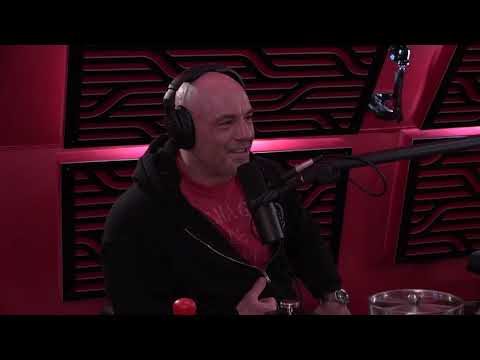
Joe Rogan Experience #1611 - Freddie Gibbs & Brian Moses
Narrator, Joe Rogan (host), Brian Moses (guest), Narrator, Freddie Gibbs (guest), Narrator, Freddie Gibbs (guest), Joe Rogan (host), Brian Moses (guest), Jamie Vernon (guest), Narrator, Freddie Gibbs (guest), Joe Rogan (host), Brian Moses (guest), Guest clip (third-party interviewee) (guest), Freddie Gibbs (guest), Brian Moses (guest), Freddie Gibbs (guest), Brian Moses (guest), Freddie Gibbs (guest), Narrator, Narrator, Narrator, Narrator, Brian Moses (guest), Freddie Gibbs (guest), Brian Moses (guest)
In this episode of The Joe Rogan Experience, featuring Narrator and Joe Rogan, Joe Rogan Experience #1611 - Freddie Gibbs & Brian Moses explores drugs, racism, boxing and chaos: Freddie Gibbs crashes Rogan Joe Rogan, Freddie Gibbs, and Brian Moses bounce through a long, loose conversation that weaves together drug policy, racism in American law, hip‑hop and comedy culture, boxing and MMA, and the decay of California vs. the appeal of Texas and Florida.
Drugs, racism, boxing and chaos: Freddie Gibbs crashes Rogan
Joe Rogan, Freddie Gibbs, and Brian Moses bounce through a long, loose conversation that weaves together drug policy, racism in American law, hip‑hop and comedy culture, boxing and MMA, and the decay of California vs. the appeal of Texas and Florida.
They revisit the racist origins of cocaine and marijuana criminalization, sentencing disparities, and infamous cases like Marion Barry and R. Kelly, while joking darkly about crime, addiction, and censorship on platforms like Instagram.
A big chunk of the episode is devoted to combat sports history—Tyson, Ali, Mayweather, Hagler–Hearns, Lomachenko, Khabib, the Gracies—with Rogan arguing that true greatness is context‑dependent and shaped by eras and opponents.
Threaded through the humor and wild stories are serious points about censorship, government overreach, nuclear brinkmanship, organized religion, and how propaganda and tribalism keep people from talking honestly across lines of race, class, and politics.
Key Takeaways
Drug policy has always been entangled with racism and economic interests.
They trace . ...
Get the full analysis with uListen AI
The real difference between crack and powder cocaine is legal, not chemical.
Citing Carl Hart, they point out that crack is essentially cocaine plus baking soda, yet sentencing historically punished crack (used more in Black communities) far more harshly than powder, illustrating how law amplifies inequality.
Get the full analysis with uListen AI
Punishment in America is misaligned: nonviolent drug offenses often draw more time than violent crimes.
Gibbs compares likely 30‑year sentences for multi‑kilo cocaine busts to relatively short terms for serial rape, arguing that the system criminalizes consensual transactions far more aggressively than direct physical harm.
Get the full analysis with uListen AI
Truly elite performers exist in every field and are shaped by their era and opposition.
Rogan frames Tyson, Ali, Mayweather, Canelo, and the Gracies as 'tip‑of‑the‑mountain' figures whose greatness depended on their competition; he argues you can’t meaningfully crown a universal GOAT without context because each fighter’s level was forged by the threats around them.
Get the full analysis with uListen AI
Physical exertion and discipline are crucial antidotes to modern anxiety.
Rogan stresses that many people riddled with existential dread and depression simply aren’t giving their bodies the 'requirements' they evolved for; hard workouts, saunas, and physical struggle help burn off stress that would otherwise twist inward.
Get the full analysis with uListen AI
Censorship by platforms and advertisers risks freezing honest, uncomfortable speech.
They argue that Instagram bans, advertiser squeamishness, and 'wokeness' push everything toward safe, shallow content, when society actually needs to see what people really think and want—even if that includes disturbing or offensive material.
Get the full analysis with uListen AI
Tribalisme and propaganda keep groups from having the simple conversations that would defuse conflict.
Using U. ...
Get the full analysis with uListen AI
Notable Quotes
“You’re not really doing anything wrong with kilos. You’re just getting something to them that they want.”
— Joe Rogan
“Poor conditions produce fighters. You look at Conor, you look at Jack Dempsey—if you’re fighting for food, you’re gonna kill somebody.”
— Freddie Gibbs
“Boxing is legitimately about hitting and not being hit, and no one’s done it better than Floyd.”
— Joe Rogan
“We elected the fucking police, man.”
— Freddie Gibbs, on Biden/Harris and the 1994 Crime Bill/three‑strikes
“Trust in the government is way crazier than any other religion.”
— Joe Rogan
Questions Answered in This Episode
How should modern drug policy be redesigned if we take racism and economic self‑interest in its origins seriously?
Joe Rogan, Freddie Gibbs, and Brian Moses bounce through a long, loose conversation that weaves together drug policy, racism in American law, hip‑hop and comedy culture, boxing and MMA, and the decay of California vs. ...
Get the full analysis with uListen AI
Is it possible—or even desirable—to separate an artist’s work (R. Kelly, Michael Jackson, Marion Barry) from their personal crimes, and where do you personally draw that line?
They revisit the racist origins of cocaine and marijuana criminalization, sentencing disparities, and infamous cases like Marion Barry and R. ...
Get the full analysis with uListen AI
Given Rogan’s framing that greatness is era‑dependent, how should we talk about GOATs in sports, music, and comedy without erasing historical context?
A big chunk of the episode is devoted to combat sports history—Tyson, Ali, Mayweather, Hagler–Hearns, Lomachenko, Khabib, the Gracies—with Rogan arguing that true greatness is context‑dependent and shaped by eras and opponents.
Get the full analysis with uListen AI
What balance should social media platforms strike between allowing disturbing, honest content and protecting users (and advertisers) from harm or outrage?
Threaded through the humor and wild stories are serious points about censorship, government overreach, nuclear brinkmanship, organized religion, and how propaganda and tribalism keep people from talking honestly across lines of race, class, and politics.
Get the full analysis with uListen AI
If physical struggle and discipline are so crucial to mental health, how could schools and cities be redesigned to build that into everyday life, especially for kids?
Get the full analysis with uListen AI
Transcript Preview
(drum music plays) Joe Rogan podcast. Check it out. The Joe Rogan Experience.
Train by day, Joe Rogan podcast by night. All day. (rock music plays)
But you know why they got rid of it, right?
Why?
Black people.
Really?
Mm-hmm.
That's why they got rid of it?
So I w- yeah, this is, actually this is-
Hol- hold these thoughts.
Okay.
Hold his thoughts. Tell me when. You good?
I got it. I got it.
Okay. We rolling?
(laughs)
Did he get that already?
(laughs)
Oh, Jamie already got that. All right. Let's- so s- finish your thought.
Yeah, yeah. So, uh, the reason the .45 caliber bullet exists and the reason they got rid of co- or the reason they, uh, made cocaine illegal is because when Blacks were working the docks in the late 1800s, early 1900s, um, they had these things, uh ... There was a rape, obviously. That's what always happens, right?
Yeah.
Emmett Till, all of 'em, right? So, uh, a woman reported a rape. And, uh, a cop, he came up and then c- he was ... There was a Black dude on cocaine 'cause they would give the dock workers cocaine to keep 'em up all night.
Yeah.
That's when it was legal.
Oh.
And then there was a, uh, a coked-up Black dude, right? Real big dude, I guess. And, uh, a woman was saying, "He's chasing me," right? And he was just, he was ... I don't know what the fuck was going on. But the cop was shooting at him and there was no stopping power enough, they said, for the bullets. So they made a bigger bullet, uh, the .45 caliber bullet because what they were using was like, something li- like a little over a .22.
Oh.
Damn. And you know, this is some real shit because it was a crackhead back in the day. I shot that nigga nine times with a TEC-9 and he w- kept running down the alley.
Hmm.
Different. Different crack, though (laughs) . Different coke, but yeah.
That was crack. They said if that was coke, this was crack.
Right, yes. Medicinal cocaine.
But they said ... Coke and crack, according to Carl Hart, they're the same thing.
They are the same thing.
Dr. Carl Hart.
One just-
Really?
One just has baking soda. That's all.
Yeah.
It's just that you're just freeing the base of the powder.
Freebase, right? Right.
That's why it's called freebase.
Yeah.
You know what I'm saying? So ...
Which probably made it famous, yeah.
But crack c- crack is different.
Cocaine-crazed n- cro- cro- cocaine-crazed Negroes. That's what they called them.
The difference is the, the, w- in sentencing.
Install uListen to search the full transcript and get AI-powered insights
Get Full TranscriptGet more from every podcast
AI summaries, searchable transcripts, and fact-checking. Free forever.
Add to Chrome