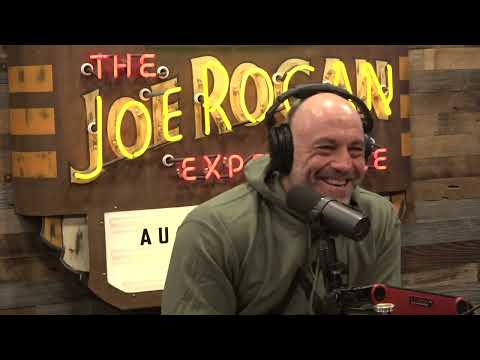
Joe Rogan Experience #2080 - John Reeves
Narrator, John Reeves (guest), Joe Rogan (host), Narrator, Narrator, Narrator, Narrator
In this episode of The Joe Rogan Experience, featuring Narrator and John Reeves, Joe Rogan Experience #2080 - John Reeves explores alaskan bone rush exposes museum secrets and extinction mysteries Joe Rogan and gold miner John Reeves revisit Reeves’ Alaskan ‘Boneyard,’ a small mining site yielding an extraordinary concentration of Ice Age megafauna bones and tusks, and now-confirmed fossil dumps in New York’s East River. They discuss how the American Museum of Natural History (AMNH) allegedly took hundreds of thousands of bones under a 1920s–50s agreement, failed to properly document or study them, and secretly dumped around 50 tons into the river.
Alaskan bone rush exposes museum secrets and extinction mysteries
Joe Rogan and gold miner John Reeves revisit Reeves’ Alaskan ‘Boneyard,’ a small mining site yielding an extraordinary concentration of Ice Age megafauna bones and tusks, and now-confirmed fossil dumps in New York’s East River. They discuss how the American Museum of Natural History (AMNH) allegedly took hundreds of thousands of bones under a 1920s–50s agreement, failed to properly document or study them, and secretly dumped around 50 tons into the river.
Reeves outlines his push to reclaim the collection for Alaska via political channels, arguing that these bones hold critical evidence about extinction events and the Younger Dryas impact hypothesis. The conversation ranges through museum ethics, stolen artifacts, possible human occupation evidence (sawed bones, carved faces, spear points), and the unexplored scientific potential of his site’s burned bedrock and dense fossil layer.
They also broaden out into speculations on lost civilizations, AI and deepfakes, black holes and fractal universes, cloning mammoths and humans, and the structural dysfunction of institutions and governments. Throughout, Rogan emphasizes that Reeves’ operation is a rare, independent window into deep prehistory that mainstream academia and big museums have been reluctant to engage with.
Key Takeaways
The Alaskan Boneyard may be one of the richest Ice Age fossil sites on Earth.
On just 2. ...
Get the full analysis with uListen AI
Reeves alleges AMNH holds—and even dumped—huge quantities of his legally owned fossils without proper study.
Under a 1920s–50s three‑party agreement, AMNH and the University of Alaska were supposed to take only scientifically valuable bones, document their stratigraphy, and publish annual reports; Reeves says they took nearly everything, never did the required work, and secretly disposed of ~50 tons in the East River, which divers have now confirmed by finding mammoth and bison bones where his documents indicated.
Get the full analysis with uListen AI
Political pressure may be more effective than lawsuits in forcing museum accountability.
Rather than personally litigate against a wealthy private institution, Reeves is working with Alaska state legislators to pursue repatriation of the bones as state property, with an eye toward federal congressional action that could legally compel AMNH to return the collection.
Get the full analysis with uListen AI
The site’s burned bedrock and carbon layer strongly hint at a catastrophic event linked to global extinction debates.
Reeves shows a distinct burned bedrock horizon about 80 feet down with burnt gravel above it, consistent with some form of intense heating or impact; combined with dense megafaunal remains of varying ages (including material dated ~40,000 years), this supports exploring multiple catastrophic or impact-related extinction phases beyond standard overhunting explanations.
Get the full analysis with uListen AI
There are provocative but unresolved hints of relatively recent and very ancient human presence.
Finds include industrially sawed animal bones carbon‑dated to roughly 190 years old in a context previously thought to be purely Ice Age, a carved face on bone that paleontologists dismiss as “natural,” a mammoth hip bone with a spear point, and a non-local skinner’s tool from Eastern European stone—together suggesting both under-documented historical use and much earlier human occupation of the region.
Get the full analysis with uListen AI
Museum and academic gatekeeping can obstruct, not advance, knowledge of prehistory.
Rogan and Reeves argue that large institutions often hoard collections, fail to study them, and sometimes lose, sell, or misappropriate artifacts, while also punishing younger researchers who challenge established chronologies—slowing honest investigation into events like the Younger Dryas or the true antiquity of human civilization.
Get the full analysis with uListen AI
Independent operators plus modern media can now surface evidence that challenges entrenched narratives.
Reeves’ Instagram, direct fieldwork, and unfiltered long-form conversations like this one have created a public record and massive grassroots interest—what Rogan calls a ‘bone rush’—that makes it harder for institutions to quietly deny or bury inconvenient data.
Get the full analysis with uListen AI
Notable Quotes
““Something came in hot. There’s burnt gravel laying on top of burnt bedrock 80 feet below the surface.””
— John Reeves
““The answers to the extinction event are in those bones.””
— John Reeves
““They know how long people live. This outlasted son of a bitch. We’re an institution. We don’t ever die.””
— John Reeves, on AMNH’s strategy of waiting critics out
““How the hell else are you gonna find a steppe bison bone in the East River?””
— Joe Rogan
““We live in the Ice Age. People say, ‘Think outside the box.’ We live outside that son of a bitch.””
— John Reeves
Questions Answered in This Episode
If an independent, multi-year scientific expedition were mounted at the Boneyard, what specific research questions should be prioritized first?
Joe Rogan and gold miner John Reeves revisit Reeves’ Alaskan ‘Boneyard,’ a small mining site yielding an extraordinary concentration of Ice Age megafauna bones and tusks, and now-confirmed fossil dumps in New York’s East River. ...
Get the full analysis with uListen AI
What legal and ethical frameworks should govern the repatriation of scientific collections that were taken under vague or exploitative agreements a century ago?
Reeves outlines his push to reclaim the collection for Alaska via political channels, arguing that these bones hold critical evidence about extinction events and the Younger Dryas impact hypothesis. ...
Get the full analysis with uListen AI
How much could a detailed study of the burned bedrock and carbon layer contribute to confirming or refuting the Younger Dryas impact hypothesis?
They also broaden out into speculations on lost civilizations, AI and deepfakes, black holes and fractal universes, cloning mammoths and humans, and the structural dysfunction of institutions and governments. ...
Get the full analysis with uListen AI
What kinds of evidence would it take for mainstream archaeology to seriously reconsider timelines of human presence and technological sophistication in places like Alaska and Egypt?
Get the full analysis with uListen AI
In an era of AI, deepfakes, and institutional mistrust, how can the public reliably distinguish between legitimate paradigm‑shifting discoveries and sensational claims about prehistory?
Get the full analysis with uListen AI
Transcript Preview
(drumming music) Joe Rogan podcast, check it out. The Joe Rogan Experience. Train by day, Joe Rogan podcast by night, all day. (rock music)
Oh, yeah, no. Yeah, I'll have a little taste.
Just a little taste, Mr. Reeves. There you go.
Thank you, sir.
Cheers, sir.
Cheers to you.
Good to see you again.
Good to be seen.
Aha. Mm. Woo! So tell me, what the fuck is going on? How is it? How's- how's things cracking? First of all, congratulations on being, uh, proved correct.
Mm-hmm.
And that there are literally mammoth bones, bison bones, all kinds of bones in the East River.
Yes, sir.
You- you said it on this podcast. Dirty Water Dan went out and looked for them. They found bones. They found multiple bones. It's real.
It's very real.
So the museum dumped bones that belong to your property-
Yeah.
... out there in the East River, and they're still out there for people to find. How- how many pounds were dumped, roughly?
50- 50 tons.
50 tons?
50.
50 tons?
And that was told to me by one of the guys that wrote that report that I read on your show.
Good Lord, that's a lot. I didn't know it was that many.
Yeah. Boxcar.
(exhales loudly) And they found how many bones so far?
I don't know.
You don't know?
I- I think, uh, Dirty Water Don and those guys found three so far.
Did I say Dan? Sorry, sorry.
Uh, it is either Dan or Don.
Don. I think it's ... Is it Dirty Water Dan or Dirty Water Don?
It's Don.
It's Don. Dirty Water Don.
That's right.
So that's a risky thing that ... The guy's diving in the East River.
Yeah.
That guy is ...
Yeah. There's more guys out there, too.
How many guys are out there right now?
Don't know how many, but I know there's others out there that are making finds.
So were they using spotlights? Like, how are they seeing things at the bottom of the East River?
One is a research vessel.
A research vessel?
Yeah. In the-
Whoa.
Yeah, I'm in the gold mining industry, and we have a code that we don't talk about, that-
So this is one piece, and this is-
Yeah.
... uh, a jawbone, correct?
Yes, sir.
Uh, of a steppe bison.
I believe so. I have never seen it.
Hmm.
But I know he found ... That was one of the first things he found. He found some mammoth ivory.
Yeah. And, uh, he found another bone, right?
Yes, sir.
Some ... So ... Oh, yeah.
Looks like a s- uh, leg bone.
Install uListen to search the full transcript and get AI-powered insights
Get Full TranscriptGet more from every podcast
AI summaries, searchable transcripts, and fact-checking. Free forever.
Add to Chrome