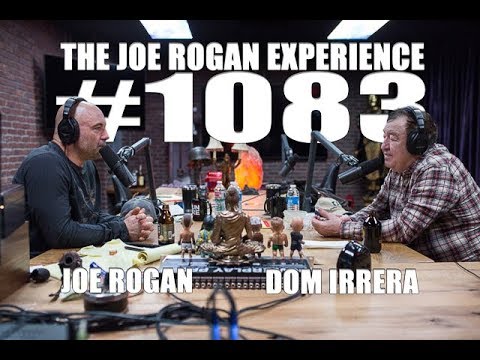
Joe Rogan Experience #1083 - Dom Irrera
Joe Rogan (host), Dom Irrera (guest), Guest (unidentified third person in studio) (guest), Guest (unidentified fourth person in studio) (guest)
In this episode of The Joe Rogan Experience, featuring Joe Rogan and Dom Irrera, Joe Rogan Experience #1083 - Dom Irrera explores joe Rogan and Dom Irrera Trade War Stories, Jokes, And Wisdom Joe Rogan and veteran comic Dom Irrera spend the episode reminiscing about decades in stand-up, especially life at The Comedy Store and the evolution of the LA comedy scene.
Joe Rogan and Dom Irrera Trade War Stories, Jokes, And Wisdom
Joe Rogan and veteran comic Dom Irrera spend the episode reminiscing about decades in stand-up, especially life at The Comedy Store and the evolution of the LA comedy scene.
They bounce between topics like touring in Ireland and Australia, club politics, podcasting’s power, hunting and food ethics, fighting and martial arts, and how fame and media have changed.
They also dig into touchier areas—Louis C.K. and #MeToo, school shootings, gun control, the Olympics and NCAA exploitation—trying to balance empathy, responsibility, and comedy.
Underlying the jokes is a recurring theme: how time, experience, family, and hardship shape perspective, soften egos, and deepen both their comedy and their compassion.
Key Takeaways
The Comedy Store’s renaissance shows how scenes cycle and revive.
Irrera describes The Comedy Store’s shift from half-empty nights to packed rooms fueled by Rogan, Burr, D’Elia and others returning, illustrating how a few key comics can revitalize an entire club ecosystem.
Get the full analysis with uListen AI
Different clubs cultivate distinctly different crowds—and comics adjust accordingly.
Dom breaks down LA venues (Laugh Factory = young/foreign, Comedy Store = tourist cross-section, Improv = Hollywood slick), highlighting how comics tailor material and energy to room culture.
Get the full analysis with uListen AI
Hunting forces a direct, uncomfortable connection to meat that most avoid.
Rogan explains that killing and eating what you hunt removes the psychological buffer of shrink‑wrapped meat, making you confront what meat really is and accept or reject it more consciously.
Get the full analysis with uListen AI
Wrestling and jiu-jitsu form the most practical base for real fighting.
Drawing on his martial arts background, Rogan argues wrestling lets you choose where a fight happens (stand-up vs. ...
Get the full analysis with uListen AI
Podcasting rewards authenticity more than the polished late-night format.
Both comics criticize 5‑minute, canned TV spots and praise long-form podcasts as the best way to truly know someone, with Rogan openly modeling his media choices on Tosh’s refusal to be overexposed.
Get the full analysis with uListen AI
The #MeToo cases are not all equivalent, and context matters.
Rogan sees Cosby and Weinstein as essentially unrecoverable, but Louis C. ...
Get the full analysis with uListen AI
Seeing people as someone’s former child deepens empathy for even the worst outcomes.
Talking about school shooters and homeless people, Rogan emphasizes remembering that every broken adult was once a baby in someone’s arms, which for him (especially after having kids) shifts reactions from pure anger toward compassion and systemic thinking.
Get the full analysis with uListen AI
Notable Quotes
“You know the place is slow when Paulie and I are the most famous people.”
— Dom Irrera
“The beautiful thing about America, Dom, is you can do whatever the fuck you want.”
— Joe Rogan
“Imagine you have a kid… one day that becomes a school shooter.”
— Joe Rogan
“Some of my best moments in life have been after I felt terrible… those bad moments can be an incentive for you to move forward and progress.”
— Joe Rogan
“I really believe this generation is better than the generation I started with, because they got to see them and grow from them.”
— Dom Irrera
Questions Answered in This Episode
How should the comedy community decide when, or if, someone like Louis C.K. has done enough to return—what would real accountability look like?
Joe Rogan and veteran comic Dom Irrera spend the episode reminiscing about decades in stand-up, especially life at The Comedy Store and the evolution of the LA comedy scene.
Get the full analysis with uListen AI
If wrestling and jiu-jitsu are the most effective bases for real fighting, how should that change how self-defense is taught to the public?
They bounce between topics like touring in Ireland and Australia, club politics, podcasting’s power, hunting and food ethics, fighting and martial arts, and how fame and media have changed.
Get the full analysis with uListen AI
What specific reforms to gun laws and mental health systems could realistically reduce mass shootings without triggering the ‘they’ll take all our guns’ panic Rogan describes?
They also dig into touchier areas—Louis C. ...
Get the full analysis with uListen AI
Should Olympic and NCAA athletes be paid directly, and if so, how could revenue-sharing be structured to avoid turning them into the “unpaid labor” Rogan criticizes?
Underlying the jokes is a recurring theme: how time, experience, family, and hardship shape perspective, soften egos, and deepen both their comedy and their compassion.
Get the full analysis with uListen AI
In a world of podcasts and direct-to-fan platforms, is there any real career value left in traditional late-night TV spots for stand-up comics?
Get the full analysis with uListen AI
Transcript Preview
And four, and three, and two, and one. Dominic Herrera.
Oh, what a way to lead the show there, Joe Rogan.
I like to do it that way. I don't know why I've been talking to you like that forever, but I have.
I know, you al- (laughs) We- we always go into those Irish accents.
(laughs)
They would throw us out of Ireland with those accents.
I think it was when you started touring in Ireland on a regular basis.
Uh-huh.
Like-
That's a long time, Joe.
Yeah. But you, you've always been touring in Ireland. I remember you talking about how great Ireland was, (sniffs) decades ago.
Yeah.
Yeah.
Right?
You've always loved it there, huh?
I've been to the Kilkenny Festival more than any other white guy. No, I mean American.
(laughs)
(laughs)
How long you been there? How many, how many times?
I think, like, 22.
Holy shit.
And R- Rich Hall al- also went a lot, but he's, he's based in London. I'm the only one that actually still comes over.
Rich Hall. He's not-
Remember him? He did the Sniglets.
Yeah.
He was on Saturday Night Live for a-
He's based in London now?
Yeah, he likes it better there, you know.
Huh.
He, I mean, he still works here once in a while. He's got a place in Montana. But he was on Saturday Night Live, and he did that Sniglets book, and it was a big smash.
I paid to see him live when I was one week into comedy. He was performing at Stitches, and I went there live to see him.
Stitches, oh, Stitches-
There he is.
... in Boston?
Yeah. So he lives in London now. Is he still doing standup?
Yeah, yeah. I saw him at the, uh, Laugh Factory in Vegas a couple weeks ago. Him, Harris Peat, and Blake Clark.
He always used Harris Peat. Like, he would take Harris Peat-
Yeah.
... on the road with him, and Harris Peat used to watch his Montana place for him.
Right.
That's hilarious.
He was a joyless doorman. Like, he made the comedy (laughs) experience tense and miserable.
Yeah.
But it's pretty funny.
He was, he was rough as a doorman. Harris is... But he's one of those old staples of The Comedy Store-
Yeah.
... which is almost kind of weird, not having him around.
Yeah, yeah. He... I mean, he made it so uninviting, you know. Like-
Yeah.
... just have a smile to show to people, you know, they're going to have a good time. He made it like a military thing, you know.
Yeah, it wasn't good. Yeah. (laughs) And then there was Chewy, who was always the, the, the, the guy who was sort of working the door, guard the bar-
Install uListen to search the full transcript and get AI-powered insights
Get Full TranscriptGet more from every podcast
AI summaries, searchable transcripts, and fact-checking. Free forever.
Add to Chrome