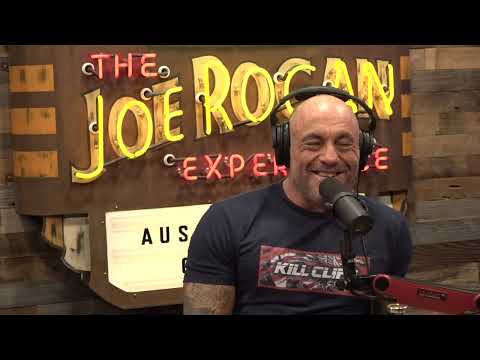
Joe Rogan Experience #2092 - Mariana van Zeller
Joe Rogan (host), Narrator, Mariana van Zeller (guest), Joe Rogan (host), Joe Rogan (host), Joe Rogan (host), Joe Rogan (host)
In this episode of The Joe Rogan Experience, featuring Joe Rogan and Narrator, Joe Rogan Experience #2092 - Mariana van Zeller explores inside Global Black Markets: From Coup Escapes To Organ Scams Joe Rogan interviews investigative journalist Mariana van Zeller about season four of her series *Trafficked*, highlighting her escape from a military coup in Niger and her continued work in some of the world’s most dangerous black markets.
Inside Global Black Markets: From Coup Escapes To Organ Scams
Joe Rogan interviews investigative journalist Mariana van Zeller about season four of her series *Trafficked*, highlighting her escape from a military coup in Niger and her continued work in some of the world’s most dangerous black markets.
They explore illicit economies including illegal gold and ape trafficking, hash and cartel activity, fake pharmaceuticals, body-part and organ markets, sextortion rings, and contract killing operations in the U.S., Africa, and Latin America.
The conversation repeatedly returns to how poverty, inequality, and broken legal systems fuel these underground trades, from cobalt mining for smartphones to counterfeit medicines driven by U.S. drug prices.
Despite chronic exposure to brutality and corruption, van Zeller emphasizes that systemic failures and lack of opportunity, rather than innate evil, are what most often drive people into criminality.
Key Takeaways
Black markets thrive where governance is weak and inequality is high.
From apes in Congo to assassins in South Africa and cartel sicarios in Mexico, van Zeller consistently finds that people enter illicit trades when legal jobs, safety, and basic services are absent.
Get the full analysis with uListen AI
Consumer demand in rich countries quietly sustains extreme exploitation.
Gold and diamonds for jewelry, cobalt for smartphones, exotic pets, cheap online meds, and even organs are all linked to brutal conditions and, at times, lethal violence at the bottom of these supply chains.
Get the full analysis with uListen AI
The U.S. healthcare and prison systems directly fuel black markets.
Sky‑high drug prices push an estimated 20 million Americans to seek medications on the black market; punitive, for‑profit incarceration and weak regulation around pharmaceuticals and body parts create massive criminal opportunity.
Get the full analysis with uListen AI
Technology-enabled scams like sextortion can turn fatal in days.
Teens coerced into sharing explicit images are extorted for money under threat of exposure; some, like the Utah boy discussed, kill themselves within days, showing how fast online manipulation can become lethal.
Get the full analysis with uListen AI
Legalization and regulation models matter more than simple prohibition.
Portugal’s decriminalization of all drugs dramatically reduced HIV, overdoses, and incarceration, whereas U. ...
Get the full analysis with uListen AI
Many ‘villains’ in black markets are also victims of circumstance.
Contract killers, poachers, scammers, and organ brokers often have histories of trauma, poverty, or family loss; van Zeller repeatedly finds that with different opportunities, many would not be in crime at all.
Get the full analysis with uListen AI
There is little transparency or consent in the trade of human bodies and organs.
From U. ...
Get the full analysis with uListen AI
Notable Quotes
“Nobody is born wanting to be a criminal. You are put in that position.”
— Mariana van Zeller
“Your choices are only as good as the opportunities you’re given.”
— Mariana van Zeller
“We use human beings as batteries to generate money. Just put them inside this box and you can generate money with human beings.”
— Joe Rogan
“It’s not entirely humanity that’s broken. It’s the systems we’ve created.”
— Mariana van Zeller
“That is one of the best indicators of how twisted we are—that the height of technology you’re using to virtue-signal is literally made by slaves.”
— Joe Rogan
Questions Answered in This Episode
If black markets are so clearly driven by inequality and broken systems, what concrete policy changes would most effectively shrink them without causing new harms?
Joe Rogan interviews investigative journalist Mariana van Zeller about season four of her series *Trafficked*, highlighting her escape from a military coup in Niger and her continued work in some of the world’s most dangerous black markets.
Get the full analysis with uListen AI
How should individual consumers in wealthy countries adjust their behavior when their gold, smartphones, pets, or medications are likely tied to exploitation and violence?
They explore illicit economies including illegal gold and ape trafficking, hash and cartel activity, fake pharmaceuticals, body-part and organ markets, sextortion rings, and contract killing operations in the U. ...
Get the full analysis with uListen AI
Can a country like the United States realistically implement a Portugal-style drug decriminalization model given its entrenched prison and pharmaceutical interests?
The conversation repeatedly returns to how poverty, inequality, and broken legal systems fuel these underground trades, from cobalt mining for smartphones to counterfeit medicines driven by U. ...
Get the full analysis with uListen AI
What ethical framework should govern the use of human remains and organs for science, art, or medicine, and how can families’ informed consent be meaningfully guaranteed?
Despite chronic exposure to brutality and corruption, van Zeller emphasizes that systemic failures and lack of opportunity, rather than innate evil, are what most often drive people into criminality.
Get the full analysis with uListen AI
At what point does undercover law enforcement cross the line from preventing crime to manufacturing it, and how should those boundaries be enforced?
Get the full analysis with uListen AI
Transcript Preview
(drumbeats) Joe Rogan podcast, check it out.
The Joe Rogan Experience.
Train by day, Joe Rogan podcast by night, all day. (instrumental music) Hello.
Hi.
Good to see you my friend. How's things?
So good to see you. Great. Thanks so much for having me again.
I'm so happy every time I see you that you're alive and well.
(laughs)
'Cause you do some wild stuff, lady. (laughs) You get involved in some, some situations.
I do. This, this past year was crazy.
Yeah?
Yeah. This, uh, we just had season four come out and it's my favorite season for many reasons, but, um, also because it was quite the adventure.
What did you get involved with this season?
Oof. Um, (laughs) well, uh, it ended with a military coup in Africa, where my team and I-
Oh, boy.
... got stuck. Mm-hmm. So that was sort of the-
What part of Africa?
... kickoff to all of it. Um, it was in Niger, so it's in the Sahel region of Africa. The US has actually a military presence. Remember a few years ago when there were these, uh, four US marines that were killed in the Sahel in Niger, and nobody even knew they were there?
Mm-hmm.
Well, there's actually over 1,000 troops stationed in Niger. And, uh, we were there in a little town called Agadez, which is in sort of the southern border of the Sahara Desert, and we were doing a story about gold mining. So the story itself was incredible. We had to, you know, we had, uh, con- military co- convoy with us because it's incredibly dangerous part of the world. You've got terrorism, you've got ISIS, Al-Qaeda, Boko Haram, you've got kidnappers, so it's very, very dangerous.
Mm.
We'd gone there with the permission of the government, but only if we, we had to have a military con- uh, convoy with us at all, all times. So we're talking about four tru- armored trucks, uh, with lots of trained soldiers that every time we stopped, they'd get out of the trucks and basically point their guns all around. They were very well-trained.
Wow.
A lot of them are actually trained by the American military. And, uh, we went out into the desert and visited these gold mines which are crazy. It was an eight-hour off-roading into the desert to arrive at these illegal, unregulated mines. We're going down these tunnels and it's, you know, h- uh, a hundred meters down, hand, uh, dug tunnels with no, nothing to buttress them, no safety precautions or anything.
Oh.
But we filmed it all and we get to the end, and there's people basically mining for gold. And, and again, constantly with the idea that the military is telling us, "Okay, we have to film fast, we have to do this fast. We can't be out at night." So we went to a sort of safety, uh, more safe location to sleep that night under the stars. And then the next day, it's time to come back to Agadez, the town, which is about 100 miles but takes anywhere between, like, three to 12 hours to get because you can, lots of things can happen along the way. And we arrived in Agadez and we got word that there had been a military coup and the president had been deposed, and, uh, he was now being kidnapped inside the presidential palace, basically was stuck there with his family, and that we were about to lose our military compound and security. And they closed all the land borders and the airspace, and we were stuck, uh, with no way out 'cause you can't travel by road without security in that part of the world, and there were no planes leaving, so we were stuck.
Install uListen to search the full transcript and get AI-powered insights
Get Full TranscriptGet more from every podcast
AI summaries, searchable transcripts, and fact-checking. Free forever.
Add to Chrome