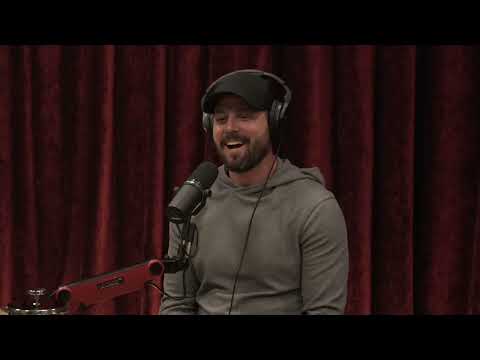
Joe Rogan Experience #1857 - Seth Dillon
Joe Rogan (host), Seth Dillon (guest), Narrator
In this episode of The Joe Rogan Experience, featuring Joe Rogan and Seth Dillon, Joe Rogan Experience #1857 - Seth Dillon explores free Speech, Satire, and Culture Wars: Joe Rogan Meets Babylon Bee Joe Rogan and Babylon Bee CEO Seth Dillon discuss the Bee’s rise as a conservative satire outlet, focusing on its clashes with big tech over jokes about transgender issues, gender ideology, and ‘misinformation.’
Free Speech, Satire, and Culture Wars: Joe Rogan Meets Babylon Bee
Joe Rogan and Babylon Bee CEO Seth Dillon discuss the Bee’s rise as a conservative satire outlet, focusing on its clashes with big tech over jokes about transgender issues, gender ideology, and ‘misinformation.’
They argue that comedy’s role is to puncture dominant narratives and mock bad ideas, and warn that content moderation regimes on platforms like Twitter increasingly amount to ideological enforcement rather than safety.
The conversation broadens into debates over abortion, transgender participation in sports and spaces, grooming language, capitalism, social media’s impact on discourse, and the importance of modeling values for children.
Both agree that open debate and the freedom to joke—even offensively—are essential for a healthy society, and that suppressing speech deepens polarization and erodes trust in institutions.
Key Takeaways
Satire fills a demand where mainstream comedy is constrained by taboos.
Dillon argues The Babylon Bee grew rapidly because it made jokes about topics and narratives—especially progressive ones—that mainstream, left-leaning comedy avoided, meeting a clear audience demand.
Get the full analysis with uListen AI
Current content moderation often enforces ideology rather than safety.
Examples like the Bee’s ban for calling Rachel Levine 'Man of the Year' and the banning of 'groomer' as hate speech show platforms punishing perspectives while allowing explicit content and harassment that align with preferred politics.
Get the full analysis with uListen AI
Compelled affirmation of contested beliefs is dangerous precedent.
They argue that forcing users to delete posts while 'confessing' to hateful conduct, or to adopt specific language (e. ...
Get the full analysis with uListen AI
Debate and criticism are healthier than censorship for resolving hard issues.
Whether discussing abortion, trans participation in sports, or drag events with kids, both contend that open argument and even harsh jokes are better ways to stress‑test ideas than silencing one side as hateful.
Get the full analysis with uListen AI
Twitter’s format incentivizes performative cruelty and shallow thinking.
Rogan emphasizes that character limits and public scorekeeping (likes, ratios) reward 'dunking' over understanding, making it hard to have the kind of nuanced, respectful disagreement they model in-person.
Get the full analysis with uListen AI
Values and resilience must be modeled, not outsourced to institutions.
In discussing kids, social media, and education, Rogan stresses parents need to model discipline, kindness, and critical thinking, rather than relying on schools or platforms that may push ideologies or shield kids from all discomfort.
Get the full analysis with uListen AI
You can critique systems while still defending free speech for opponents.
Both are sharply critical of media bias, big-tech–government collusion (e. ...
Get the full analysis with uListen AI
Notable Quotes
“I don’t believe that the truth is hate speech.”
— Seth Dillon
“The absurd has only become sacred because it hasn’t been sufficiently mocked.”
— Seth Dillon
“Comedy is supposed to be funny. This whole punching up, punching down—things are just supposed to be funny.”
— Joe Rogan
“We have a mental health problem described as a gun problem.”
— Joe Rogan
“We just had a peaceful disagreement about things. That can be done.”
— Seth Dillon
Questions Answered in This Episode
Where should platforms draw the line between protecting users from harm and allowing controversial or offensive satire about protected groups?
Joe Rogan and Babylon Bee CEO Seth Dillon discuss the Bee’s rise as a conservative satire outlet, focusing on its clashes with big tech over jokes about transgender issues, gender ideology, and ‘misinformation.’
Get the full analysis with uListen AI
Is it possible to design a social media platform that preserves open debate without devolving into harassment and tribal pile-ons?
They argue that comedy’s role is to puncture dominant narratives and mock bad ideas, and warn that content moderation regimes on platforms like Twitter increasingly amount to ideological enforcement rather than safety.
Get the full analysis with uListen AI
How should society balance compassion for transgender individuals with fairness in women’s sports and safety in sex‑segregated spaces?
The conversation broadens into debates over abortion, transgender participation in sports and spaces, grooming language, capitalism, social media’s impact on discourse, and the importance of modeling values for children.
Get the full analysis with uListen AI
In the abortion debate, is there any morally coherent compromise between 'life begins at conception' and 'my body, my choice,' or are the frameworks irreconcilable?
Both agree that open debate and the freedom to joke—even offensively—are essential for a healthy society, and that suppressing speech deepens polarization and erodes trust in institutions.
Get the full analysis with uListen AI
Are we underestimating the long-term impact of self-censorship in comedy and journalism on our ability to identify and correct bad ideas?
Get the full analysis with uListen AI
Transcript Preview
(drumbeats) Joe Rogan podcast, check it out.
The Joe Rogan Experience.
Train by day, Joe Rogan podcast by night. All day. (instrumental music plays) Oh, hello, Seth.
Hey, Joe.
Nice to meet you. Officially. (laughs)
Nice to meet you in person finally.
Yeah, man. It's, uh, what has this been like for you? The Babylon Bee rise and attack, and all the chaos. Wh- when did you guys start?
2016.
What was the impetus?
The impetus was, uh, nobody was doing it. You know? There's nobody that's, like, doing satirical comedy from, like, a conservative perspective, I guess. Um, Adam Forge is the guy that founded it, and, uh, and it just ... I mean, I don't know. There was a void there. Nobody was filling that void, so he's like ... He, he publishes this site using, like, a WordPress template and, like, puts out some articles, and they go viral so quick. Like, within two months, he's getting millions of visits, so. I don't know. He just had a sense that, like, somebody ... You know, there was so much comedy. Like, the left dominated comedy. They were just dominating it. Nobody-
Why do you think that is?
There was no answer to that. Um, that's a good question. I mean ... So ev- everything ... Like, all of these institutions, the insti- like, you know, the media, education institutions, corporations, all of these things, they're all dominated by the left. So, comedians, though ... I mean, as you know, there's been this, like, there's been this opportunity, this big opportunity to kind of, like, step in and provide comedy that makes jokes that the left isn't willing to make. And so they were dominating for a while, but now I think things have shifted, because you've got all these rules about what you can and can't joke about, and the people who are willing to make jokes that kind of, like, sidestep those rules, uh, they're, you know, they're meeting a demand.
Yeah, the meme space, though, has always been very right wing in a lot of ways, because it's like the thing to make fun of. Because since the media has been so dominated by the left, whenever there's, like, a narrative that just gets pushed w- like, that sort of ignores logic and ignores reality, there's like a thing that happens where someone goes, "Yeah, but what about this?" And, like, that has been, like, the meme space. Like, memes have always been, like, very funny.
Right.
Like some of the really funny Trump memes and some of the very funny anti-Bi- Biden memes and COVID memes, they, they were kind of like on, on that vein.
Yeah. Well, you know, yeah. When you've got a, when you've got a narrative that's being advanced and it's being pushed on everybody, you know, like, I don't know. I, I fe- ... My personal take on it is that comedian's job is to, like, poke holes in it, you know?
Install uListen to search the full transcript and get AI-powered insights
Get Full TranscriptGet more from every podcast
AI summaries, searchable transcripts, and fact-checking. Free forever.
Add to Chrome