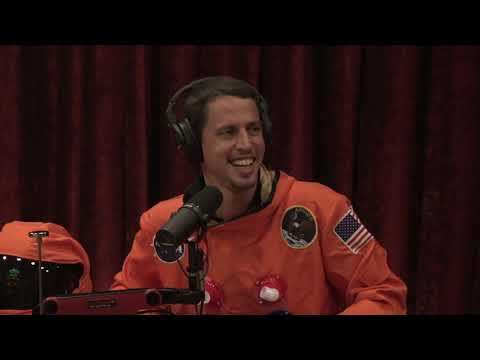
Joe Rogan Experience #1720 - Tony Hinchcliffe & Brian Redban
Narrator, Narrator, Joe Rogan (host), Tony Hinchcliffe (guest), Brian Redban (guest), Tony Hinchcliffe (guest), Brian Redban (guest), Narrator, Brian Redban (guest), Tony Hinchcliffe (guest), Tony Hinchcliffe (guest), Narrator, Brian Redban (guest), Brian Redban (guest), Narrator, Narrator, Brian Redban (guest), Narrator, Narrator
In this episode of The Joe Rogan Experience, featuring Narrator and Narrator, Joe Rogan Experience #1720 - Tony Hinchcliffe & Brian Redban explores rogan, Hinchcliffe, Redban Riff On COVID, Culture Wars, Comedy, Chaos Joe Rogan, Tony Hinchcliffe, and Brian Redban spend a long, freewheeling conversation bouncing between COVID culture, media distrust, combat sports, drugs, technology, and the evolution of comedy.
Rogan, Hinchcliffe, Redban Riff On COVID, Culture Wars, Comedy, Chaos
Joe Rogan, Tony Hinchcliffe, and Brian Redban spend a long, freewheeling conversation bouncing between COVID culture, media distrust, combat sports, drugs, technology, and the evolution of comedy.
They mock what they see as performative masking, vaccine mandates that ignore natural immunity, and the broader tribalism around the pandemic, while also acknowledging vaccines likely reduce severe illness.
The trio dig into historical brutality (Columbus, Comanches), modern censorship and Big Tech incentives, and the oddities of contemporary politics and media narratives.
They close by celebrating Kill Tony as a brutal but fertile proving ground for new comics and as a counterbalance to what they depict as a more constrained, ‘woke’ comedy landscape.
Key Takeaways
COVID responses became moral signaling as much as public health.
They argue that practices like masking alone outdoors or on camera but not backstage often serve as ‘virtue signaling’ theater rather than rational risk management, deepening cultural divides.
Get the full analysis with uListen AI
Natural immunity is being politically downplayed in mandate debates.
Rogan repeatedly stresses that recovered COVID patients often have strong, long-lasting immunity and questions policies that ignore antibody testing when threatening people’s jobs over vaccination.
Get the full analysis with uListen AI
Perverse incentives and revolving doors erode trust in health authorities.
They highlight how FDA officials can later work for companies like Pfizer, and how generic drugs like ivermectin conflict with patented antivirals, fueling suspicion that profit skews public guidance.
Get the full analysis with uListen AI
Human tribalism and fear drive much of today’s polarization.
Using examples from Comanche warfare to chimp border raids to COVID mask/vax camps, Rogan frames modern culture wars as the same ancient ‘us vs. ...
Get the full analysis with uListen AI
Extreme weight cutting in combat sports is dangerously normalized.
Rogan describes fighters nearly dying to make weight and notes that brain rehydration lags behind body rehydration, meaning athletes step into fights with increased vulnerability to head trauma.
Get the full analysis with uListen AI
Algorithms reward outrage, pushing people toward more extreme content.
They reference The Social Dilemma and argue that recommendation engines surface whatever keeps users engaged—often anger and conflict—distorting what people think is ‘normal’ discourse.
Get the full analysis with uListen AI
Kill Tony functions as both brutal meritocracy and community engine for comics.
The show’s one-minute sets and ruthless feedback, they say, quickly reveal who has potential while creating a vibrant local ecosystem where new comics can get noticed and seasoned comics sharpen skills.
Get the full analysis with uListen AI
Notable Quotes
“We’re gonna look back on this as a specially stupid time.”
— Joe Rogan (on performative COVID masking)
“You can’t tell someone their job depends on taking a chance with a new medication they might not need because they already had COVID and recovered.”
— Joe Rogan
“There are two different kinds of people. The kind that want to make a lot of money off drugs should be very different from the kind that want to regulate drugs and make sure everybody’s safe.”
— Joe Rogan
“It’s wild to watch people that don’t handle anxiety and fear well getting thrust into an undeniable worldwide anxiety and fear conference.”
— Joe Rogan
“Kill Tony is all just about being funny, which is one of the things dangerously close to being exterminated in some circles in today’s comedy.”
— Joe Rogan
Questions Answered in This Episode
How should public health policy balance vaccine mandates with documented natural immunity without incentivizing people to get infected intentionally?
Joe Rogan, Tony Hinchcliffe, and Brian Redban spend a long, freewheeling conversation bouncing between COVID culture, media distrust, combat sports, drugs, technology, and the evolution of comedy.
Get the full analysis with uListen AI
What structural changes, if any, could realistically reduce conflicts of interest between regulators (like the FDA) and pharmaceutical companies?
They mock what they see as performative masking, vaccine mandates that ignore natural immunity, and the broader tribalism around the pandemic, while also acknowledging vaccines likely reduce severe illness.
Get the full analysis with uListen AI
To what extent are social media algorithms responsible for rising political extremism, and what alternative designs could blunt that effect without heavy-handed censorship?
The trio dig into historical brutality (Columbus, Comanches), modern censorship and Big Tech incentives, and the oddities of contemporary politics and media narratives.
Get the full analysis with uListen AI
Is there a reform path for combat sports’ weight-cutting culture that preserves competition but meaningfully reduces brain and organ damage?
They close by celebrating Kill Tony as a brutal but fertile proving ground for new comics and as a counterbalance to what they depict as a more constrained, ‘woke’ comedy landscape.
Get the full analysis with uListen AI
How can comedy shows like Kill Tony maintain a free-speech, anything-goes ethos while staying accessible enough to bring new audiences into stand-up?
Get the full analysis with uListen AI
Transcript Preview
(drumming music) Joe Rogan podcast, check it out.
The Joe Rogan Experience.
Train by day, Joe Rogan podcast by night, all day. (rock music plays) Oh, hello, boys.
Hey.
Hello.
(laughs) This is gonna be one of those shows.
(laughs)
How's it sound with that on?
It sounds perfectly normal.
(laughs)
(laughs)
(laughs) Today, how many times have you, like, heard... I've heard videos on YouTube where, like, th- this guy was reviewing watches and he was wearing a mask while he was reviewing the video. So, you could, like, hear the (muffled sound) muffle thing. I'm like, this is gonna be... Like, we're gonna look back on these days with the, the masks and all the, the people that were, like, taking them off and then putting them back on to take photos. Like, all the times that politicians have been busted doing that. And we're gonna say, "This was, like, a specially stupid time."
So stupid.
Specially stupid. Not saying that it's stupid to wear a mask. I'm not saying that. I'm just saying the virtue signaling of it.
Yeah.
The, the theater of it all.
Yeah.
I-
People put on the mask before, like, giving a speech and then-
Yeah.
... Yeah.
Well, they have it off and they're hanging out backstage, and then there's a video of them putting it on, then getting in front of everybody, and then taking it off in front of everybody giving the speech. Like, it's just theater. Like, when Rand Paul was in front of Fauci and he said, you know, "Your, your vaccine, why are you wearing this mask?" It's theater. He's, he was right. It is, it's a theater. It's to let everybody know you're a good person. I'm a good person. Look at my mask.
Yeah.
I talked to somebody on the phone that was use- that had a mask on. I was like, "Where are you?" And they're like, "In my hotel room." I'm like, "What the fuck are you doing calling me with a mask on? Are you by yourself?"
Was it Ian Edwards? Were you talking to Ian Edwards?
(laughs)
(laughs)
Ian double masks backstage with us.
Yeah.
We're hanging out backstage. He's double masked. I'm like, "Hey, bro, we've all been tested, like you. You know, we're all good."
Yeah.
He's just like, "I'm more comfortable with this thing on."
I don't get it.
It's California. They got those people scared.
Yeah.
I would like to see, like, if there was a chart of, like, how worried people are about the pandemic vers- you know, based on where they live, if there's, like, pockets of worry.
I think there's no doubt about that, right? Like, I mean, like, the people that I see in LA on Twitter and stuff, and just when we visited there, like, it's a whole different world. I saw more masks in a few hours than I saw in a month here in Texas.
Install uListen to search the full transcript and get AI-powered insights
Get Full TranscriptGet more from every podcast
AI summaries, searchable transcripts, and fact-checking. Free forever.
Add to Chrome