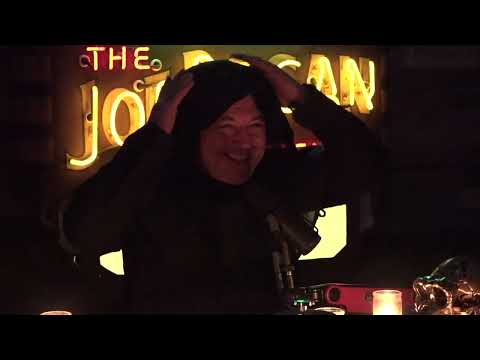
Joe Rogan Experience #1953 - Duncan Trussell
Duncan Trussell (guest), Narrator, Joe Rogan (host), Joe Rogan (host), Narrator, Narrator, Narrator, Narrator, Narrator, Narrator
In this episode of The Joe Rogan Experience, featuring Duncan Trussell and Narrator, Joe Rogan Experience #1953 - Duncan Trussell explores rogan and Trussell Explore Plagues, Propaganda, AI, and Human Collapse Joe Rogan and Duncan Trussell range from Black Plague medicine and COVID-era masks to the future of nanotech, mRNA treatments, and AI-driven society. They question how past and present institutions—medicine, funerals, corporations, governments—use propaganda, regulatory capture, and profit motives to shape public belief and behavior.
Rogan and Trussell Explore Plagues, Propaganda, AI, and Human Collapse
Joe Rogan and Duncan Trussell range from Black Plague medicine and COVID-era masks to the future of nanotech, mRNA treatments, and AI-driven society. They question how past and present institutions—medicine, funerals, corporations, governments—use propaganda, regulatory capture, and profit motives to shape public belief and behavior.
The conversation dives into ethical blind spots like child labor in cobalt and chocolate supply chains, for‑profit prisons, drug policy, homelessness, and automation’s impact on work and universal basic income. They repeatedly return to the idea that modern civilization may be far less stable and far more exploitative than people want to admit.
Rogan and Trussell also unpack AI (ChatGPT), bot manipulation on social media, and simulation-style thought experiments about machine overlords, planetary resets, and UFOs policing nuclear weapons. Throughout, they mix dark humor, personal stories (sobriety, pandemic life, building Rogan’s new comedy club), and speculative philosophy about where humanity is headed.
Key Takeaways
Our descendants will likely see today’s medicine as barbaric—just as we see plague-era practices.
Rogan and Trussell argue that x‑rays, crude chemo, and broad-spectrum antibiotics may soon look as primitive as leeches and humors once nanotech, precision genetics, and advanced mRNA medicines mature.
Get the full analysis with uListen AI
Masks, lockdowns, and COVID narratives show how fear and politics can override open scientific debate.
They question the efficacy of cloth masks, discuss N95s’ partial benefit, and criticize how lab‑leak skeptics and vaccine critics were suppressed instead of being debated, which erodes public trust.
Get the full analysis with uListen AI
Propaganda works by hitching brands to moral movements and turning consumers into unpaid evangelists.
Citing Edward Bernays, they highlight how companies attach products to social causes (ethically sourced coffee, pandemic ads) so buying feels like activism, hijacking people’s altruistic instincts.
Get the full analysis with uListen AI
Modern comfort is built on invisible suffering—especially child labor and dangerous extraction economies.
They explore child labor in cocoa and cobalt, noting that smartphones, EVs, and cheap chocolate are tied to horrific conditions that Western consumers largely ignore or rationalize away.
Get the full analysis with uListen AI
Many ‘normal’ death practices are driven by profit and propaganda, not health or spiritual necessity.
The funeral industry’s use of embalming and expensive coffins is traced back to Civil War-era formaldehyde logistics and then to manipulative upselling, severing humans from natural decomposition cycles.
Get the full analysis with uListen AI
Drug laws and mass incarceration reveal a system that protects industries more than public health.
With ~45% of federal inmates in for drug offenses, they argue that scheduling psychedelics, criminalizing cannabis, and for‑profit prisons reflect lobbying and revenue needs more than updated science.
Get the full analysis with uListen AI
AI and bots may already be steering culture in ways we don’t perceive, raising existential risks.
They describe nerfed ChatGPT, jailbreaks like ‘DAN,’ and estimates that a huge share of Twitter accounts might be bots, suggesting public opinion and outrage cycles could be heavily synthetic and ultimately guided by non-human intelligences.
Get the full analysis with uListen AI
Notable Quotes
“You created the Olympics for sociopathic narcissists. It's called the government.”
— Duncan Trussell
“If people in American cities had to live like cobalt miners, everyone would be up in arms—yet we’re tweeting about justice on phones made by slaves.”
— Joe Rogan
“Propaganda becomes really dangerous when you interiorize it. You go from seeing the bullshit to becoming the vessel that spreads it.”
— Duncan Trussell
“How different is the world now versus 5,000 years ago? The feudalism and monarchy are still here—they’re just camouflaged.”
— Duncan Trussell
“Am I wrong to think this [AI] is going to destroy society?”
— Joe Rogan
Questions Answered in This Episode
If so much of our comfort relies on hidden exploitation, what practical steps—beyond boycotts—can individuals and governments realistically take to reduce that harm?
Joe Rogan and Duncan Trussell range from Black Plague medicine and COVID-era masks to the future of nanotech, mRNA treatments, and AI-driven society. ...
Get the full analysis with uListen AI
How should we balance emergency public health responses with the need for transparent, open scientific debate so we don’t repeat COVID-era suppression and overreach?
The conversation dives into ethical blind spots like child labor in cobalt and chocolate supply chains, for‑profit prisons, drug policy, homelessness, and automation’s impact on work and universal basic income. ...
Get the full analysis with uListen AI
At what point does AI and automation make the current labor-based economic model unworkable, and what would a humane transition to universal basic income or a post-work society look like?
Rogan and Trussell also unpack AI (ChatGPT), bot manipulation on social media, and simulation-style thought experiments about machine overlords, planetary resets, and UFOs policing nuclear weapons. ...
Get the full analysis with uListen AI
Given how easily rituals like embalming or drug criminalization became normalized through propaganda, what current ‘common sense’ practices are we most likely to see as insane in 100 years?
Get the full analysis with uListen AI
If large portions of online discourse are driven by bots and algorithmic curation, how can an ordinary person meaningfully distinguish authentic public opinion from manufactured consensus?
Get the full analysis with uListen AI
Transcript Preview
(drum roll) Joe Rogan podcast, check it out.
The Joe Rogan Experience. Train by day, Joe Rogan podcast by night, all day. (rock music plays) Hello, Joe.
Hello, Joe. Here we go.
(laughs)
(laughs)
(laughs)
How are you feeling?
Good, dude.
Safe and effective?
Yeah, for sure. I feel safe-ish right now.
I feel safer.
I do love that you have the boosters in the... When you come in, you get all your guys a booster.
(laughs)
I appreciate that, man.
Can you imagine that they used to use these things to protect themselves from disease? They'd fill the, the tube, the beak, up with herbs?
I can imagine it. I d- I can totally imagine, in the time of the Black Plague-
Yeah.
... d- doing anything you could possibly do to not get the Black Plague.
So, do you think that people just walked around like this all day?
I think it was doctors. I don't think it was, uh-
Only doctors?
Yeah, I don't think it was, um, like, uh, I don't think most people could probably afford these masks.
Really?
But I think if you were a plague doctor, you'd, like, throw one of these things in and just walk into a fucking house where someone's got bubonic plague.
Ah.
Can you imagine dying of bubonic plague, and this is, like, the last thing you see is this?
Oh, my God.
"I will pop your boil now. Let me extract pus from your boil."
Imagine being a person who has to go visit people that has bubonic plague. You're a doctor. You don't have it. And you're gonna go treat a person who has it, with what? Like, what are you treating them with back then?
That's a great question. I mean, I imagine l- like, probably, like, crazy medieval shit, like-
Yeah. Chicken blood?
Chicken blood, leeches.
Yeah.
Probably mercury or something, pouring mercury into their mouth.
What kind of fucking medicine did they even have back then?
Well, I think they had, like, it's, like, different theories of disease. You know, you can look at, like, the different theories of disease. Some of them appear again. Like, one of them is, like, diseases are i- like, viruses are a lie. Disease isn't caused by viri. Disease is caused by, like, dysfunction in the system.
Mm.
Basically. So, viruses are not, have nothing to do with it at all. And so, they, they look, and that's where you get, like, all of, like, folk medicine and stuff like that. I think it was, what's it called? Humors? It was called humors. You've got three different humors in you, and if one's out of balance, then that, you treat that humor. Like, blood or, like, red, and then a black humor, and then I can't remember the other one. So, you would, like, try to identify what's destabilizing the system and treat that using, like, what? Mouse teeth.
Install uListen to search the full transcript and get AI-powered insights
Get Full TranscriptGet more from every podcast
AI summaries, searchable transcripts, and fact-checking. Free forever.
Add to Chrome