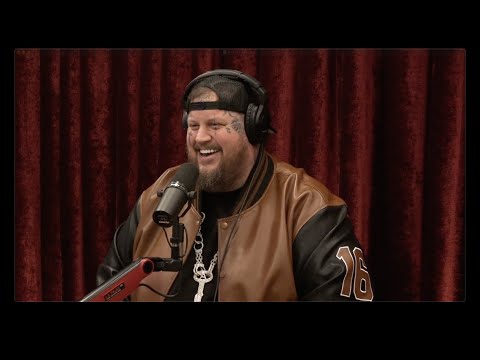
Joe Rogan Experience #2212 - Jelly Roll
Joe Rogan (host), Narrator, Narrator, Jelly Roll (guest), Joe Rogan (host)
In this episode of The Joe Rogan Experience, featuring Joe Rogan and Narrator, Joe Rogan Experience #2212 - Jelly Roll explores jelly Roll and Joe Rogan on comedy, redemption, work, and wonder Joe Rogan and Jelly Roll spend this long-form conversation tracing the intertwined rise of Austin’s comedy scene, the Mothership, and Jelly Roll’s late-blooming music success, emphasizing how there are no real age rules when it comes to breaking through. They dive into the mechanics and culture of stand-up—especially Kill Tony—as a crucible for authenticity and a rejection of ideological “clapter,” and connect it to Nashville’s songwriter world and Jelly Roll’s plan to build a ‘music mothership.’
Jelly Roll and Joe Rogan on comedy, redemption, work, and wonder
Joe Rogan and Jelly Roll spend this long-form conversation tracing the intertwined rise of Austin’s comedy scene, the Mothership, and Jelly Roll’s late-blooming music success, emphasizing how there are no real age rules when it comes to breaking through. They dive into the mechanics and culture of stand-up—especially Kill Tony—as a crucible for authenticity and a rejection of ideological “clapter,” and connect it to Nashville’s songwriter world and Jelly Roll’s plan to build a ‘music mothership.’
Jelly Roll opens up about addiction, jail, food as his last major battle, losing over 100 pounds, and how a stable home life, faith, and relentless work (170 songs in a year) transformed him from a 550‑pound ex‑inmate into a chart-topping artist. They also explore storytelling as humanity’s oldest entertainment, touching on religion, mushrooms, and the ‘simulation’ idea as ways to think about inspiration and consciousness.
Throughout, the episode is framed by gratitude and imposter syndrome: Jelly Roll wrestles with feeling undeserving of a potential No. 1 album while Rogan pushes him to stop ‘staring at the sun’ and just keep being himself. The conversation ends with Jelly Roll announcing his Nashville bar, plans for a songwriter-focused ‘Music Mothership,’ and a very public commitment to continued health and creative discipline.
Key Takeaways
There are no fixed timelines or age limits on success.
Rogan and Jelly Roll cite examples like Jelly becoming ‘New Artist of the Year’ at nearly 40 and Ron White getting better in his 60s, underscoring that consistent work and authenticity matter far more than industry age expectations.
Get the full analysis with uListen AI
Authenticity beats ideology and pandering in comedy and art.
Kill Tony’s one-minute format forces comics to chase laughs, not applause for beliefs; Rogan contrasts this with ‘clapter’ in woke scenes and argues that audiences ultimately respond to honesty and raw fun, not messaging.
Get the full analysis with uListen AI
Your environment and community are force multipliers for growth.
Both men highlight how the Comedy Store, Mothership back bar, Nashville writers’ rooms, and touring crews act as ‘gyms’ where iron sharpens iron, accelerating craft development far beyond what’s possible in isolation.
Get the full analysis with uListen AI
Treat creative ideas as gifts and capture them ruthlessly.
Jelly Roll keeps notepads by his bed and even on the toilet; Rogan records and transcribes sets—both emphasize writing things down immediately, then revisiting and expanding them, rather than trusting memory.
Get the full analysis with uListen AI
Stability at home unlocks performance and business success.
Jelly Roll describes how committing to his wife and family shrank his world from chaos to a focused ‘foxhole,’ freeing energy that translated directly into better art, better decisions, and healthier habits.
Get the full analysis with uListen AI
You can’t skip the reps; you can only choose when you pay them.
They warn about TikTok stars and young fighters thrown into big stages too early: you might ‘skip the line’ to big rooms, but without hundreds of small‑room or low‑stakes reps, the game will eventually expose you.
Get the full analysis with uListen AI
Turning your focus from yourself to others can unlock your best work.
Jelly Roll says his new album ‘Beautifully Broken’ clicked only when he stopped writing about himself as ‘Cinderella Man’ and started writing for addicts, assault survivors, and broken people whose stories he carries.
Get the full analysis with uListen AI
Notable Quotes
“You’re a beautiful example that there’s no rules. It’s all bullshit. Just be yourself.”
— Joe Rogan
“None of us came in here on a winning streak.”
— Jelly Roll (recounting an AA old-timer comforting a shaking newcomer)
“You might be able to skip the line a little bit, but you can’t cheat the game.”
— Jelly Roll
“As soon as I took me out of it, the album blossomed.”
— Jelly Roll
“If it’s a simulation, it’s a really good one. We’re in a good timeline, brother.”
— Joe Rogan
Questions Answered in This Episode
How does Jelly Roll’s shift from writing about himself to writing for ‘broken’ people change the emotional impact of his music for you as a listener?
Joe Rogan and Jelly Roll spend this long-form conversation tracing the intertwined rise of Austin’s comedy scene, the Mothership, and Jelly Roll’s late-blooming music success, emphasizing how there are no real age rules when it comes to breaking through. ...
Get the full analysis with uListen AI
What role do you think environments like the Mothership or a Nashville ‘Music Mothership’ play in creating the next generation of great comedians and songwriters?
Jelly Roll opens up about addiction, jail, food as his last major battle, losing over 100 pounds, and how a stable home life, faith, and relentless work (170 songs in a year) transformed him from a 550‑pound ex‑inmate into a chart-topping artist. ...
Get the full analysis with uListen AI
Where is the line between healthy use of psychedelics for insight and escapist ‘tuning out’ of life’s responsibilities, and how would you personally navigate it?
Throughout, the episode is framed by gratitude and imposter syndrome: Jelly Roll wrestles with feeling undeserving of a potential No. ...
Get the full analysis with uListen AI
In your own life, are you more held back by lack of opportunity or by fear of being ‘too old’ or ‘too late’—and what would it look like to ignore those rules?
Get the full analysis with uListen AI
If storytelling is humanity’s oldest entertainment, how can you incorporate more deliberate storytelling into your work, relationships, or personal growth?
Get the full analysis with uListen AI
Transcript Preview
(drum roll) Joe Rogan podcast. Check it out.
The Joe Rogan Experience.
Train by day, Joe Rogan podcast by night, all day.
(rock music plays) Let's go. Let's go, Jelly Roll.
Yes. I'm back with my bubba. (laughs)
My man. I haven't seen you since, uh, Madison Square Garden. That was crazy.
Yes. What a great night that was, dude.
What an experience. What an experience, man.
Dude, it was so ... I was thinking about it pulling up here, is that, um, I think y'all just got out of Vulcan and the club had just opened. And I'd came that night to see Ron White, and I went back that Monday to see Kill Tony. And I could feel the Kill Tony thing happening over COVID at Vulcan, so I had to go see it in person, you know?
Yeah.
And I could remember sitting in there. And you know how, like, you can feel a sh- an energy shift?
Yeah.
I felt an energy shift in life in that room that night. I was like, "This is fixing to explode."
Yeah.
Like, everything associated with this club, everything associated with Tony, everything associated with Joe is fixing to fucking rocket ship. And it felt like, almost like ... I'm getting goosebumps, Joe. I'm not even bullshitting.
Woo, I'm getting goosebumps too.
I'm getting goosebumps.
(laughs)
It's almost like ... I swear, dude. It was like feeling the grunge movement in the '90s. Like, when you first heard a little something, you were like, "This is different."
Yeah.
And you were like, "This could be something." And then it just turned out to be the explosion. It's like, I felt that happening. So to see Tony at fucking Madison Square Garden, and then to see how y'all showed up for Tony at Madison Square Garden. Every fucking comedian on Earth came to see that dude, to fucking-
Two nights we had to be there.
... kiss him on his fucking cheek. You know what I'm saying?
I had to be there. I had to be there. I was there in the beginning. I was there when there was, like, 18 comedians in the crowd.
Is that not crazy?
It was crazy. They were doing it in the Belly Room of the Comedy Store. It was just, like, an afterthought. They couldn't do any of the other rooms 'cause they didn't have an audience, and they would ... And Tony just had this weird idea that he just, like ... Like a little pit bull, just stuck with it.
(laughs)
One minute of comedy, and he, like, honed it over time, and figured out ... And then he became the best host in all of entertainment. There's n- no one better at hosting a comedy show than him. The way he does that show, the f- the speed of his comebacks, the speed of his, like ... The roast lines.
Install uListen to search the full transcript and get AI-powered insights
Get Full TranscriptGet more from every podcast
AI summaries, searchable transcripts, and fact-checking. Free forever.
Add to Chrome