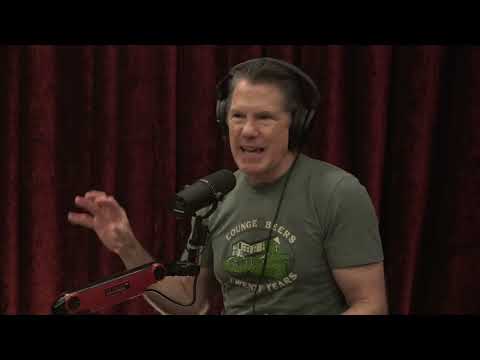
Joe Rogan Experience #1793 - Mike Baker
Joe Rogan (host), Narrator, Mike Baker (guest), Guest (guest), Guest (guest), Guest (guest)
In this episode of The Joe Rogan Experience, featuring Joe Rogan and Narrator, Joe Rogan Experience #1793 - Mike Baker explores ex-CIA agent Mike Baker dissects Putin, Ukraine, intel, censorship, chaos Joe Rogan and former CIA officer Mike Baker discuss the Russia–Ukraine war, focusing on Vladimir Putin’s mindset, Russia’s military miscalculations, and the real risks of nuclear or cyber escalation in a new Cold War environment.
Ex-CIA agent Mike Baker dissects Putin, Ukraine, intel, censorship, chaos
Joe Rogan and former CIA officer Mike Baker discuss the Russia–Ukraine war, focusing on Vladimir Putin’s mindset, Russia’s military miscalculations, and the real risks of nuclear or cyber escalation in a new Cold War environment.
They examine how intelligence is gathered on hard targets like Putin and Xi, why Western intel often misreads authoritarian leaders, and how Chinese and Russian espionage operate over long time horizons.
The conversation broadens into domestic issues: media bias, Hunter Biden laptop coverage, the politicization and apolitical ideal of intelligence agencies, and the structural weaknesses of US politics and energy policy.
Rogan and Baker also explore free speech, censorship by tech platforms, ideological indoctrination in schools, and why an informed, skeptical public is essential in an era of propaganda, information overload, and existential weaponry.
Key Takeaways
Authoritarian leaders like Putin must be analyzed on their own terms, not through Western values.
Baker argues Western intel repeatedly “mirrors” its own rationality onto Putin, overlooking his long-declared goal of rebuilding Russia’s sphere of influence and his indifference to civilian casualties, which made the full-scale Ukraine invasion more predictable than many admitted.
Get the full analysis with uListen AI
Russia badly miscalculated Ukrainian resistance and its own military performance.
Russian planners appears to have expected Kyiv to fall quickly, Ukrainian civilians to be relatively welcoming, and a puppet government to be installed; instead, poor intel, low troop experience, and effective Western-supplied weapons like Javelins and Stingers have stalled advances and produced heavy losses, including multiple Russian generals.
Get the full analysis with uListen AI
Nuclear deterrence is less stable in an age of hypersonic and cyber weapons.
Hypersonic missiles and advanced cyber capabilities compress decision times and can bypass traditional defenses, undermining the old logic of mutually assured destruction that assumed clear warning and rational, human-controlled retaliation.
Get the full analysis with uListen AI
China’s intelligence and influence strategy is patient, pervasive, and structurally advantaged.
Baker describes how China uses students, conferences, long-term academic and corporate placements, and appeals to ethnic loyalty to collect US tech and defense secrets over decades, and notes that an open society like the US is far easier to penetrate than China’s tightly controlled system.
Get the full analysis with uListen AI
Public trust in media has eroded for good reasons, fueling polarization and confusion.
Examples like the suppression and later validation of the Hunter Biden laptop story, shifting coverage of Ukrainian corruption, and narrative-driven war reporting reinforce the perception that major outlets shape facts to fit politics, driving audiences to alternative platforms and deepening suspicion of all information.
Get the full analysis with uListen AI
Energy security is national security, and abrupt ‘green’ pivots carry real strategic costs.
They argue the Biden administration’s early signals against fossil fuels discouraged long-term domestic investment, increased reliance on foreign oil, and limited Western leverage on Russia, when a dual-track strategy (maximizing current energy independence while investing heavily in alternatives) would have been more realistic.
Get the full analysis with uListen AI
Censorship and deplatforming create dangerous precedents for future abuse of power.
From banning the New York Post’s laptop story to pulling Trump interviews and shouting down campus debates, Rogan and Baker contend that suppressing speech, even when you ‘like’ the outcome, normalizes tools that can later be turned against dissidents, journalists, or entire viewpoints.
Get the full analysis with uListen AI
Notable Quotes
““We kind of missed the obvious… He’s been pretty damn consistent over the years.””
— Mike Baker (on Putin’s long-term intent to rebuild Russia’s sphere of influence)
““The only person that really knows what Putin’s thinking is Putin.””
— Mike Baker
““You can’t just stifle information and debate and think that, you know, there’s dangerous thoughts out there and we have to stop them… Stifling speech is more dangerous.””
— Joe Rogan
““The intel community writ large has got to be apolitical… You cannot have that.””
— Mike Baker
““Energy in today’s world equals national security.””
— Mike Baker
Questions Answered in This Episode
If Putin ultimately accepts a negotiated settlement in Ukraine, what concessions on territory and NATO status are realistically necessary, and what precedents would that set for future aggressors?
Joe Rogan and former CIA officer Mike Baker discuss the Russia–Ukraine war, focusing on Vladimir Putin’s mindset, Russia’s military miscalculations, and the real risks of nuclear or cyber escalation in a new Cold War environment.
Get the full analysis with uListen AI
How should nuclear doctrine and international law adapt to account for hypersonic weapons, cyber warfare, and autonomous ‘dead-hand’ systems that remove humans from the loop?
They examine how intelligence is gathered on hard targets like Putin and Xi, why Western intel often misreads authoritarian leaders, and how Chinese and Russian espionage operate over long time horizons.
Get the full analysis with uListen AI
What concrete steps could the US take to seriously harden its power grid and digital infrastructure against the kind of cyber operations Baker says Russia, China, and Iran are continually rehearsing?
The conversation broadens into domestic issues: media bias, Hunter Biden laptop coverage, the politicization and apolitical ideal of intelligence agencies, and the structural weaknesses of US politics and energy policy.
Get the full analysis with uListen AI
Is it possible to rebuild trust in mainstream media and political institutions without major structural changes, or has the information ecosystem already fragmented beyond repair?
Rogan and Baker also explore free speech, censorship by tech platforms, ideological indoctrination in schools, and why an informed, skeptical public is essential in an era of propaganda, information overload, and existential weaponry.
Get the full analysis with uListen AI
Where should democracies draw the line between combating disinformation and protecting free speech, especially when private platforms control the main channels of public discourse?
Get the full analysis with uListen AI
Transcript Preview
(drumming music plays) Joe Rogan podcast, check it out.
The Joe Rogan Experience.
Train by day, Joe Rogan podcast by night. All day. (rock music plays) Mike Baker-
Mm-hmm.
... are we fucked?
Mr. Rogan, we are fucked. (laughs)
(laughs) This is not good, right?
(laughs)
This is not good.
How much fun is this? Every time we get together, there's some-
It seems like it.
... bullshit happening. Yeah, yeah.
Yeah. Some... Every time, the world is, uh, somewhat falling apart.
Yeah, yeah. Well, it's good for business. Um, I didn't mean that, actually. That s- sounds-
You shouldn't say that.
... sounds wrong. No, no.
Yeah.
That's what people expect me to say, I think, but-
Right.
... um, yeah, yeah, I, I think, uh, (clears throat) nobody really expected, uh, the potential for t-thermonuclear war, uh, right after two years of a pandemic. I don't think anybody actually saw that coming.
Yeah, well there was no break-
Yeah.
... for the weary.
Yeah, exactly. Every- it comes out... I did have a thought (laughs) , which was, I talked to my, I talked to my daughter the other day. She's just turned 28. And I thought, after I hung up, (sniffs) she was talking about it, and she was kind of basically saying, "What the fuck?" Right? And so I th- people that age, if you think about those, the folks in that age group, uh, she was born, you know, she was old enough to understand 9/11, right, in a sense, from a child's perspective. And then, through the Iran, or the Iraq, A- Afghanistan, you know, bullshit, that, that whole time, with the war on terrorism. Couple of recessions, right? Global pandemic. Now, you know, approaching Cold War 2.0, getting close to thermonuclear war, (laughs) not that we are. Uh-
And the disastrous pull out of Afghanistan.
And the, and A- af- Afghanistan, uh, inflation possibly leading too.
Yeah.
Recession.
$7 a gallon gas in California.
Yeah. People, people of that age, not, not able to save money for a, for a house. They must just be thinking, "What the fuck?" You know?
Yeah.
"Wh- wh- where, where's our, you know, big build up? Where's our, like, the '50s or the, the '80s, you know?"
Well, it just seems so supremely incompetent. Everything seems like the, the, whoever the grownups are that are running the show have fucked up so many different things.
(laughs) Yeah, yeah. Um, yeah, there's a lot of, there's a lot to unpack there, isn't there? In that statement. (laughs)
This Putin, the Putin thing scares the shit out of me, though, because he's a, you know, when it comes to warlords, he's a legitimate warlord-
Yeah.
... who is in charge of, I didn't know that they had more nukes than us. I mean, I guess it's kind of a moot point, right, because everybody's got an-
Install uListen to search the full transcript and get AI-powered insights
Get Full TranscriptGet more from every podcast
AI summaries, searchable transcripts, and fact-checking. Free forever.
Add to Chrome