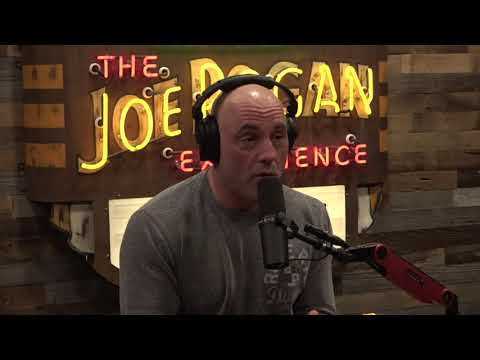
Joe Rogan Experience #1779 - Michael Osterholm
Michael Osterholm (guest), Joe Rogan (host), Guest’s assistant/producer reading search results (guest), Michael Osterholm (guest), Narrator
In this episode of The Joe Rogan Experience, featuring Michael Osterholm and Joe Rogan, Joe Rogan Experience #1779 - Michael Osterholm explores michael Osterholm Dissects COVID’s Past, Uncertain Future, And Our Missteps Dr. Michael Osterholm returns to discuss what we’ve learned from COVID-19, stressing humility about what experts do and don’t know, and warning that the pandemic’s course is still uncertain due to evolving variants and animal reservoirs.
Michael Osterholm Dissects COVID’s Past, Uncertain Future, And Our Missteps
Dr. Michael Osterholm returns to discuss what we’ve learned from COVID-19, stressing humility about what experts do and don’t know, and warning that the pandemic’s course is still uncertain due to evolving variants and animal reservoirs.
He explains why Omicron’s “mild” label is misleading at the population level, how vaccines and prior infection change risk, and why serious concerns like long COVID and overburdened healthcare systems remain.
The conversation explores origins debates, gain-of-function research, masks and ventilation, treatment options such as antivirals and monoclonal antibodies, and systemic failures in communication and preparedness.
Osterholm argues for better testing and treatment infrastructure, higher‑quality respiratory protection, and a realistic, data-driven approach that balances hopeful advances with the reality that hope alone is not a strategy.
Key Takeaways
Adopt humility and clearly communicate uncertainty.
Osterholm argues experts repeatedly overstated certainty—declaring the pandemic “almost over” or overselling early vaccines—without adequately explaining what was unknown, eroding public trust when reality changed.
Get the full analysis with uListen AI
Stop treating Omicron as universally “mild.”
Per case, Omicron may cause less severe disease than Delta, but because it infects far more people, it has generated enormous hospitalizations and deaths; many children and adults without obvious comorbidities were still hit hard.
Get the full analysis with uListen AI
Plan for variants and animal reservoirs, not for COVID to “just end.”
New variants continue to arise from the ancestral virus and are now appearing in multiple animal species (e. ...
Get the full analysis with uListen AI
Use vaccines and prior infection together rather than pitting them against each other.
Data across waves show that people with prior infection plus at least one vaccine dose have some of the strongest protection against severe disease; he advocates counting infection as a “dose” for policy but still encouraging vaccination.
Get the full analysis with uListen AI
Shift from cloth/surgical masks to fit-tested, high‑filtration respirators.
Because SARS‑CoV‑2 spreads largely as an aerosol, loose cloth and standard surgical masks offer limited protection; well‑fitted N95/KN95 respirators with electrostatic filter media substantially cut inhaled and exhaled virus when worn correctly.
Get the full analysis with uListen AI
Build a robust test‑and‑treat system before the next surge.
To truly reduce hospitalizations and deaths, people must be able to get same‑day tests and immediate access to effective antivirals or monoclonal antibodies; Osterholm proposes funding surge-capable testing infrastructure much like fire departments.
Get the full analysis with uListen AI
Prepare for long COVID as a major, poorly understood chronic burden.
A significant minority of infected people, including those with mild acute illness, develop lasting fatigue, brain fog, cardiac or lung issues; he calls for intensive research into mechanisms and treatments, comparing it to chronic fatigue and post‑Lyme syndromes.
Get the full analysis with uListen AI
Notable Quotes
“My job is not to scare anyone out of their wits. It’s to scare them into their wits.”
— Michael Osterholm
“Hope’s not a strategy.”
— Michael Osterholm
“If you knew COVID-19 in 2020 and 2021, it doesn’t mean you know it today.”
— Michael Osterholm
“I think we had far too many answers before we really had the answers.”
— Michael Osterholm
“Rocket science is easy. It’s immunology that’s hard.”
— Michael Osterholm
Questions Answered in This Episode
How should public health leaders communicate uncertainty and changing evidence without losing credibility or paralyzing the public?
Dr. ...
Get the full analysis with uListen AI
Given the extensive animal reservoirs now involved, what realistic long-term endgame exists for COVID-19 control?
He explains why Omicron’s “mild” label is misleading at the population level, how vaccines and prior infection change risk, and why serious concerns like long COVID and overburdened healthcare systems remain.
Get the full analysis with uListen AI
What metrics should policymakers use to decide when to tighten or relax measures like masking, especially if future variants differ drastically?
The conversation explores origins debates, gain-of-function research, masks and ventilation, treatment options such as antivirals and monoclonal antibodies, and systemic failures in communication and preparedness.
Get the full analysis with uListen AI
How can healthcare systems be redesigned to avoid collapse and burnout in the face of long, multi‑year crises like COVID?
Osterholm argues for better testing and treatment infrastructure, higher‑quality respiratory protection, and a realistic, data-driven approach that balances hopeful advances with the reality that hope alone is not a strategy.
Get the full analysis with uListen AI
What research priorities around long COVID and immune dysregulation could most quickly translate into meaningful treatments for patients?
Get the full analysis with uListen AI
Transcript Preview
(drumbeats) Joe Rogan podcast, check it out. The Joe Rogan Experience.
Train by day, Joe Rogan podcast by night. All day. (instrumental music) Dr. Osterholm, welcome back.
Thank you very much, Joe.
Very good to see you again.
Good to see you.
It's been basically two years, uh, from the day. And I think when you were on the podcast, for a lot of my friends, that was the first real fear that they felt about the pandemic. You scared the shit out of a lot of people.
(smacks lips) Well, you know, my job is not to scare anyone out of their wits. It's to scare them into their wits.
Ah.
And to do what they can to, uh, deal with the situation. As you know, at that time, March 10 of 2020, no one wanted to believe this was going to be a pandemic. And so-
Yeah, there was a lot of denial about how it was gonna play out, and people were thinking that it was inflated or it was not that big of a deal. And then, like I said, when you came on the podcast, that, like I got a bunch of calls from friends, like going, "Jesus."
(smacks lips) Yeah, I think the understanding of where we've been, where we're at, and where we're going still I think isn't really completely clear.
(smacks lips) Yeah, where we're going in particular, right? Now, um, as an infectious disease expert, it's very rare that you have an opportunity during your lifetime, during your career to examine a pandemic and to be through it and examine the responses to the pandemic. You know, h- how, when you look back at it, what mistakes do you think were made and what do you think was done correctly?
(smacks lips) Well, first of all, let me just say that one of the things I think has been missing from a lot of the response that we've had so far is an incredible sense of humility.
Humility.
Every day when I get up, the first thing I do is I look over at my nightstand and I see this crystal ball. It has five inches of caked mud on it, and I try to scrape it off (laughs) and then decide what do I know for the rest of the day. And I think that we've had far too many answers before we really had the answers. And while we always wanna use that term, quote, follow the science, I think we didn't do a good job sharing with the public and even within ourselves what did we really know and not know, and what did we have to do to learn more? So I'd say it's humility.
Uh, do you think that it's overwhelming, like the, the reason... Is there a reason why they didn't do a good job sharing the information with the public? And do you think that some of that might be just the fact that being involved in something w- th- that has such a massive footprint, something that literally-
Install uListen to search the full transcript and get AI-powered insights
Get Full TranscriptGet more from every podcast
AI summaries, searchable transcripts, and fact-checking. Free forever.
Add to Chrome