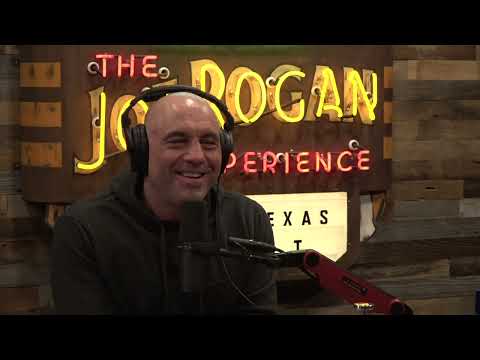
Joe Rogan Experience #1801 - David Mamet
Joe Rogan (host), David Mamet (guest), Narrator, Narrator, Narrator
In this episode of The Joe Rogan Experience, featuring Joe Rogan and David Mamet, Joe Rogan Experience #1801 - David Mamet explores david Mamet Decries Cultural Decay, Censorship, and Prosperity’s Perils Joe Rogan and playwright/screenwriter David Mamet discuss Mamet’s political evolution from lifelong liberal to self-described conservative, framed around his new book *Recessional* about the decline of free speech and Western civilization. They argue that modern left-wing movements have become quasi-religious, illiberal, and censorious, especially in media, education, and Big Tech. Mamet links current cultural conflicts—over gender, race, welfare, and immigration—to a deeper loss of religious grounding, mythic narratives, and respect for the individual. The conversation also covers the demise of mid-budget filmmaking, Mamet’s life in theater and movies, his love of jiu-jitsu, and anecdotes about Hollywood, policing, and politics.
David Mamet Decries Cultural Decay, Censorship, and Prosperity’s Perils
Joe Rogan and playwright/screenwriter David Mamet discuss Mamet’s political evolution from lifelong liberal to self-described conservative, framed around his new book *Recessional* about the decline of free speech and Western civilization. They argue that modern left-wing movements have become quasi-religious, illiberal, and censorious, especially in media, education, and Big Tech. Mamet links current cultural conflicts—over gender, race, welfare, and immigration—to a deeper loss of religious grounding, mythic narratives, and respect for the individual. The conversation also covers the demise of mid-budget filmmaking, Mamet’s life in theater and movies, his love of jiu-jitsu, and anecdotes about Hollywood, policing, and politics.
Key Takeaways
Free speech is a non‑negotiable foundation; once you allow censorship, it spreads everywhere.
Mamet and Rogan argue that deplatforming and content moderation for political reasons inevitably expand from fringe figures to mainstream dissenters, eroding open debate and pushing people into ideological echo chambers.
Get the full analysis with uListen AI
Prosperity can weaken societies by disconnecting people from work, responsibility, and reality.
Mamet claims that extreme comfort dulls incentives to strive, erodes the middle class that enforces rules and norms, and lets insulated elites and dependent classes grow while fewer people experience real economic consequences.
Get the full analysis with uListen AI
Modern progressive movements often function as substitute religions or ‘cults’.
They argue that in the absence of traditional faith and shared myths, people adopt rigid ideological systems around climate, race, and gender that demand moral conformity and cast dissenters as heretics.
Get the full analysis with uListen AI
Education has become a powerful vector for ideology rather than basic learning.
Mamet criticizes public schools and teachers’ unions for prioritizing political projects—like certain implementations of anti-racism or early gender instruction—over reading, writing, and numeracy, and he champions school choice as a corrective.
Get the full analysis with uListen AI
Welfare and long-term dependence can unintentionally entrench poverty and social breakdown.
While Rogan credits welfare with helping his own family escape poverty, Mamet argues that multigenerational dependency and incentives that undermine intact families fuel gang culture, crime, and a lack of personal agency.
Get the full analysis with uListen AI
Big Tech platforms are de facto public utilities and should be treated that way.
Because Twitter, YouTube, and Facebook now function as central infrastructure for global discourse, the hosts question the idea that they are just private companies free to enforce partisan moderation rules.
Get the full analysis with uListen AI
Hollywood and the arts are dominated by one political perspective, making dissent costly.
Mamet details how, after mildly contrarian writing, he was informally ostracized by liberal cultural institutions, and he describes how many right-leaning creatives in film and TV now whisper their views for fear of losing work.
Get the full analysis with uListen AI
Notable Quotes
“Free speech doesn’t mean you have the right to say ‘happy birthday.’ Free speech means you have the right to say anything you want, except advocating violent overthrow of the United States government.”
— David Mamet
“When you destroy the old myths, you’re always going to get a new myth, because we need to mythologize our life.”
— David Mamet
“If you want only your side to be represented, that’s not discourse. That’s propaganda.”
— Joe Rogan
“The problem with government isn’t that they don’t get good ideas. Once in a while, they do. The problem is that if the idea turns out to be bad, they never fix it.”
— David Mamet
“I used to refer to myself as a brain-dead liberal. Then I realized a lot of what I thought I thought, I wasn’t actually living by.”
— David Mamet
Questions Answered in This Episode
How can a society realistically protect robust free speech while still addressing real harms like targeted harassment or coordinated violence online?
Joe Rogan and playwright/screenwriter David Mamet discuss Mamet’s political evolution from lifelong liberal to self-described conservative, framed around his new book *Recessional* about the decline of free speech and Western civilization. ...
Get the full analysis with uListen AI
Is there a sustainable way to provide welfare and social safety nets that encourage mobility and responsibility rather than long-term dependence?
Get the full analysis with uListen AI
What would a pluralistic, non-dogmatic form of civic ‘myth’ or shared narrative look like in a secular, diverse country today?
Get the full analysis with uListen AI
To what extent is the current ideological tilt in media and education a temporary phase versus a structural feature of modern democracies?
Get the full analysis with uListen AI
Can Big Tech be effectively regulated as a public utility without creating new avenues for government censorship and control?
Get the full analysis with uListen AI
Transcript Preview
(drumbeats) Joe Rogan podcast, check it out.
The Joe Rogan Experience.
Train by day, Joe Rogan podcast by night, all day. (instrumental music plays) And we're up and running. How are you, sir?
I'm great. Happy to be back in the United States. I've been in, uh, California for the last-
(laughs)
... uh, little-
The People's Republic of California?
Yeah, exactly so.
Yeah, it's, uh, an interesting turn of events. California has become a strange new place.
Yes, it has.
A- almost unrecognizable. (laughs)
Yes. Well, it'd be recognizable to George Orwell.
Y- well, yeah, right? Even he probably been like, "Wow." H- he was probably ... If, if you could get George Orwell from, you know, the time he wrote 198- ... When did he write 84?
Oh, that's pretty good. I, uh, I don't know. I think it was the late '40s. We can, we can l- look it up.
And then to see, uh, the ... you know, in 2022, he was, he was in the neighborhood.
He-
He definitely was pretty close.
He was off like, oh, 1.2%.
(laughs) There it is, '49.
Yeah.
Wow, interesting.
You know, George Orwell said ... He was a interesting guy. He was a cop in, um, Burma. He was a, a, a-
Really?
Yes. Uh, he was a hook- colonial cop, and then he was a, a roustabout, and he wrote, uh, Down and Out in Paris and London. He was a bum. And, uh, he said, "When thought control comes, it will come not from the right, but from the left."
Wonder why he thought that?
Well, because he got around.
Mm-hmm.
I mean, he ... That guy had seen a huge bunch of life and he looked at what things were from every angle, right? He was a well-brought-up Englishman, and then he was a, a tramp and a dishwasher and a cop. And, uh, he saw it all. He saw it clearly.
But it's ... When y- ... Classically, like, when we think about depictions of totalitarianism and authoritarianism, when I was a kid, we always thought of it as being a right-wing thing. It is like a ... There was always, like, a right-wing dictator-type character that imposed censorship and authoritarianism. You didn't think of it as something that would be coming from the left.
Well, but, uh, you know, who was Stalin? Who was Trotsky and Lenin? They're certainly the left.
Right.
And, uh, Pol Pot and, uh, a- and all of the Chinese. Also, if you look at the history of this country, that the f- ... that, uh, Woodrow Wilson imposed strictures against talking about the war. Anybody who talked about the war and said a- anything that could be construed as unf- unfavorable was thrown in prison.
Really?
Install uListen to search the full transcript and get AI-powered insights
Get Full TranscriptGet more from every podcast
AI summaries, searchable transcripts, and fact-checking. Free forever.
Add to Chrome