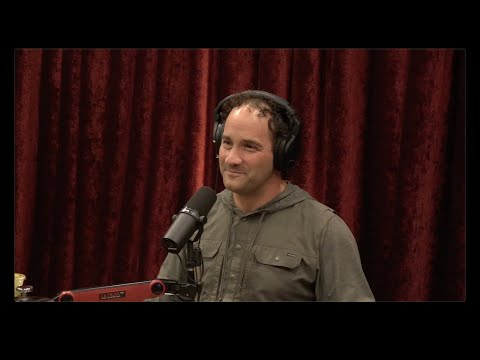
Joe Rogan Experience #2292 - Josh Waitzkin
Narrator, Narrator, Joe Rogan (host), Josh Waitzkin (guest), Narrator, Narrator
In this episode of The Joe Rogan Experience, featuring Narrator and Narrator, Joe Rogan Experience #2292 - Josh Waitzkin explores josh Waitzkin, Jiu-Jitsu, Foiling, and Preparing Minds For Super‑AI Joe Rogan and Josh Waitzkin explore how high-level learning principles connect across chess, jiu-jitsu, surfing/foiling, and life. Waitzkin explains why time spent in transitions, embracing failure, and seeking honest feedback are crucial to mastery. They then pivot into a deep discussion on AI, using chess engines as a metaphor for how far beyond us superintelligence can go, and what that implies for human agency, jobs, and decision-making. Throughout, Waitzkin emphasizes cultivating a beginner’s mind, living at your edge, and grounding yourself in real, bullshit-free feedback loops as AI rapidly reshapes reality.
Josh Waitzkin, Jiu-Jitsu, Foiling, and Preparing Minds For Super‑AI
Joe Rogan and Josh Waitzkin explore how high-level learning principles connect across chess, jiu-jitsu, surfing/foiling, and life. Waitzkin explains why time spent in transitions, embracing failure, and seeking honest feedback are crucial to mastery. They then pivot into a deep discussion on AI, using chess engines as a metaphor for how far beyond us superintelligence can go, and what that implies for human agency, jobs, and decision-making. Throughout, Waitzkin emphasizes cultivating a beginner’s mind, living at your edge, and grounding yourself in real, bullshit-free feedback loops as AI rapidly reshapes reality.
Key Takeaways
Spend more time in transitions, not just in stable positions.
Marcelo Garcia’s jiu-jitsu philosophy—and Lomachenko’s boxing—show that real virtuosity emerges in scrambles and in‑between moments. ...
Get the full analysis with uListen AI
Treat your biggest losses as the primary engine of long-term growth.
Waitzkin’s early chess defeats and later injuries forced him to confront weaknesses directly and redefine himself. ...
Get the full analysis with uListen AI
Separate your self-expression from external narratives about you.
The film 'Searching for Bobby Fischer' warped public perception of Waitzkin and pulled him into self-consciousness. ...
Get the full analysis with uListen AI
Learn any discipline in a universal language, not a sealed-off one.
Waitzkin argues you can study chess or jiu-jitsu in a way that links principles (pressure, tradeoffs, transitions, feedback) to everything else in life. ...
Get the full analysis with uListen AI
Actively seek accurate, painful feedback loops in your life.
True growth requires arenas where you simply cannot bullshit yourself—ratings in chess, tapping on the mats, getting knocked out, or clean business metrics. ...
Get the full analysis with uListen AI
Cultivate a beginner’s mind now to survive the AI transition.
As AI rapidly surpasses humans (as chess engines already have), identities tied to specific expertise will become fragile. ...
Get the full analysis with uListen AI
Ground your life in real training, not digital manipulation.
With AI-enhanced social media capable of steering behavior at scale, Waitzkin urges people to get off social platforms and root themselves in tangible practices—physical arts, crafts, or disciplines—where effort, consequence, and improvement are real and visible.
Get the full analysis with uListen AI
Notable Quotes
“People who don’t lose at something early develop a brittle relationship to success.”
— Josh Waitzkin
“Virtuosity is so beautiful to watch—in anything.”
— Joe Rogan
“You can learn Karpov through Kasparov—you can learn great defense through the defense of great attackers.”
— Josh Waitzkin (recounting advice from Yuri Razdvaev)
“We have to have the humility that we are the ant relative to the human when it comes to AI.”
— Josh Waitzkin
“Everything worthwhile is hard. The first thing is, we want people to love the discomfort of it being hard.”
— Josh Waitzkin
Questions Answered in This Episode
How can someone who’s never competed seriously start building the kind of honest feedback loops Josh talks about?
Joe Rogan and Josh Waitzkin explore how high-level learning principles connect across chess, jiu-jitsu, surfing/foiling, and life. ...
Get the full analysis with uListen AI
In practical terms, what does it look like to 'learn in a universal language' when you’re studying something like coding, music, or lifting?
Get the full analysis with uListen AI
Given the risks they outline, what would a sane, personal relationship with AI tools look like over the next five years?
Get the full analysis with uListen AI
How do you distinguish between a painful experience that’s worth integrating for growth and one that’s simply damaging or misaligned with your nature?
Get the full analysis with uListen AI
What specific daily or weekly practices could help cultivate the 'beginner’s mind' and dynamic quality that Josh believes we’ll need in an AI-dominated world?
Get the full analysis with uListen AI
Transcript Preview
(drumming music) Joe Rogan podcast, check it out.
The Joe Rogan Experience.
Train by day, Joe Rogan podcast by night, all day. (rock music) Whenever someone is a, like, an interesting person, and then I find out they do jujitsu too, "Oh, I could talk to that guy, for sure."
Yeah.
You know? (laughs)
(laughs) Jiu-jitsu-
You know, like, I get excited when interesting people do jujitsu, because I think, uh, for the outsider, to a lot of people that are, you know, they, they haven't been exposed to what it's like to train and what it's like to be around high level jujitsu people, they don't, uh, they don't know that vibe. They don't know what it's like. Like, they don't know the, um, the beauty of jujitsu. I feel like b- bea- jujitsu is beautiful for people who practice it, you know? Like, you see, like, Marcelo's a great example, your, your coach. You know, Marcelo is probably one of the most beautiful guys to watch, because he just takes advantage of these scrambles in this, like, really beautiful way, like fast and, and slippery. And when the opponents react, he reacts in the other way. It's all just technique and flow. It's like, "Ah!" Like, the first time I ever saw him, I saw him live in 2003 in Abu Dhabi, and, uh, it was when he fought Shaolin. That was the first time I'd ever seen him, uh, in the flesh. I didn't even-
And then choked him out in, like, eight seconds, 10 seconds.
Oh, my God.
Yeah.
It was the most crazy scramble.
Incredible.
But no one even knew him. No one knew of him, other than... You know, he was o- obviously a r- I think he was a brown belt at the time. I don't even think he was a black belt. I think Marcelo might've been a brown belt.
I- i- it's interesting. I didn't... In 2003. Maybe.
So find that out. Was Marcelo a brown belt when he won Abu Dhabi in 2003? He may have... Eddie Bravo was a brown belt when he tapped out Royler.
He told me recently that right before that fight, his, um, like, his grips had locked up. So he ca- Went into that fight... It looks incredible, just that arm drag, take the back, choked him out in seconds.
His, like, hands?
Yeah, his, like, grips from the fight before were like...
Oh, wow.
Yeah. W- wh- When, when Eddie beat Royler, he was a brown belt?
Yep.
Wow.
Yeah, m- uh, Jean Jacques took his black belt-
Yeah.
... off of his own waist-
(laughs)
... and put it on Eddie.
Amazing, amazing.
Dude.
That's epic. So yeah, it's funny. Uh, my background... Uh, we have a lot of overlap in our early jujitsu education, 'cause my first teacher was John Machado.
Install uListen to search the full transcript and get AI-powered insights
Get Full TranscriptGet more from every podcast
AI summaries, searchable transcripts, and fact-checking. Free forever.
Add to Chrome