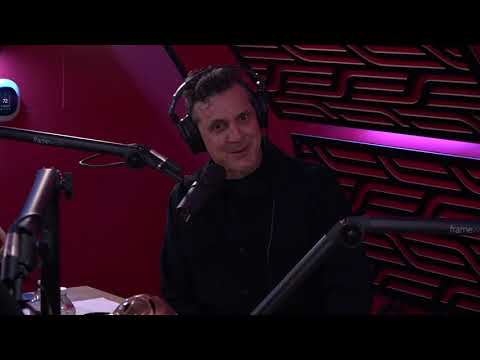
Joe Rogan Experience #1574 - Jacques Vallee & James Fox
James Fox (guest), Narrator, Joe Rogan (host), Jacques Vallée (guest), Jamie Vernon (guest), Narrator
In this episode of The Joe Rogan Experience, featuring James Fox and Narrator, Joe Rogan Experience #1574 - Jacques Vallee & James Fox explores lifelong UFO Researchers Reveal Patterns, Cover-Ups, And New Evidence Joe Rogan speaks with filmmaker James Fox and legendary UFO researcher Jacques Vallée about decades of UFO encounters, government secrecy, and Fox’s documentary *The Phenomenon*.
Lifelong UFO Researchers Reveal Patterns, Cover-Ups, And New Evidence
Joe Rogan speaks with filmmaker James Fox and legendary UFO researcher Jacques Vallée about decades of UFO encounters, government secrecy, and Fox’s documentary *The Phenomenon*.
They revisit classic cases like Roswell, Socorro, the 1952 Washington, D.C. incursions, Travis Walton, and schoolyard landings in Africa and Australia, highlighting consistent witness testimony and physical trace evidence.
Vallée explains ongoing scientific analysis of alleged crash materials, patterns in global sightings, and why he believes the phenomenon involves consciousness and possibly other dimensions rather than simple extraterrestrial visitors.
The conversation also addresses Pentagon programs, suppressed photographic and radar evidence, nuclear shutdown incidents, and the need to move UFO study from a pure threat framework into open, multidisciplinary science.
Key Takeaways
Patterns across decades and countries matter more than any single UFO case.
Vallée stresses that Roswell or any lone incident cannot prove the phenomenon; the evidential strength comes from recurring features—craft performance, entity descriptions, and behavioral patterns—repeated worldwide over many years.
Get the full analysis with uListen AI
Some high‑level military and intelligence officials confirm significant hidden evidence.
Figures like Senator Harry Reid and Christopher Mellon describe unreleased cockpit videos, clear photographs, radar data, and even historic landing films that they say remain classified despite strong national and scientific interest.
Get the full analysis with uListen AI
Alleged crash materials show signs of sophisticated engineering, but proof is incomplete.
Samples from Brazil, Argentina, and elsewhere appear ultra‑pure or isotopically altered in ways that would be extremely costly or impossible for mid‑20th‑century technology, yet Vallée emphasizes that rigorous, multi‑lab confirmation is still in progress.
Get the full analysis with uListen AI
The phenomenon appears to manipulate perception, time, and context.
Multiple witnesses report “bubbles” of altered reality—silence, missing traffic, frozen time—suggesting to Vallée that encounters may involve control of consciousness or spacetime, not just physical hardware entering from another planet.
Get the full analysis with uListen AI
Many encounters seem pedagogical rather than purely hostile or benign.
Cases like the Ruwa, Zimbabwe school landing, Chinese and Australian parallels, and nuclear shutdown incidents all convey implicit messages about environmental danger, the risks of technology, and humanity’s destructive capabilities.
Get the full analysis with uListen AI
Military threat framing captures only a small fraction of relevant data.
Official task forces focus on defense-related incidents, but Vallée argues that roughly 90% of meaningful information comes from civilians and non-military contexts, so limiting attention to “threats” distorts both the database and the conclusions.
Get the full analysis with uListen AI
Disclosure is likely to be incremental and contested, not a single revelation.
Because different agencies, contractors, and programs hold fragmented information—and often fear admitting what they don’t know—Vallée expects piecemeal releases, partial truths, and ongoing battles over how much to disclose and how to frame it.
Get the full analysis with uListen AI
Notable Quotes
“No single case can prove we’re being visited; you have to look for patterns.”
— Jacques Vallée
“I’m saying that most of the evidence hasn’t seen the light of day.”
— Senator Harry Reid (as recounted by James Fox)
“Think of it this way, James: an omnipresent intelligence that can manifest itself in a multitude of ways.”
— Jacques Vallée (as recalled by James Fox)
“They were not only observed over super sensitive military weapons installations, but they were shutting our nukes off.”
— James Fox
“This is not just ET coming here in a rocket ship. We need something more complex if we’re going to get the scientific community involved.”
— Jacques Vallée
Questions Answered in This Episode
If the most compelling evidence remains classified, what practical steps could scientists and the public take to force greater transparency without compromising legitimate national security concerns?
Joe Rogan speaks with filmmaker James Fox and legendary UFO researcher Jacques Vallée about decades of UFO encounters, government secrecy, and Fox’s documentary *The Phenomenon*.
Get the full analysis with uListen AI
How should mainstream science design a research program that can handle both hard physical data (materials, radar tracks) and the subjective, consciousness-related aspects of UFO encounters?
They revisit classic cases like Roswell, Socorro, the 1952 Washington, D. ...
Get the full analysis with uListen AI
What are the implications for human society, religion, and geopolitics if UFOs are neither strictly extraterrestrial visitors nor purely psychological, but something interdimensional or deeply entangled with human perception?
Vallée explains ongoing scientific analysis of alleged crash materials, patterns in global sightings, and why he believes the phenomenon involves consciousness and possibly other dimensions rather than simple extraterrestrial visitors.
Get the full analysis with uListen AI
How do we ethically evaluate schoolyard landing cases and abduction narratives when they involve children and long-term psychological impact, yet cannot be replicated or easily verified?
The conversation also addresses Pentagon programs, suppressed photographic and radar evidence, nuclear shutdown incidents, and the need to move UFO study from a pure threat framework into open, multidisciplinary science.
Get the full analysis with uListen AI
If certain UFO incidents have disabled nuclear weapons, what does that suggest about the phenomenon’s intentions—and how might militaries around the world misinterpret or react to such interventions?
Get the full analysis with uListen AI
Transcript Preview
(drum music) Joe Rogan podcast, check it out.
The Joe Rogan Experience.
Train by day, Joe Rogan podcast by night. All day. (rock music) Gentlemen, James, Jacques, welcome. Thanks for being here. Uh, we'll explain, uh, what this is all about 'cause, uh, on the new Spotify podcast we don't really have an intro the same way the old ones did. Um, James, you produced a phenomenal documentary on the phenomenon, on what's going on with, uh, UFOs. And I just sent you an- an article that my friend, Saga sent me today, uh, about a photograph, a very clear photograph that they've taken of this, uh, triangular UFO. Um, so there's something that we'll be talking about in a little bit. Uh, Jacques Vallée, uh, you have been studying this most of your life.
Too long.
Too long. (laughs)
(laughs)
We did- we discussed it last night at dinner that, um, your interest in this came from an experience that you actually had as a child, you actually saw a UFO.
As a t- as a teenager with two other witnesses. Uh, one of the witnesses was half a mile away with binoculars so I'm pretty sure that, um, that that object was real and it was, uh, classic disc, middle of the afternoon, clear sky. Absolutely clear. At the time, I became convinced that it might be a prototype of something that would be coming out later and, uh, you know, we're here many years later and we still don't have anything like that. It was just hovering and it was there.
And w- you've been studying this for so long and this is, uh, something you guys talked about on the film that you were actually the character that the French UFO researcher in Close Encounters of the First Kind, or the Third Kind rather, was modeled after.
Well, S-
The Steven Spielberg film.
Spielberg was intrigued with the idea of a- of a character that was not quite as weird as, you know, the ETs, but was a lot weirder than, you know, the- the people on the ground in the US trying to make sense of this and the military and so on. So he needed this intermediate character and he felt, you know, F- Frenchmen was- was the right thing to do.
And so did you talk to him about the film? Did you talk to him about when- when he was putting it together and-
Yeah, uh, I, uh, a journalist put us together when about halfway through the, you know, the- the final, uh, final shooting of the film. And there were- there were gaps in the movie at that point. And we, uh, we- so we had lunch twice together and, uh, it was- was a lot of fun. He- he was, at the time, he was looking for a transition between the time when they- they know the, you know, the big thing is coming, the mothership is coming, and they don't know where. And the mothership is sending signals but they can't decipher the signals. And I- he said, you know, he had spent the morning at the- the Jet Propulsion Laboratory and he said he couldn't make any sense of all the mathematics they had. And I said, "Well, maybe you could have, you know, two screens that give you an angle and- and the angle tells you where the thing is." And he said, "No, that's too complicated, you know, and takes too long. I- it, uh, it's got to be just a few minutes in the film." And then I- I thought of a photograph that was on the desk of Dr. Hynek, you know, Dr. J. Allen Hynek-
Install uListen to search the full transcript and get AI-powered insights
Get Full TranscriptGet more from every podcast
AI summaries, searchable transcripts, and fact-checking. Free forever.
Add to Chrome