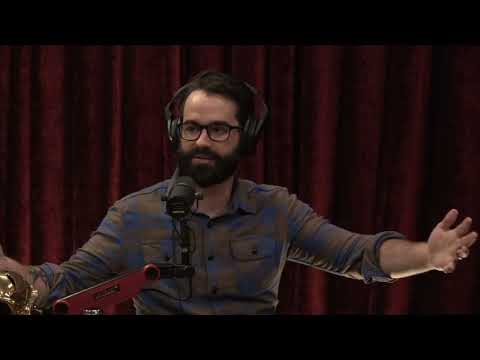
Joe Rogan Experience #1895 - Matt Walsh
Joe Rogan (host), Matt Walsh (guest)
In this episode of The Joe Rogan Experience, featuring Joe Rogan and Matt Walsh, Joe Rogan Experience #1895 - Matt Walsh explores matt Walsh, Joe Rogan Debate Gender Ideology, Kids, and Marriage Joe Rogan and Matt Walsh discuss Walsh’s documentary *What Is a Woman?*, focusing on how it was made, why it resonated, and its critique of contemporary gender ideology.
Matt Walsh, Joe Rogan Debate Gender Ideology, Kids, and Marriage
Joe Rogan and Matt Walsh discuss Walsh’s documentary *What Is a Woman?*, focusing on how it was made, why it resonated, and its critique of contemporary gender ideology.
They argue that medical, academic, and media institutions have adopted radical positions on gender identity, especially regarding children, puberty blockers, and surgeries, without robust long‑term data and while suppressing dissent.
The conversation broadens into free speech online, social contagion, the role of institutions, and whether gender ideology represents a broader assault on objective reality and truth.
In the latter part, they debate gay marriage, divorce, Christian sexual morality, and what marriage is for, illustrating how deep value differences shape today’s cultural conflicts.
Key Takeaways
Simply asking clear definitions can expose ideological weaknesses.
Walsh’s core tactic in the film—repeatedly asking “What is a woman? ...
Get the full analysis with uListen AI
Children are being medically transitioned amid major evidence gaps.
They describe widespread use of puberty blockers, cross‑sex hormones, and even surgeries on minors, arguing that long‑term data is scarce and that vulnerable youth are effectively experimental subjects.
Get the full analysis with uListen AI
Emotional blackmail is a central tool in pushing pediatric transition.
Rogan and Walsh highlight the “dead daughter or living son” framing given to parents, claiming this suicide‑prevention narrative overstates evidence and pressures families into irreversible medical decisions.
Get the full analysis with uListen AI
Institutional incentives and profit strongly shape gender medicine.
Walsh contends that clinics, surgeons, and pharma benefit financially when a child begins a transition ‘conveyor belt,’ making ideological fervor and economic interest mutually reinforcing.
Get the full analysis with uListen AI
Dissent is often met with silencing rather than argument.
They point to activists refusing debates, media ignoring the film, online de‑platforming threats, and aggressive responses to detransitioners as signs that defenders of current gender orthodoxy avoid open scrutiny.
Get the full analysis with uListen AI
Social media amplifies and normalizes fringe ideas into mass culture.
Examples like Libs of TikTok, hospital marketing clips, and TikTok influencers show how niche content aimed at sympathetic audiences can be surfaced to outsiders, revealing how rapidly norms are shifting.
Get the full analysis with uListen AI
Competing moral frameworks drive irreconcilable views on marriage and sexuality.
Walsh defends a Christian, procreative definition of marriage and sexual ethics, while Rogan pushes a personal‑freedom, harm‑reduction lens; their stalemate illustrates why cultural debates often feel intractable.
Get the full analysis with uListen AI
Notable Quotes
“We wanted to give gender ideology a chance to hang itself by its own incoherences.”
— Matt Walsh
“This rigid adherence to ideology is so cult‑like, it’s so Handmaid’s Tale.”
— Joe Rogan
“The current crop of so‑called trans kids are the guinea pigs. We’ve never done this to people on this scale in human history.”
— Matt Walsh
“If you can control what people believe, you don’t need as many laws telling them what they can and can’t do.”
— Matt Walsh
“What scares me about our culture today is that these kinds of conversations are not encouraged; they’re discouraged.”
— Joe Rogan
Questions Answered in This Episode
How should societies balance compassion for gender‑dysphoric individuals with safeguards against social contagion and medical overreach, especially for minors?
Joe Rogan and Matt Walsh discuss Walsh’s documentary *What Is a Woman? ...
Get the full analysis with uListen AI
What kind of long‑term evidence and follow‑up should be required before puberty blockers and cross‑sex hormones become standard pediatric practice?
They argue that medical, academic, and media institutions have adopted radical positions on gender identity, especially regarding children, puberty blockers, and surgeries, without robust long‑term data and while suppressing dissent.
Get the full analysis with uListen AI
Are current media and academic environments capable of hosting genuinely open debates on gender ideology, or are new parallel institutions inevitable?
The conversation broadens into free speech online, social contagion, the role of institutions, and whether gender ideology represents a broader assault on objective reality and truth.
Get the full analysis with uListen AI
To what extent are rising LGBT identifications in younger generations driven by innate orientation versus cultural incentives and identity fashion?
In the latter part, they debate gay marriage, divorce, Christian sexual morality, and what marriage is for, illustrating how deep value differences shape today’s cultural conflicts.
Get the full analysis with uListen AI
Is it possible to craft a definition of marriage that satisfies both procreative, traditional views and modern personal‑freedom arguments, or must societies ultimately choose one framework?
Get the full analysis with uListen AI
Transcript Preview
(drum music) Joe Rogan podcast, check it out. The Joe Rogan Experience.
Train by day, Joe Rogan podcast by night, all day. (instrumental music) Hello, Matt Walsh. Joe Rogan- Hi. ... nice to meet you. Yeah, you too. Officially. Um, your documentary's a, a w- it's- (sighs) I can't tell you how many people have asked me if I've seen it. It's- I think it's one of the most eye-opening things that's ever been done on this whole gender confusion thing that we're going through right now in our culture. And, it was just like one of those things where I- I had to watch. Like so many people were like, "You have to see this. You have to see this." And I expected it to be like- (deep breath) I mean, I- I thought it would be like arguments with people or it would be very, you know, very confrontational, but instead, I think you did it masterfully. What you did is you just let these people explain themselves the way they would talk if you weren't there. The way they would talk to people who agree with what they're saying. And by not pushing back, I think you allowed them to- to let all the crazy out. And it's like- it's- it's dis- it's hard to describe to people that aren't aware of what's going on- Yeah. ... of how wild this stuff has gotten. But first of all, tell me, what was the process of making this? Like how long did it take? What- what was the- what was the motivation behind it? (smacks lips) Yeah. Um, thanks for talking about it so much on your podcast, by the way. It's been, uh, it's been a huge boost for us. And we- you know, I- I had this idea- (sighs) you really have to go back several years, because it occurred to me maybe back in, I don't know, 2017 that, uh, when this- when this transgender stuff w- was starting to really gain mainstream traction, which I think happened really- that was like, uh, maybe when Bruce Jenner became Caitlyn Jenner. That was the- that was the moment that I think it exploded onto the mainstream. Not- not when it began, but it exploded onto the mainstream. Right around that time, it- it sort of occurred to me that- that the people promoting this stuff have a- a problem, which is that we're- we're supposed to accept someone like Bruce as a woman, but then what- what exactly does that mean? What are we accepting him as? Like, he says, "I identify as a woman." Well, what are you identifying as? What are we if you're a woman? Well, I- I know what a woman was before, but if now we're including a guy like Bruce, then what is a woman now? And so, I started asking this question, it was really basic, just like, "What is a woman? What- what are you trying to say about womanhood now?" And, uh, couldn't get anyone to answer it. I mean, and mostly it's just on Twitter, you know? And, uh, challenging someone on the left, "Just give me a definition. What- what's your definition of the word?" And, um, none of them would do it, so at a certain point, I thought, "Well, we have to find a way to go out and put this question in front of them." Um, and that's sort of where the idea for the documentary came from. And- and we knew going in that we wanted- we wanted two things. Well, three things. One is we have the- we have the mission behind it, the- the message that we wanna get across. Uh, but we also want it to be a piece of enter- entertainment, you know? Because a lot of conservative documentaries, not all of them, but many of them are just- you feel like you're watching an extended version of a podcast or something. It's not- there's- it's not a piece of entertainment. So, we wanted it to be that. And then, we also knew that, uh, the way this is going to work, if it works at all is if I'm just asking questions and I'm- 'cause if I- if it's- if it's me going on a tour around the country yelling at people, that would be satisfying for me emotionally, but it just wouldn't- it wouldn't prove anything other than what people already know, which is that two sides yell at each other. Uh, so we wanted to give sort of gender ideology a chance to hang itself by its own incoherences, which is- which I think is what- what happened. T- I think you definitely accomplished that. And th- that- it's- it's so funny that that question, "What is a woman?" is so difficult to answer. And then they'll say, "Well, someone who identifies as a woman." And you said, "Well, what does that mean though?" Right, so then- And then, they wanna just stop talking. Like- Yeah. ... what- what was the- the politician that actually had you leave his office when you...? Yeah, we actually- we had a couple that, uh, stormed out, but only one made it on- on camera, and that was the- that was, um, uh, Mark Takano, congressman in, uh, California. And he's one of the- he's one of the advocates. There- there's a reason why- there's a reason we chose all these people. It wasn't just random. He's an advocate. He's not just a Democrat politician. He's an advocate for the Equality Act, which is, uh, this push by Democrats to kind of federalize all this stuff on a national level, so that all across the country, for example, men have the right to use the women's restroom and opens up all the sports teams and all that. It just settles it. Takes it away from the states. And so, he's an advocate of that, and he's a- so a good guy to talk to. And, um, we- we- he- he sat there for about 30 minutes, uh, especially when I'm asking him the easy questions, and he would give his like filibustering answer, but then once I started asking real questions, that's when he got really uncomfortable. Y- you could even see in the film, he keeps looking over my shoulder, and that's because his aide is standing right behind my back the entire time. And, uh, but she never- I- I was- I kept expecting her to cut it off and- and shut it down, but she never did. And eventually, he just had enough of it and he got up and left. But the thing that made him leave was, I didn't even get to ask him the what is a woman question. I asked him, uh, I- I- I asked him, you know, there- there are males who want to use the women's restroom or the women's locker room, but then there are females who don't want to see an individual with a penis in the locker room, so you've got two competing claims here, two people who have feelings, the women who feel like they don't want to see this, it makes them feel bad to see it, and then the men who it makes them feel bad if they can't use the restroom. So, who wins out? How do you balance that? I think it's a fair question. And- It's a very good question. And that's when he just got up and said, "The interview's over," and walked out. Well, th- in those scenarios where- this is where women, particularly feminists who have always been like hardcore lefties, they're li- like they're finding themselves in this ideological quagmire. Yeah. They're like, they're- they're feminists-
Install uListen to search the full transcript and get AI-powered insights
Get Full TranscriptGet more from every podcast
AI summaries, searchable transcripts, and fact-checking. Free forever.
Add to Chrome