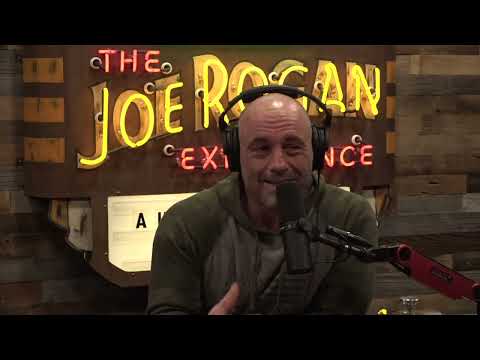
Joe Rogan Experience #1814 - Radio Rahim
Radio Rahim (guest), Narrator, Joe Rogan (host)
In this episode of The Joe Rogan Experience, featuring Radio Rahim and Narrator, Joe Rogan Experience #1814 - Radio Rahim explores joe Rogan, Radio Rahim dissect anger, social media, and fighting Joe Rogan and Radio Rahim open by talking about the emotional impact of online comments, arguing that performers must protect their mental ‘information diet’ and avoid letting anonymous criticism define them.
Joe Rogan, Radio Rahim dissect anger, social media, and fighting
Joe Rogan and Radio Rahim open by talking about the emotional impact of online comments, arguing that performers must protect their mental ‘information diet’ and avoid letting anonymous criticism define them.
They dive into the blurred line between social media and real life through the Dave Chappelle Hollywood Bowl attack, exploring how online dehumanization, mental illness, and weak institutional safeguards can lead to real-world violence.
The conversation moves through addiction, quitting cigarettes and alcohol, the discipline required in fighting and comedy, and broader distrust in institutions—from news media to government power—contrasted with the rise of independent platforms.
Rahim introduces his podcast 'Till This Day,' centered on the inner “opponent” people fight in life, which leads both men into a deep discussion of personal weakness, discipline, and how hardship and fatherlessness shaped their drive and worldview.
Key Takeaways
Curate your 'mental diet' and avoid reading most online comments.
Rogan argues that anonymous comment sections are a biased sample dominated by chronic complainers, and consuming too much of that negativity distorts self-perception, just like overconsuming junk food harms physical health.
Get the full analysis with uListen AI
Treat violent online rhetoric as a red flag, but accept that you can’t police the internet at scale.
Rahim suggests communities should push back on threats like 'you’re next' before they escalate, while Rogan notes that with hundreds of millions online, perfect monitoring is impossible—so individuals must manage their own behavior and risk.
Get the full analysis with uListen AI
Phase out bad habits by removing specific 'trigger moments' rather than going cold turkey.
Rahim quit a two-pack-a-day cigarette habit by first denying himself key ritual cigarettes (like the first one in the morning) while still smoking at other times, gradually shrinking the habit until a final, smaller jump to zero became manageable.
Get the full analysis with uListen AI
Free speech and skepticism toward powerful institutions are essential safeguards.
They contend that once people are trained to 'just trust the experts' and obey authority—especially when money and politics are involved—governments can use crises (health, terror, climate) to expand control in ways that rarely get rolled back.
Get the full analysis with uListen AI
Specialization creates the highest expression of a skill, but crossover has limits.
In comparing boxing and MMA, they stress that world‑class success in one combat sport doesn’t easily transfer to another without years of re-specialization, highlighting how different rule sets demand different bodies, habits, and intelligence.
Get the full analysis with uListen AI
Redefine your main opponent in life as your own inner weakness.
Rahim’s show asks guests to name their core 'opponent'; Rogan answers that his is always himself—his inner 'bitch' that seeks comfort, quits early, or lies to preserve ego—so his daily discipline is structured around defeating that voice.
Get the full analysis with uListen AI
Hard physical challenges can anchor mental health and resilience.
Rogan frames brutal daily workouts as a way to make the rest of life feel easier and to 'shore up the gates' mentally; the point isn’t aesthetics, but regularly doing something harder than anything else he’ll face that day.
Get the full analysis with uListen AI
Notable Quotes
“If you're a sensitive guy, you're in the wrong business. Fuck, you gotta get out of those comments.”
— Joe Rogan
“I recognized in the moment what I saw as an assassination attempt on my best friend.”
— Radio Rahim, on the Hollywood Bowl attack
“What if we just police each other in the public space? What if we don't accept that on social media from our peers?”
— Radio Rahim
“Most of the time people do their job and they keep it together. But people fall apart all the time… To trust people and say, 'They would never fuck this up'—everybody could fuck up everything.”
— Joe Rogan
“Every day it's me, fighting with that me guy. My biggest opponent is my inner bitch.”
— Joe Rogan
Questions Answered in This Episode
How can public figures realistically balance the need for feedback with the mental cost of reading anonymous online criticism?
Joe Rogan and Radio Rahim open by talking about the emotional impact of online comments, arguing that performers must protect their mental ‘information diet’ and avoid letting anonymous criticism define them.
Get the full analysis with uListen AI
To what extent should online platforms or communities be responsible for intervening when users post explicit violent threats?
They dive into the blurred line between social media and real life through the Dave Chappelle Hollywood Bowl attack, exploring how online dehumanization, mental illness, and weak institutional safeguards can lead to real-world violence.
Get the full analysis with uListen AI
Where is the line between healthy skepticism of institutions and a destructive inability to trust any expert or source?
The conversation moves through addiction, quitting cigarettes and alcohol, the discipline required in fighting and comedy, and broader distrust in institutions—from news media to government power—contrasted with the rise of independent platforms.
Get the full analysis with uListen AI
Does calling someone a 'prizefighter' rather than a 'real boxer' meaningfully change how we value what someone like Jake Paul is doing for combat sports?
Rahim introduces his podcast 'Till This Day,' centered on the inner “opponent” people fight in life, which leads both men into a deep discussion of personal weakness, discipline, and how hardship and fatherlessness shaped their drive and worldview.
Get the full analysis with uListen AI
If your primary 'opponent' in life is your own inner weakness, what daily practices would you design to systematically challenge that part of yourself?
Get the full analysis with uListen AI
Transcript Preview
(drum roll) Joe Rogan podcast, check it out.
The Joe Rogan Experience.
Train by day, Joe Rogan podcast by night. All day. (instrumental music) Oh, yeah, and last time, I guess I talk really loud, apparently.
No, you don't. Oh, you read comments.
Y- yeah.
Don't read comments. Don't read comments.
U- they-
Don't read comments.
(laughs) He told me that last time, Joe. (laughs)
Never read comments. Never read c- I told it Don L. (laughs) When Don and L- when Don L. and I did a podcast with Ariza, uh, it was so much fun. After it was over, I gave him a big hug. I said, "That was fun. Don't read the comments."
(laughs)
And he went on, like, for weeks, for weeks, he was, like, on this, like, defensive campaign.
But Don L. maybe, maybe should read a few of the comments. (laughs)
(laughs)
(laughs)
I, I don't think so. I don't think so. I, I like him perfectly flawed.
Y-
I like him-
Yeah, that's a good way-
... as he is.
... to describe it.
Yeah. I don't want-
That's a good way to describe him.
I don't want him to change at all. I mean, I would like him to grow and get better as a human being, but that whole, like, interrupting thing that he does, like-
Yeah.
... psh, that's great, man. That's him.
I'm a very sensitive guy, though. I need to know what I've said, how that affects people.
You're in the wrong business.
(sighs)
If you're a sensitive guy-
(laughs)
... you're in the wrong business. Fuck, you gotta get out of those comments. Don't read them. If they said that you were too loud, that means one fucking person thought you were too loud and they've put it out there. And then another person reads that and goes, "Yeah, he's too loud."
I was like, "Am I too loud?"
No, you're not too loud.
(laughs)
You're not too loud. It's- that's not real.
D- do you not go into your own comment section-
Never.
... on Instagram?
Uh-uh.
Like, never?
Never. Uh-uh. Never.
It is the Wild West in there.
(laughs)
And every check mark-
(gasps)
... every, like, legitimate celebrity, everybody's trying to beat each other, not just to be the first to comment on anything you post, but to have, like, the smartest quip or the funniest, like, one-liner. Y- it's a-
Well, that's good.
It's a talent show-
Well, that's good.
... in your, in your, because y- y- you get a hundred followers from having one solid comment on a Rogan, uh, post.
Ah.
(laughs)
That's funny. The people actually do that. They try to get followers from com- I mean, I mean, look, I probably would do that, too, if I didn't have a lot of followers.
Install uListen to search the full transcript and get AI-powered insights
Get Full TranscriptGet more from every podcast
AI summaries, searchable transcripts, and fact-checking. Free forever.
Add to Chrome