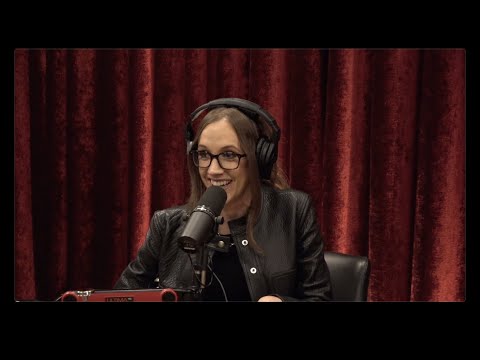
Joe Rogan Experience #2200 - Kat Timpf
Joe Rogan (host), Narrator, Kat Timpf (guest), Joe Rogan (quoting Alexa) (host), Narrator, Narrator, Narrator
In this episode of The Joe Rogan Experience, featuring Joe Rogan and Narrator, Joe Rogan Experience #2200 - Kat Timpf explores kat Timpf, pregnancy, politics, and quitting lifelong ADHD meds collide Joe Rogan and Kat Timpf cover her new book, political tribalism, free speech, and how people reduce each other to a single label, especially around Fox News and MAGA vs. anti‑Trump identities.
Kat Timpf, pregnancy, politics, and quitting lifelong ADHD meds collide
Joe Rogan and Kat Timpf cover her new book, political tribalism, free speech, and how people reduce each other to a single label, especially around Fox News and MAGA vs. anti‑Trump identities.
Kat describes being pregnant while off amphetamines for the first time since age five, her extreme nicotine and Adderall/Vyvanse history, and how that’s changed her writing, stand‑up, and basic functioning.
They dive into controversial policy issues—abortion, IVF, open borders, crime, homelessness, COVID lies and censorship, social media regulation, and psychedelics—asking who really benefits from current government and corporate behavior.
Throughout, they weave in personal stories (her bowel perforation and colostomy, feral cat, NYC costs, dating a Call of Duty guy) to illustrate how institutions, drugs, and online mobs shape individual lives and public discourse.
Key Takeaways
Stop defining people by one label or employer.
Kat argues that writing someone off because they’re on Fox, pro‑choice, MAGA, etc. ...
Get the full analysis with uListen AI
Question whether you truly “need” performance drugs if you’re high‑functioning without them.
Kat discovers off‑amphetamines that she’s still articulate and sharp, even if tasks feel harder; Rogan challenges the assumption that lifelong stimulants were necessary rather than just productivity‑enhancing crutches.
Get the full analysis with uListen AI
Recognize how government incentives often reward process, not solutions.
They point to California homelessness, NYC infrastructure, and education as systems where bureaucracies grow while problems worsen, suggesting more competition and accountability—potentially via private or decentralized solutions.
Get the full analysis with uListen AI
Be wary of letting government or tech arbitrate “misinformation.”
Using the Hunter Biden laptop, COVID lab‑leak, and Kamala’s comments on regulating social platforms, they argue that state‑aligned censorship routinely suppresses truths and favors political outcomes rather than public good.
Get the full analysis with uListen AI
Drug policy should separate personal choice from criminal harm.
They distinguish between non‑violent drug use (which they argue should be legal and treated with tools like psychedelics) and violent crime, criticizing a system that jails users yet releases dangerous repeat offenders.
Get the full analysis with uListen AI
Social media feedback is toxic noise, not a reliable mirror.
Kat describes industrial‑scale hate from hyper‑tribal viewers and anonymous men, noting that both praise and hate skew reality; she now delegates “hate tweet” selection and avoids doom‑scrolling for mental health.
Get the full analysis with uListen AI
Psychedelics may be a powerful, underused tool for trauma and perspective.
They highlight MDMA, psilocybin, and ibogaine’s potential to help veterans, crime victims, and the bereaved, questioning why such tools remain illegal while far more harmful substances like alcohol and fentanyl are normalized.
Get the full analysis with uListen AI
Notable Quotes
“People will let one aspect of a person completely define them: ‘Oh, she works at Fox News, that tells me everything I need to know.’”
— Kat Timpf
“There’s no biological free lunch. A lifetime of stimulating your system is probably going to have a cost.”
— Joe Rogan
“If you don’t think the government can solve something, that doesn’t mean you don’t care about the problem.”
— Kat Timpf
“If the only solution to ‘bad information’ is censorship, you don’t have free speech at all.”
— Joe Rogan
“I’ve been on amphetamines since I was five. I’m 36 and pregnant, and this is the first time I’m meeting myself without them.”
— Kat Timpf
Questions Answered in This Episode
How different would Kat’s life and career have been if she’d never been medicated for ADHD as a child?
Joe Rogan and Kat Timpf cover her new book, political tribalism, free speech, and how people reduce each other to a single label, especially around Fox News and MAGA vs. ...
Get the full analysis with uListen AI
Where should the line be drawn between legitimate content moderation and unconstitutional censorship on social platforms?
Kat describes being pregnant while off amphetamines for the first time since age five, her extreme nicotine and Adderall/Vyvanse history, and how that’s changed her writing, stand‑up, and basic functioning.
Get the full analysis with uListen AI
If psychedelics were fully legal and regulated, how might mental health treatment—and political thinking—change in the U.S.?
They dive into controversial policy issues—abortion, IVF, open borders, crime, homelessness, COVID lies and censorship, social media regulation, and psychedelics—asking who really benefits from current government and corporate behavior.
Get the full analysis with uListen AI
Are sanctuary city policies and lax theft enforcement compassionate, or are they ultimately cruel to both residents and migrants?
Throughout, they weave in personal stories (her bowel perforation and colostomy, feral cat, NYC costs, dating a Call of Duty guy) to illustrate how institutions, drugs, and online mobs shape individual lives and public discourse.
Get the full analysis with uListen AI
What practical steps can individuals take to resist political tribalism and genuinely engage with people they strongly disagree with?
Get the full analysis with uListen AI
Transcript Preview
(drumming music plays) Joe Rogan podcast. Check it out.
The Joe Rogan Experience.
Train by day, Joe Rogan podcast by night. All day. (rock music plays) What's up?
No- (laughs)
Nice to meet you.
Great to meet you, too.
Thank you. Thanks for being here.
Of course. Yeah, of course I'm here, right? Of course I'm gonna, of course I'm gonna do this. (laughs)
(laughs) Well, I'm glad, I'm glad you're doing it.
Yeah.
So, um, you wrote a book about ... Well, I think the title is, I Used To Like You But?
Until. Yeah.
Until.
I Used To Like You Until.
Yeah. Right.
Yeah.
Why'd you wanna do that? What, what was the motivation behind that?
Uh, I, I mean, I real- ... It's, it's not a hot take that everything's so divided now, right? I think a lot of people have noticed that. But I think I'm really in this unique position where I kinda get it from both sides, because I'm independent, politically. I just want very small government, which I think puts me at odds with both the parties sometimes, depending on what the issue is. So, I will sometimes get shit from the F- I'm on Fox News, so I'll get sometimes shit from the viewers for ... Sometimes m- more of the s- more social issues or I'm not religious, that kind of a thing. But then the people on the left, a lot of them w- won't even wanna have a conversation with me, 'cause they're like, "Oh, she works at Fox News. That tells-"
Right.
"... me everything I need to know about her."
Yeah.
And I think that that's doing some real damage, overall, to us as a country (laughs) by the fact that we're letting ... 'Cause I'm not special in that aspect, right? People will let one aspect of a person completely just, "Oh, that's all I need to know about that person. I'm not gonna"-
Sure.
"... talk to that person."
Yeah.
Yeah.
Yeah. That's a real problem. And, and i- it's so funny, like, if you say, "I'm independent. I just want small government," immediately people start thinking, "Prepper."
Yeah.
You know, "KKK, stockpiling"-
Yeah.
"... guns, living in the woods."
Yeah.
"I'm independent, I want small government," is like you're a ... You might be a dangerous person, which is such a wild take.
Well, people think that just 'cause you don't think the gov- the government's the best way to solve a problem-
Right.
... that doesn't actually mean you don't care about the problem. So, if you don't think the government can solve something, like, "Oh, well, you're a piece of shit, because"-
Right.
... "you don't, you don't care about this and this and this." It's like, no, I just don't think the government's gonna solve it. I mean-
Install uListen to search the full transcript and get AI-powered insights
Get Full TranscriptGet more from every podcast
AI summaries, searchable transcripts, and fact-checking. Free forever.
Add to Chrome