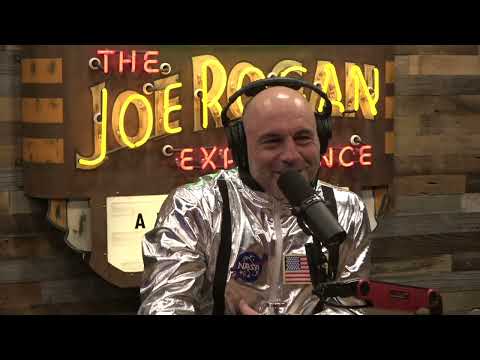
Joe Rogan Experience #1841 - Brian Redban
Narrator, Joe Rogan (host), Brian Redban (guest), Narrator, Narrator, Narrator, Narrator, Narrator, Narrator, Narrator, Narrator, Narrator, Narrator, Narrator, Narrator, Narrator, Narrator, Narrator, Narrator, Narrator, Narrator, Narrator, Narrator
In this episode of The Joe Rogan Experience, featuring Narrator and Joe Rogan, Joe Rogan Experience #1841 - Brian Redban explores rogan and Redban Dive Into Comedy, Podcasts, Plastics, and Evolution Joe Rogan and Brian Redban spend a long, freewheeling conversation bouncing from the evolution of their shows (especially Kill Tony and early podcasting) into stand‑up comedy culture, substances, and technical nerdery about touring, recording, and gear.
Rogan and Redban Dive Into Comedy, Podcasts, Plastics, and Evolution
Joe Rogan and Brian Redban spend a long, freewheeling conversation bouncing from the evolution of their shows (especially Kill Tony and early podcasting) into stand‑up comedy culture, substances, and technical nerdery about touring, recording, and gear.
They reflect on how accessible podcasting has become compared to 2009, how Kill Tony functions as a powerful talent incubator, and how different audiences (weed vs. alcohol, LA vs. Texas) shape the comedy experience.
A major middle section explores health and science tangents: alcohol tolerance, glyphosate and food, microplastics, phthalates and shrinking male fertility, diet (meat, gluten), and speculative future human evolution, AI, and VR.
They close with more personal and cultural riffs—child‑raising and mass shootings, Boy Scout and childhood stories, wild nature clips, body‑building, sleep, and the Austin scene—tying it back to how comedy and community are evolving around them.
Key Takeaways
Kill Tony is now a major gateway for new comedy talent.
Rogan and Redban frame Kill Tony as the best live stand‑up show ever, noting it has run weekly for nearly a decade, can be staged anywhere with minimal gear, and has launched careers for comics like Hans Kim, William Montgomery, and Preacher Lawson.
Get the full analysis with uListen AI
Podcasting’s barrier to entry has collapsed, radically changing media.
They contrast the hundreds or tens of thousands of shows in 2009 with over 4 million indexed today, noting that cheap gear, platforms like Zoom recorders, and turnkey ‘podcast kits’ have turned podcasting from fringe tech to a crowded mainstream medium—even restaurants and trivia pre‑shows have podcasts.
Get the full analysis with uListen AI
Crowd chemistry (alcohol vs. weed) fundamentally changes a comedy set.
Alcohol crowds are loose but can get rowdy, while all‑weed audiences tend to be quiet, paranoid, and easily overwhelmed; Rogan and Redban agree they’d generally rather play to alcohol‑fueled rooms than a fully stoned crowd suffocating in smoke.
Get the full analysis with uListen AI
Modern chemicals and plastics may be reshaping human biology.
They discuss glyphosate residues in food, microplastic ingestion, and especially phthalates and endocrine disruptors that research links to reduced sperm counts, smaller taints and genitals, and more feminized male traits, speculating this could be nudging human evolution in unexpected directions.
Get the full analysis with uListen AI
Diet and individual response matter more than one‑size‑fits‑all advice.
Rogan describes thriving on mostly meat and fruit while avoiding gluten‑heavy foods that make him feel sluggish, arguing people react differently and that chemical contamination in food (e. ...
Get the full analysis with uListen AI
VR/AR and AI are rapidly approaching life‑changing thresholds.
They see Apple’s upcoming AR/VR headset and ever‑smarter AI systems as precursors to Ready Player One–style immersive worlds and potential Matrix‑like futures, where virtual experiences (including simulated drug trips) may compete directly with real‑world activities.
Get the full analysis with uListen AI
Comedy sits at the intersection of personal stress, social sickness, and community.
They link mass shootings and social dysfunction to a web of factors—bad parenting, mental illness, meds, violent media, and a “sick society”—while noting how stand‑up and shows like Kill Tony create in‑person communities that can channel dark experiences into laughter instead of violence.
Get the full analysis with uListen AI
Notable Quotes
“Kill Tony is the best live standup show that’s ever existed.”
— Joe Rogan
“Me and Tony could literally, just me and him and an iPad, go anywhere and then like have a show.”
— Brian Redban
“There’s 4,079,717 total podcasts in the index. When we started in 2009, there were probably a couple hundred.”
— Joe Rogan (reacting to Jamie’s stats)
“We’re doing something weird to the human organism, and we’re doing it through plastics, and we’re just now finding out about it.”
— Joe Rogan
“Instead of wondering how we got here, we gotta figure out how to keep everybody safe.”
— Joe Rogan
Questions Answered in This Episode
How has Kill Tony specifically changed the trajectory of individual comics compared to the traditional open‑mic grind?
Joe Rogan and Brian Redban spend a long, freewheeling conversation bouncing from the evolution of their shows (especially Kill Tony and early podcasting) into stand‑up comedy culture, substances, and technical nerdery about touring, recording, and gear.
Get the full analysis with uListen AI
Given the saturation of 4 million podcasts, what realistically differentiates a show that breaks out from the noise today?
They reflect on how accessible podcasting has become compared to 2009, how Kill Tony functions as a powerful talent incubator, and how different audiences (weed vs. ...
Get the full analysis with uListen AI
To what extent do you think plastics and endocrine disruptors are already influencing behavior, gender identity debates, and social norms without us realizing it?
A major middle section explores health and science tangents: alcohol tolerance, glyphosate and food, microplastics, phthalates and shrinking male fertility, diet (meat, gluten), and speculative future human evolution, AI, and VR.
Get the full analysis with uListen AI
Where is the ethical line between using AI/VR for entertainment and letting it replace meaningful real‑world struggle, risk, and growth?
They close with more personal and cultural riffs—child‑raising and mass shootings, Boy Scout and childhood stories, wild nature clips, body‑building, sleep, and the Austin scene—tying it back to how comedy and community are evolving around them.
Get the full analysis with uListen AI
If violent media and games are only one factor among many in real‑world violence, what targeted interventions (family, mental health, school, gun policy) actually move the needle most?
Get the full analysis with uListen AI
Transcript Preview
(drum music) Joe Rogan podcast, check it out. The Joe Rogan Experience. (rock music)
Train by day, Joe Rogan podcast by night, all day. Kill Tony's the best fucking show in comedy.
It's great.
It is. You guys have the best show in comedy.
We broke, uh-
Are we up?
Oh, nevermind.
Hold on a second.
Yeah, you're good.
I don't wanna say this.
We running?
Yeah.
Yeah, we're running. Yeah. No, you have the best show in comedy. Kill, Kill Tony is the best live standup show that's ever existed. It's the best.
It's f- it's fun.
It's the best.
Yeah. And it has such a great, you know, like, we learn about new comics in it, you know?
Yeah.
And that, and that's great for ev- all of us, knowing who's good, who's bad, you know.
Think about all the people that came from it. Hans, William.
Mm-hmm.
You know, like, all, all these fucking people from the past. Preacher Lawson.
Yeah. Yeah.
You know? I mean, how many guys came from Kill Tony?
Tons.
Right?
Mm-hmm.
It's fucking ... It's, it's such a great show, dude. You guys are ... It's awesome. It's so y- ... And you guys have it so down now, you know? Like, with the band behind you, and like everyone's in sync, and-
Mm-hmm.
It's so good. Tony is so fucking good at hosting too.
Yeah. It's, uh, insane. He, and he's gotten so much better, you know?
Yeah.
Like, just in the last couple years, you could just ... He, he's like so professional now, like how he does it.
Yeah.
'Cause it used to be where I'd be like, "Okay, now we have to do hats," you know, and stuff like that. And I had to kind of like help him.
Mm-hmm.
Now he, he just ... He, he has it. It's-
No, he's got it down.
Yeah.
But like off the cuff, that kid is fucking insane. It's so good. It's such a great thing to have for comedy too, to have like this opportunity for young, up-and-coming people, or, or even old up-and-coming people. They could be old. You've had a few old people. Who's the oldest p- one you've ever had on your show?
Like the, uh, like a guest?
Yeah.
Or are you ... Uh, I don't-
Not a guest, like a-
You know what I mean? Someone we've found?
... a one-minute. Yeah, someone doing a one-minute.
Oh, we've had old, old, old people.
(laughs)
Like, when we, we're, when we w- ... Like, on the road, we'll find these guys that, you know, did comedy in the '80s, and they still do it in like Jersey somewhere, and they be ... You know, and, uh-
Install uListen to search the full transcript and get AI-powered insights
Get Full TranscriptGet more from every podcast
AI summaries, searchable transcripts, and fact-checking. Free forever.
Add to Chrome