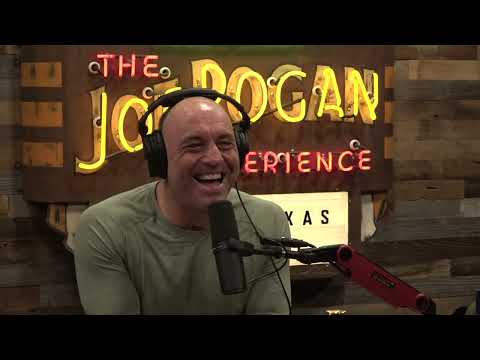
Joe Rogan Experience #1800 - Gavin de Becker
Joe Rogan (host), Gavin de Becker (guest), Guest (third person in studio, brief interjection) (guest), Narrator
In this episode of The Joe Rogan Experience, featuring Joe Rogan and Gavin de Becker, Joe Rogan Experience #1800 - Gavin de Becker explores gavin de Becker Explains Fear, Violence, Fame, and Modern Control Systems Gavin de Becker discusses how his violent childhood and early work with Elizabeth Taylor and Richard Burton led to a lifetime career in threat assessment, protective security, and governmental advisory roles.
Gavin de Becker Explains Fear, Violence, Fame, and Modern Control Systems
Gavin de Becker discusses how his violent childhood and early work with Elizabeth Taylor and Richard Burton led to a lifetime career in threat assessment, protective security, and governmental advisory roles.
He explains how real predictors of violence differ from popular assumptions, emphasizing intuition, pre‑incident indicators, and the limits of direct threats, while describing his company’s large‑scale threat research.
The conversation then shifts to state‑level surveillance (e.g., Pegasus), media–pharma collusion, COVID policies, censorship, and how fear is repeatedly used by governments and corporations to expand control.
De Becker closes by stressing personal responsibility for safety, the importance of free discourse, and his free ‘Gift of Fear’ masterclass designed to help ordinary people better recognize and respond to danger.
Key Takeaways
Direct threats are rarely the true precursors to serious violence.
De Becker’s research shows that public figures who are attacked almost never receive prior explicit threats from their attackers, while direct threat‑makers almost never carry out attacks—so fixation, intrusive pursuit, and “targeted travel” are more meaningful warning signs.
Get the full analysis with uListen AI
Treat intuition as a hard‑won survival tool, not irrational anxiety.
He argues that intuition is an evolved protective system (a ‘pre‑incident indicator’ engine) that integrates subtle cues before the conscious mind; overriding it for social politeness—like a woman entering an elevator with someone who scares her—is often how people participate in their own victimization.
Get the full analysis with uListen AI
Violence risk is predictable when you focus on patterns, not headlines.
By studying hundreds of thousands of threatening communications, his firm has identified behavioral patterns—obsession, entitlement, escalation, boundary‑crossing—allowing practitioners to triage which cases are most likely to lead to approaches or attacks.
Get the full analysis with uListen AI
State‑level spyware makes true digital privacy extremely fragile.
Tools like Pegasus 2 can infect phones without any user action, then silently access microphones, cameras, messages, and files; de Becker notes that if a well‑resourced government wants into your device, standard consumer security measures and even encrypted apps are often insufficient.
Get the full analysis with uListen AI
Media narratives around drugs, vaccines, and COVID are shaped by incentives.
With pharma funding a huge share of TV news advertising, and initiatives like the BBC‑led Trusted News Initiative, coverage tends to converge on a single line (e. ...
Get the full analysis with uListen AI
Emergency powers and mandates are hard to roll back once normalized.
De Becker frames lockdowns, mandates, and speech policing as part of a long historical pattern where governments exploit fear to centralize authority, warning that even well‑intentioned emergency measures create precedents that can later be used for less benevolent purposes.
Get the full analysis with uListen AI
Effective personal safety blends avoidance, awareness, and practiced response.
He recommends learning to recognize manipulative ‘persuasion predators,’ using tools like pepper spray judiciously, training stress responses (e. ...
Get the full analysis with uListen AI
Notable Quotes
“In the mind of the beginner there are many possibilities; in the mind of the expert there are few.”
— Gavin de Becker
“Fame is a uniform. It’s on the outside of you.”
— Gavin de Becker
“Anytime a government wants us to fear something, it’s very important to ask: is that thing really worth fearing in the way they’re telling us?”
— Gavin de Becker
“Life is a sexually transmitted, always fatal, communicable disease.”
— Gavin de Becker
“There’s never been a day in human history that the good guys were the ones censoring books.”
— Gavin de Becker
Questions Answered in This Episode
How can ordinary people better distinguish between valid fear signals and anxiety that’s been manufactured by media or government messaging?
Gavin de Becker discusses how his violent childhood and early work with Elizabeth Taylor and Richard Burton led to a lifetime career in threat assessment, protective security, and governmental advisory roles.
Get the full analysis with uListen AI
Given the power of state‑level surveillance tools like Pegasus, what realistic digital‑hygiene practices are actually worth maintaining for non‑government targets?
He explains how real predictors of violence differ from popular assumptions, emphasizing intuition, pre‑incident indicators, and the limits of direct threats, while describing his company’s large‑scale threat research.
Get the full analysis with uListen AI
How should threat‑assessment principles for public figures be adapted for everyday situations like domestic relationships, workplaces, or school environments?
The conversation then shifts to state‑level surveillance (e. ...
Get the full analysis with uListen AI
Where is the ethical line between responsible content moderation and dangerous censorship when private platforms have near‑monopoly influence on public discourse?
De Becker closes by stressing personal responsibility for safety, the importance of free discourse, and his free ‘Gift of Fear’ masterclass designed to help ordinary people better recognize and respond to danger.
Get the full analysis with uListen AI
What kind of self‑defense or situational‑awareness training provides the highest payoff for women and other vulnerable groups without creating false confidence?
Get the full analysis with uListen AI
Transcript Preview
(drumbeats) Joe Rogan podcast, check it out.
The Joe Rogan Experience.
Train by day, Joe Rogan podcast by night, all day. (instrumental music) Hello, Gavin.
Hey.
Pleasure to meet you in person, in the flesh.
You too. Uh, we obviously have a lot of friends in common, and I'm glad to be here.
I'm glad to have you here. And, uh, I'm glad to talk about, uh, we have a lot of shared interests, but, uh, this Survival Signals That Protect Us From Violence.
Mm.
Now, this is, uh... I- I've always wanted to talk to you because you are a truly an expert on preparedness and cautionary tactics in, in, w- what to do and not to do, like in terms of security and how to protect people. And how did, what is your background like? How did you get started in all this?
Uh, bad childhood, violent childhood is the way I started. Um, when I was, uh, 10 years old, my mother shot my stepfather in front of me.
Oh, Jesus Christ.
And that was one of many-
(laughs)
... sort of gun incidents, uh, in our family. And so I grew-
Was your stepfather violent or something?
No, he wasn't. Uh,, uh, my mother was. And, um-
Wow, that's unusual, right?
Uh, it is. It's the, it is the more unusual of the two, you know, the two genders. Certainly men are more violent more often throughout history. Uh, so I had that experience but, uh, and a whole bunch of others. Uh, my mother was a heroin addict. She committed suicide when I was, uh, 16. And so I saw a lot of stuff. I saw a lot of criminality, I saw a lot of violence. And I guess I developed kind of like a, uh, an ambassador between the two worlds. I spoke both languages.
Hmm.
You know, if I had a few other disadvantages, there's no way I would have, uh, you know, succeeded in life. I would have died young. Like, if I'd been a Black kid with the same circumstance, I'd have been in big trouble.
Hmm.
And, uh, so that, uh, that life brought me to a fascination with... When John Kennedy was killed, I was 10, and, uh, I was home from school, and it just absolutely captivated and fascinated me, not so much the issue of who killed him or the conspiratorial sides of these things, which, (laughs) which are very real, not so much that, but the actual physics of how you prevent assassination. And that interest stayed with me throughout my life, and I eventually... I've had a, an odd life. So as, as I tell you this story, uh, you'll, you'll be ready for it to be unusual. But by the time I was, uh, 19, I had already read and devoured everything I could on this subject, which was pretty limited. Most of the stuff on anti-assassination strategies I wrote later in life, but there wasn't a lot to read at the time. And at 19, I got a job w- working for Elizabeth Taylor and Richard Burton, and they were the most, uh, famous people in the world, maybe not known to everybody today, but she was a big movie star and he was a big movie star. And, uh, at that time, there was really only, uh, Jackie Onassis and, uh, Elizabeth Taylor and the Queen of England. Those were the giant media figures. Now we've got-
Install uListen to search the full transcript and get AI-powered insights
Get Full TranscriptGet more from every podcast
AI summaries, searchable transcripts, and fact-checking. Free forever.
Add to Chrome