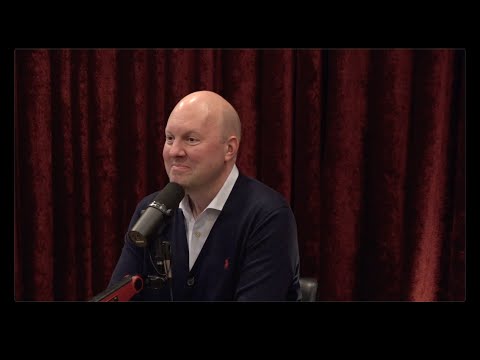
Joe Rogan Experience #2234 - Marc Andreessen
Narrator, Marc Andreessen (guest), Joe Rogan (host)
In this episode of The Joe Rogan Experience, featuring Narrator and Marc Andreessen, Joe Rogan Experience #2234 - Marc Andreessen explores marc Andreessen, Joe Rogan Dissect Trump Win, Tech, Censorship, Future Joe Rogan and Marc Andreessen use the 2024 post‑election moment to argue that the U.S. has narrowly avoided a darker political “timeline,” framing Trump’s win as a public revolt against institutional failure, censorship, and elite overreach.
Marc Andreessen, Joe Rogan Dissect Trump Win, Tech, Censorship, Future
Joe Rogan and Marc Andreessen use the 2024 post‑election moment to argue that the U.S. has narrowly avoided a darker political “timeline,” framing Trump’s win as a public revolt against institutional failure, censorship, and elite overreach.
They detail how government agencies, universities, NGOs, and large tech platforms allegedly colluded to control information, de‑bank political enemies, and erect regulatory “cartels” in banking, social media, and now AI.
Andreessen warns that if AI is captured by regulators the way social media and finance were, it could become an unprecedented tool of soft totalitarian control, while also describing how drones, crypto, and startups are being stifled by U.S. policy as China surges ahead.
Despite the criticism, both end on a strongly optimistic note: they see a chance for a cultural reset toward free speech, health, growth-focused economics, and a saner Democratic Party, powered by an explosion of independent media and young technical talent.
Key Takeaways
Information control is increasingly routed through private intermediaries to evade constitutional limits.
Andreessen argues that government agencies fund and pressure NGOs, universities, and platforms to censor on their behalf—analogous to “hiring a hitman”—so the state can shape speech and narratives without directly violating the First Amendment.
Get the full analysis with uListen AI
Regulatory capture is turning key sectors into government‑blessed cartels and killing new entrants.
Using Dodd‑Frank and banking as an example, he claims complex rules have entrenched a few giant banks, halted new bank charters, and are now being replicated in crypto, fintech, social media, and AI to freeze out disruptive startups.
Get the full analysis with uListen AI
AI could become the most powerful censorship and control layer if captured early.
Because AI will sit between people and almost everything (education, finance, access control, content), Andreessen warns that politically biased or state‑aligned AIs could enforce a de facto social credit system far beyond what happened with social media.
Get the full analysis with uListen AI
Independent and long‑form media are rapidly displacing legacy outlets as trust collapses.
They note cable news ratings and institutional trust have cratered, while podcasts, Substack, and X host real heterodoxy and ‘earned media’ that can decide elections, making attempts to build controlled, partisan alternatives less effective.
Get the full analysis with uListen AI
Soft totalitarianism via de‑banking and admin power is a growing risk.
They describe ‘politically exposed persons’ and Operation Choke Point–style tactics where banks, payment processors, and insurers quietly cut off individuals, startups, or dissidents—leaving no clear appeal path but effectively destroying livelihoods.
Get the full analysis with uListen AI
U.S. policy is unintentionally boosting Chinese tech dominance in critical domains like drones.
Strict FAA rules and security constraints hobble American drone makers while Chinese drones face fewer constraints, leading U. ...
Get the full analysis with uListen AI
There is room for a bipartisan reset around growth, health, and common sense.
Both men think Trump’s win and RFK Jr. ...
Get the full analysis with uListen AI
Notable Quotes
“All new information is heretical by definition. If you don’t tolerate heresy, you won’t get new ideas.”
— Marc Andreessen
“You can work from home, just not for the federal government.”
— Marc Andreessen (on how a Trump administration might deal with remote bureaucrats)
“If you thought social media censorship was bad, AI has the potential to be a thousand times worse.”
— Marc Andreessen
“I just don’t believe they’re good at spending it. That’s the thing.”
— Joe Rogan (on paying more taxes for social programs)
“It feels like oxygen returning.”
— Marc Andreessen (on how Trump’s victory feels in the culture and tech world)
Questions Answered in This Episode
If regulatory capture in AI is as dangerous as Andreessen claims, what practical safeguards could prevent a small cartel of state‑aligned AI providers from emerging?
Joe Rogan and Marc Andreessen use the 2024 post‑election moment to argue that the U. ...
Get the full analysis with uListen AI
Where is the line between legitimate content moderation and the kind of state‑driven censorship infrastructure they describe—especially during crises like pandemics or wars?
They detail how government agencies, universities, NGOs, and large tech platforms allegedly colluded to control information, de‑bank political enemies, and erect regulatory “cartels” in banking, social media, and now AI.
Get the full analysis with uListen AI
How should societies balance the obvious health benefits of drugs like Ozempic with their potential to reshape personality, risk‑taking, and culture at scale?
Andreessen warns that if AI is captured by regulators the way social media and finance were, it could become an unprecedented tool of soft totalitarian control, while also describing how drones, crypto, and startups are being stifled by U. ...
Get the full analysis with uListen AI
Is it realistic—or even desirable—to unwind entrenched subsidies like those for corn and high‑fructose corn syrup, given the political power of agriculture lobbies?
Despite the criticism, both end on a strongly optimistic note: they see a chance for a cultural reset toward free speech, health, growth-focused economics, and a saner Democratic Party, powered by an explosion of independent media and young technical talent.
Get the full analysis with uListen AI
What would a truly ‘internet‑native’ political campaign look like in 2028 if it avoided TV entirely and relied only on decentralized media and AI tools?
Get the full analysis with uListen AI
Transcript Preview
(drumbeats) Joe Rogan podcast, check it out.
The Joe Rogan Experience.
Train by day, Joe Rogan podcast by night. All day. (instrumental music plays) All right. Hello, Mark.
Hello.
Good to see you.
(laughs) Thanks for having me back.
My pleasure. Good to see you. Well, the world's still, uh, functional.
It's amazing.
Yeah, amazing. Um, we, we wanted to talk, you wanted to talk about the post-election, sort of a wrap-up-
Yeah.
... and sort of where we stand. Are you happy?
Very happy. It is-
It was a weird one.
... morning in America.
That was, uh, one of the first times ever I felt hopeful-
Yeah.
... after an election. Like, you should've seen the green room at the comedy club.
Yeah.
Everybody was like, "Yes."
Yes.
Whew.
So, my theory is the timeline, l- like in a science fiction movie, the timeline has split twice-
Ah.
... in the last, in the last, like, nine months.
What was the first split?
It was when Trump got shot.
Oh. Yeah.
And th- and there was that moment where the world was gonna head in two totally different directions.
Right. If he got hit ...
Yeah.
Yeah.
And we saw the most conspicuous display of physical bravery I've ever seen-
Right, afterwards.
... at that moment. Exactly.
Yeah.
And it could've gone v- you know, horrifically badly for the entire world after that. So, that was timeline split number one. So, that other timeline is out there somewhere-
Yeah.
... and I don't wanna visit it.
Boy, imagine being stuck there. What kind of horrible karma?
No.
I mean, that's a totalitarian, dystopian nightmare.
That's the bad place.
Yeah.
Um, and then, uh, timelines split again on Election Day.
I know you're a, you fancy a good conspiracy theory.
Yes.
And, uh, that, that gentleman being able to pull off what he did-
Mm-hmm.
... and, you know, the way it happened, the way it all went down is, it's a Lee Harvey Oswald 2.0.
Yeah. Oh, yeah.
Clearly.
Yeah, the shooter, and ...
Yeah.
That we still don't know anything.
There's no call for disclosure.
Yeah.
There's no call for a press conference. There's no toxicology report. The toxicology report had to have been done.
Yeah.
Wouldn't you wanna know, like, what kind of stuff this kid is on that made him want to do that, or if anything?
Yeah. So, my theory is it's almost as if the people want us to think it's a conspiracy. Like, it- it's almost like the whole thing is almost orchestrated. Like, it's just, it's so strange to us, is like the rapid cremation. Like, the- the whole thing-
Install uListen to search the full transcript and get AI-powered insights
Get Full TranscriptGet more from every podcast
AI summaries, searchable transcripts, and fact-checking. Free forever.
Add to Chrome