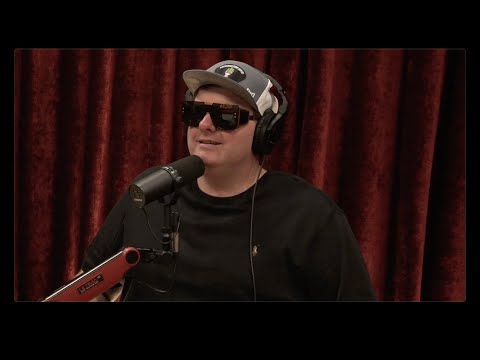
Joe Rogan Experience #2162 - Tim Dillon
Joe Rogan (host), Narrator, Tim Dillon (guest), Narrator, Narrator
In this episode of The Joe Rogan Experience, featuring Joe Rogan and Narrator, Joe Rogan Experience #2162 - Tim Dillon explores tim Dillon and Joe Rogan Skewer Politics, Media, and Modern Insanity Joe Rogan and Tim Dillon spend three hours riffing on everything from celebrity culture and fashion cycles to Biden’s age, Trump’s legal troubles, and the militarization of U.S. foreign policy.
Tim Dillon and Joe Rogan Skewer Politics, Media, and Modern Insanity
Joe Rogan and Tim Dillon spend three hours riffing on everything from celebrity culture and fashion cycles to Biden’s age, Trump’s legal troubles, and the militarization of U.S. foreign policy.
They argue that institutional trust—especially in government, media, pharma, and tech—has been shattered since COVID, and that both corporate power and intelligence agencies heavily shape public narratives.
The conversation veers through darkly comic takes on Weinstein, Spacey, Hollywood’s sexual economy, Pride culture, Israel–Gaza, Ukraine, China, and the prospect of World War III and a renewed draft.
Beneath the jokes, their through-line is that chaos, propaganda, and digital manipulation are now permanent features of life, so individuals should focus on understanding power, questioning narratives, and carving out their own pockets of meaning and fun.
Key Takeaways
Institutional trust is critically damaged and likely won’t fully recover.
From COVID mandates to media–pharma collusion and the Biden–Trump propaganda wars, they argue young people now see government, legacy media, and health authorities as self-interested actors rather than neutral guardians—pushing more skepticism and independent research.
Get the full analysis with uListen AI
Both parties and their machines manipulate elections, narratives, and legal systems.
They point to the DNC kneecapping Sanders, the Steele dossier/Russia collusion saga, the selective pursuit of Trump’s legal issues, and the media’s treatment of Biden’s age as evidence that power blocs, not voters alone, heavily steer outcomes.
Get the full analysis with uListen AI
Fear and chaos are governance tools, not just side effects.
From culture-war panics to online disinformation and campus protests, they suggest that keeping citizens emotionally agitated and divided makes it easier to pass wars, normalize surveillance, and distract from structural issues like housing, debt, and military buildup.
Get the full analysis with uListen AI
Big Tech now functions as a quasi-governmental power center.
Rogan and Dillon emphasize how platforms shape information flows, enforce speech norms, cooperate with government requests, and profit from addictive design—while their leadership sincerely believes it’s “helping” and therefore resists restraint.
Get the full analysis with uListen AI
U.S. foreign policy is drifting toward great-power war with little public consent.
They cite Ukraine funding, Biden greenlighting strikes into Russia, NATO expansion, China–Taiwan tensions, draft-registration automation, and constant “war within five years” headlines as signs that elites are preparing for major conflict while citizens are distracted.
Get the full analysis with uListen AI
Culture industries run on hypocrisy, power imbalances, and selective morality.
Their discussion of Weinstein, Spacey, old Hollywood producers, and Pride corporatization frames entertainment and activism as systems where exploitation, backroom deals, and image management often matter more than stated values.
Get the full analysis with uListen AI
Late-stage capitalism is producing absurd, unstable living conditions.
They highlight million-dollar average homes in California vs. ...
Get the full analysis with uListen AI
Notable Quotes
“I’m of the opinion Biden doesn’t exist. He’s a body, but nothing’s there.”
— Tim Dillon
“If they’re willing to manipulate everything openly except the election, why would I believe that’s the one thing they keep pure?”
— Tim Dillon
“We’ve got late-stage civilization vibes. We might make it through—but this is what it feels like.”
— Joe Rogan
“Everyone in power believes the alternative is worse. That’s how you justify MKUltra, carpet bombing, and whatever they’re doing now.”
— Tim Dillon
“Tech companies own your thoughts, dreams, hopes, fears—more than any of the old robber barons ever did.”
— Joe Rogan
Questions Answered in This Episode
How much election manipulation—both narrative and procedural—do you think actually occurs, and what kind of evidence would change your mind?
Joe Rogan and Tim Dillon spend three hours riffing on everything from celebrity culture and fashion cycles to Biden’s age, Trump’s legal troubles, and the militarization of U. ...
Get the full analysis with uListen AI
Is there a realistic way to restrain Big Tech’s influence without simultaneously increasing government censorship power?
They argue that institutional trust—especially in government, media, pharma, and tech—has been shattered since COVID, and that both corporate power and intelligence agencies heavily shape public narratives.
Get the full analysis with uListen AI
At what point, if any, does art become too morally contaminated by its creator’s actions to be enjoyed in good conscience?
The conversation veers through darkly comic takes on Weinstein, Spacey, Hollywood’s sexual economy, Pride culture, Israel–Gaza, Ukraine, China, and the prospect of World War III and a renewed draft.
Get the full analysis with uListen AI
Do you think the U.S. political establishment would risk a major war primarily to prevent political disruption at home, such as another Trump term?
Beneath the jokes, their through-line is that chaos, propaganda, and digital manipulation are now permanent features of life, so individuals should focus on understanding power, questioning narratives, and carving out their own pockets of meaning and fun.
Get the full analysis with uListen AI
Given the housing crisis, automation, and rising militarization, what concrete personal strategies make the most sense for ordinary people over the next decade?
Get the full analysis with uListen AI
Transcript Preview
(drum roll) Joe Rogan podcast, check it out.
The Joe Rogan Experience.
Train by day, Joe Rogan podcast by night, all day. (rock music) Dude, I get it now.
You get it?
I get it. I get, I get, I get the whole thing. The glasses.
You see how powerful you feel? (laughs)
Yeah. You feel like you could talk shit, like you're in another dimension.
It, it... All the things that you do, like working out and, and, and succeeding, you don't need to really do a lot of that if you put these on.
Yeah.
You get a lot of the effects-
(laughs)
... of like your, (laughs) you know, like being a trained fighter and all that crap. If you just put these on, you kind of get the idea of that.
Hmm.
Until someone calls you out and kills you, but-
Yeah, you gotta avoid, like, actual conflicts.
You gotta run away.
But you do feel superior to people.
Oh, for sure.
Like you have a suit on or something.
Yeah, for-
Like an Iron Man suit.
It's a... It keeps you away. It, it, there's a distance between you and other people now.
That must be why celebrities wear them when they go out.
Probably.
You know, like, like we'll see, like at concerts or UFC fights, you'll see celebrities with full-on sunglasses.
Interesting.
Yeah. They're like a cat hiding underneath a, a chair-
(laughs) Yeah.
... and the tail's hanging out. It's like, "You can't see me, but I can see you, stupid."
Yeah. No, people, they, they do give you some... And a lot of people, I guess, are on drugs.
Yeah, that's probably why.
And then their eyes-
Yeah.
... are bugged out of their head.
I just think they're trying to avoid eye contact with people, 'cause then people are trying to give them-
Yes.
... give them a script.
Yeah, I think that's true. They just don't-
For sure.
They want to be left alone. (laughs)
Yeah, I mean-
Yeah.
... if you want to be left alone in public, maybe that's the only way to do it.
You just gotta put these-
You gotta wear these things.
And they're getting bigger and bigger, and-
These are so huge.
They're crazy.
This is like a, a rich lady who gets out of a car with a small dog.
They're crazy, and you wear them. And when I got them, I got them as a joke, but then you just keep doing it.
(laughs) 'Cause they're good.
Because they're good.
(laughs)
They're actually fun. And people come up to you and say nice things about the sunglasses.
Install uListen to search the full transcript and get AI-powered insights
Get Full TranscriptGet more from every podcast
AI summaries, searchable transcripts, and fact-checking. Free forever.
Add to Chrome