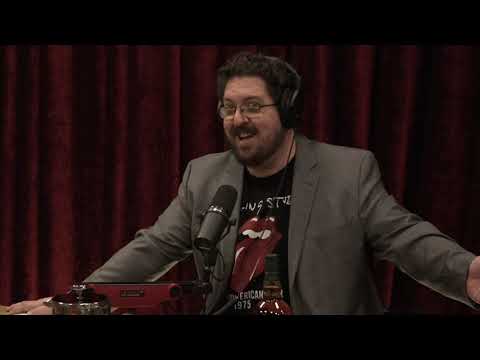
Joe Rogan Experience #1783 - Ben Burgis
Joe Rogan (host), Ben Burgis (guest)
In this episode of The Joe Rogan Experience, featuring Joe Rogan and Ben Burgis, Joe Rogan Experience #1783 - Ben Burgis explores joe Rogan and Ben Burgis Clash Over Censorship, Socialism, Outrage Culture Joe Rogan and democratic socialist writer Ben Burgis discuss Burgis’s book *Canceling Comedians While the World Burns*, using it as a springboard to critique modern left politics, cancel culture, and media incentives.
Joe Rogan and Ben Burgis Clash Over Censorship, Socialism, Outrage Culture
Joe Rogan and democratic socialist writer Ben Burgis discuss Burgis’s book *Canceling Comedians While the World Burns*, using it as a springboard to critique modern left politics, cancel culture, and media incentives.
They argue that corporate media and social platforms are driven by outrage and tribalism, which fuels censorship, shallow moralism, and symbolic culture wars instead of structural reforms like healthcare, labor rights, and anti-war policy.
Burgis defends free speech on principled and strategic grounds, criticizing both left-wing cancellation campaigns and right-wing censorship efforts, while Rogan emphasizes the danger of big tech deplatforming and narrative control during COVID and elections.
The conversation ranges from socialism, public services, and inequality to policing, Antifa, Dave Chappelle’s trans jokes, trans athletes, religion, and how social media’s “processed information” erodes genuine human dialogue and political persuasion.
Key Takeaways
Outrage-driven media distorts priorities and rewards shallow conflict.
Burgis and Rogan argue that collapsing legacy media now panders to narrow audiences with fear and outrage, making personalities like Rogan a multi-week story while major issues like war, inequality, and labor struggles receive little attention.
Get the full analysis with uListen AI
Free speech is both a moral principle and a strategic necessity.
They contend that empowering corporations or the state to police “misinformation” will almost inevitably be used against labor, anti-war, and left movements, not just against right-wing figures; bad ideas should be met with better arguments, not bans.
Get the full analysis with uListen AI
Cancel culture and moral grandstanding are symptoms of political powerlessness.
Burgis argues many on the left, feeling unable to change material conditions, redirect their energies into online shaming, purity tests, and symbolic fights (e. ...
Get the full analysis with uListen AI
Material reforms like universal healthcare and strong public services have broad potential consensus.
Both agree on socialized healthcare, free college, and better pay for teachers and public workers, pointing to examples like fire departments, Finland’s schools, and postal banking as proof that “socialist” institutions can work well and benefit everyone.
Get the full analysis with uListen AI
Tribal identity politics on both left and right block persuasion and coalition-building.
They criticize red-vs-blue team thinking, where people adopt party lines for belonging rather than conviction, treat millions of voters as irredeemable, and refuse to engage with ideological opponents, even though most ordinary people hold mixed, inconsistent views.
Get the full analysis with uListen AI
Social media’s design amplifies toxic behavior and processed information.
Rogan and Burgis note that likes, retweets, and quote-tweets incentivize performative cruelty and snap judgment (“Planet of Cops”), making it easier to misrepresent others, reward the nastiest takes, and avoid the slow, uncomfortable work of real conversation.
Get the full analysis with uListen AI
Focusing on symbolic culture-war skirmishes distracts from systemic power and class issues.
They cite examples like Dave Chappelle backlash, Antifa scuffles, and internecine left disputes (e. ...
Get the full analysis with uListen AI
Notable Quotes
“If you can’t actually change the world, you can at least get somebody fired.”
— Ben Burgis
“The answer to bad ideas is not silencing those ideas. It’s better ideas.”
— Joe Rogan
“Wanting private corporations to be more powerful because you think they’ll only silence people you don’t like is insane.”
— Ben Burgis
“We have a very distorted set of values when it comes to what’s important. Firefighters get paid well. Why not teachers?”
— Joe Rogan
“A lot of people on the left don’t think nearly enough about what will actually be appealing to ordinary people.”
— Ben Burgis
Questions Answered in This Episode
How can movements that care about economic justice and anti-war policy practically shift energy away from symbolic culture-war battles and toward concrete organizing?
Joe Rogan and democratic socialist writer Ben Burgis discuss Burgis’s book *Canceling Comedians While the World Burns*, using it as a springboard to critique modern left politics, cancel culture, and media incentives.
Get the full analysis with uListen AI
What realistic mechanisms—if any—could regulate big tech platforms without empowering corporate or state censorship of controversial but necessary political speech?
They argue that corporate media and social platforms are driven by outrage and tribalism, which fuels censorship, shallow moralism, and symbolic culture wars instead of structural reforms like healthcare, labor rights, and anti-war policy.
Get the full analysis with uListen AI
In a highly polarized media environment, what formats or institutions could revive the kind of substantive public debate once represented by figures like Gore Vidal and William F. Buckley?
Burgis defends free speech on principled and strategic grounds, criticizing both left-wing cancellation campaigns and right-wing censorship efforts, while Rogan emphasizes the danger of big tech deplatforming and narrative control during COVID and elections.
Get the full analysis with uListen AI
How should societies balance fairness in sports and safety for women’s categories with inclusion and dignity for trans athletes, especially regarding puberty and hormone thresholds?
The conversation ranges from socialism, public services, and inequality to policing, Antifa, Dave Chappelle’s trans jokes, trans athletes, religion, and how social media’s “processed information” erodes genuine human dialogue and political persuasion.
Get the full analysis with uListen AI
What specific reforms to U.S. democracy (e.g., third parties, campaign finance, labor law) would most effectively reduce corporate influence and make Burgis’s democratic socialist agenda electorally viable?
Get the full analysis with uListen AI
Transcript Preview
(drumbeats) Joe Rogan podcast, check it out.
The Joe Rogan Experience.
Train by day, Joe Rogan podcast by night. All day. (instrumental music) All right, cheers, sir.
Mm-hmm, cheers. (glasses clink) Salut.
Salut. Mm.
Mm.
So this is for you.
Oh, thank you so much.
This is your own ... It's got a little JRE label on the back of it. This is, uh, your own bu- on the side, this little thing.
Oh, yeah.
Um, this is a part of, uh, a thing we did with Fight For The Forgotten.
Yeah.
Which is, um ... I don't know if you know what that is, but it's a, a charity that my friend, Justin Wren, put together.
Mm-hmm.
It's, um ... They build, uh, wells for people in the pygmy, uh, pygmy, um, population in, uh, Uganda and in, um, uh, the Congo as well. And so they did a thing with Buffalo Trace where we picked out one very specific batch and they, they literally gave us a barrel of whiskey. So we have ... It was one giant bottle and then a bunch of these bottles to give out to guests. So there you go.
Nice. Uh, man, this feels strange. I, uh ... You know, I've got to tell you, in the late '90s, I watched NewsRadio all the time, so, you know, get the, uh ... You know, feels, uh, feels weird having a drink with you.
Yeah. It feels weird just being me, so ...
(laughs)
(laughs) It's weird for p- It's weird for people to feel weird to meet me, so that's, that's odd too.
Mm-hmm.
Um, so your book, uh, is, uh, speaks to my heart. Did you bring a copy?
Uh, I did not.
You have a book with you.
No, I have a book with me.
Oh.
This is, uh ... This is a book by my friend Adolph Reed. Uh-
Oh.
So it's, um, about growing up in New Orleans under Jim Crow and, like, kind of how the South and the country has changed and how it hasn't changed. So, uh-
Mm.
This is good stuff, but, uh ...
Okay, cool. Well, that's a good book too, but tell everybody about your book.
Yeah. So my book is called Canceling Comedians While the World Burns: A Critique of the Contemporary Left, and I wrote that a while ago, so that was before we went through this, like, surreal experience where during weeks that the United States and Russia have been, like, closer to the brink of war than the Cuban Missile cr- you know, than they have been since the Cuban Missile Crisis. Somehow we've had new- weeks of news cycle about Joe Rogan, you know? I do- I don't know. (laughs) I don't know how that happened. (laughs)
Install uListen to search the full transcript and get AI-powered insights
Get Full TranscriptGet more from every podcast
AI summaries, searchable transcripts, and fact-checking. Free forever.
Add to Chrome