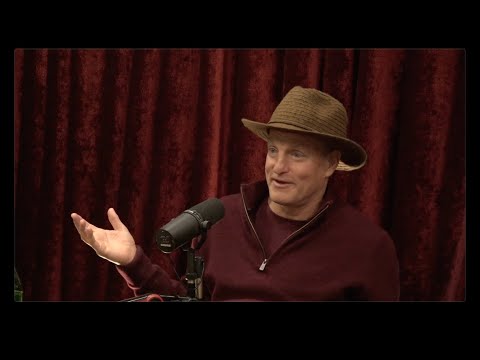
Joe Rogan Experience #2277 - Woody Harrelson
Joe Rogan (host), Woody Harrelson (guest), Narrator, Narrator, Narrator
In this episode of The Joe Rogan Experience, featuring Joe Rogan and Woody Harrelson, Joe Rogan Experience #2277 - Woody Harrelson explores woody Harrelson, Rogan Rip Pharma Profits, War, Media, and Mandates Joe Rogan and Woody Harrelson spend most of this episode dissecting COVID policies, pharmaceutical profiteering, government corruption, and the captured state of mainstream media, using Harrelson’s SNL monologue backlash as an entry point. They connect war, pandemics, and the drug war through a shared theme of profit over humanity, citing historical examples from Vietnam and Iran–Contra to modern vaccine liability shields and private prisons. Harrelson praises Rogan’s willingness to host controversial voices like Robert Malone and RFK Jr., while they both argue that censorship and narrative control during the pandemic permanently damaged public trust in institutions. The conversation also detours into Harrelson’s new film, psychedelics, regenerative farming, veganism, AI’s future impact, and a surprisingly deep appreciation of chess, public defenders, and criminal justice reform.
Woody Harrelson, Rogan Rip Pharma Profits, War, Media, and Mandates
Joe Rogan and Woody Harrelson spend most of this episode dissecting COVID policies, pharmaceutical profiteering, government corruption, and the captured state of mainstream media, using Harrelson’s SNL monologue backlash as an entry point. They connect war, pandemics, and the drug war through a shared theme of profit over humanity, citing historical examples from Vietnam and Iran–Contra to modern vaccine liability shields and private prisons. Harrelson praises Rogan’s willingness to host controversial voices like Robert Malone and RFK Jr., while they both argue that censorship and narrative control during the pandemic permanently damaged public trust in institutions. The conversation also detours into Harrelson’s new film, psychedelics, regenerative farming, veganism, AI’s future impact, and a surprisingly deep appreciation of chess, public defenders, and criminal justice reform.
Key Takeaways
Follow the profit trail to understand wars, pandemics, and policy decisions.
Rogan and Harrelson repeatedly link Vietnam, Iran–Contra, COVID vaccines, and private prisons to one root cause: massive financial incentives that prioritize corporate gain over human life and truth.
Get the full analysis with uListen AI
Mandates and censorship around COVID permanently eroded trust in institutions.
They argue that vaccine mandates, suppression of early treatments, and coordinated media narratives—often later shown to be wrong or incomplete—convinced many people that government, pharma, and legacy media are not reliable guardians of public health.
Get the full analysis with uListen AI
Independent, decentralized information channels are replacing legacy media gatekeepers.
With ratings collapsing at major networks and journalists migrating to platforms like Substack, X, and podcasts, people increasingly seek long-form, unfiltered conversations instead of advertiser- and donor-driven news formats.
Get the full analysis with uListen AI
Psychedelics and cannabis could be powerful tools for empathy and reform—if legalized.
Both see psychedelics and marijuana as consciousness-expanding, compassion-enhancing substances whose prohibition was politically motivated to suppress antiwar and civil rights movements, not to protect public health.
Get the full analysis with uListen AI
Victimless crime enforcement and private prisons are structurally inhumane.
They highlight how drug laws and for-profit prisons turn nonviolent users into revenue streams, likening it to modern slavery that persistently harms communities while failing to reduce harm.
Get the full analysis with uListen AI
Health policy should emphasize terrain—lifestyle, nutrition, and environment—over single ‘magic bullet’ interventions.
Harrelson promotes raw, organic, plant-based eating and fasting; Rogan adds training, sunlight, and sleep, and they both criticize a system that ignored metabolic health during COVID while pushing a single pharmaceutical solution.
Get the full analysis with uListen AI
Cynicism is corrosive; guarded optimism and personal discipline are essential.
Despite their criticisms, both insist that becoming purely cynical is self-destructive; Rogan talks about using hard training, cold plunges, and gratitude to keep perspective, while Harrelson stresses staying hopeful and curious about people you disagree with.
Get the full analysis with uListen AI
AI will soon expose uncomfortable truths—and be weaponized for propaganda.
Rogan predicts that advanced AI, especially tied to quantum computing, will make many hidden realities harder to deny, but warns that competing AIs will themselves be tools in future information wars.
Get the full analysis with uListen AI
Notable Quotes
““The last two entities on Earth I would trust with my health would be Big Pharma and big government.””
— Woody Harrelson
““Why did Pfizer get to make $100 billion in 2021? The profiteering of war is just wrong.””
— Woody Harrelson
““Everything he said has turned out to be true.” (about Robert Malone)”
— Joe Rogan
““Cynicism is the worst disease of old age. Once you’re cynical, you are fucked.””
— Woody Harrelson
““We’re essentially taking human beings and using them as batteries to generate money.” (on private prisons)”
— Joe Rogan
Questions Answered in This Episode
How much of public health policy during COVID was genuinely science-driven versus profit-driven, and how can we transparently audit that?
Joe Rogan and Woody Harrelson spend most of this episode dissecting COVID policies, pharmaceutical profiteering, government corruption, and the captured state of mainstream media, using Harrelson’s SNL monologue backlash as an entry point. ...
Get the full analysis with uListen AI
If vaccine manufacturers lost liability shields tomorrow, how would vaccine development, messaging, and safety practices change?
Get the full analysis with uListen AI
What realistic steps could shift the U.S. from punishment-based drug policy to a health- and rights-based approach without triggering public panic?
Get the full analysis with uListen AI
Could psychedelics or mandatory empathy-building experiences for leaders meaningfully alter how governments approach war, profit, and social policy—or would power structures simply absorb and neutralize them?
Get the full analysis with uListen AI
As trust in legacy media collapses, what new standards or institutions (if any) should emerge to vet information without recreating the same censorship and capture problems?
Get the full analysis with uListen AI
Transcript Preview
(drumbeats) Joe Rogan podcast, check it out.
The Joe Rogan Experience.
Train by day, Joe Rogan podcast by night, all day. (instrumental music) So what's happening, man? How are you?
Oh, everything's groovy as could be. I'm happy to be in Austin. I love it here, you know.
It's a fun place.
Yeah, yeah. I mean, I'm... I stay here, so... yeah.
Oh, do you?
Yeah. And, uh... I don't know. It's like... Just... It's a... It's just a special place in this country.
Yeah, I agree. It's perfect because it's like a blue city in a red state, and it's like even the really kooky liberal people are pretty... reasonable in comparison-
(laughs)
... to like the kooky liberal people from California or New York.
Yeah.
It's balanced.
Kooky liberals, yeah. I've been thinking a lot about that lately.
Did you get a lot of that after Saturday Night Live? (laughs) A lot of kooky liberals coming your way? That, uh...
Uh... (laughs) Yeah, that's-
(laughs)
That's a good transition there.
That, uh-
Uh-
... monologue was great, by the way.
That thing? (laughs) Yeah. Well, I got a... I got a lot of blowback-
Yeah.
... as I knew I would, you know.
Yeah.
Because, uh...
'Cause you tell the truth. (laughs)
Well, yeah. I... You know, it's just that you don't wanna say anything negative about vaccines, which I didn't. What- what I was talking about in that monologue was... was really about profiteering.
Yeah.
Okay, so World War II, necessary. Everyone could say that was a necessary war. Let's say this war on, uh, microbes was a necessary war, right? Why is anyone profiteering?
Yes.
Why did, uh, you know, uh, you know, Pfizer get to make $100 billion in 2021?
Right.
Anyway, uh-
Why did the government-
The profiteering-
... profit off of it? Why did-
The profiteering-
... it was Moderna-
... of war is just wrong. Like okay, if you say that it has to be... there's conflicts happening right now I disagree with, but I'm wondering, why are people making money off of it? You know.
Right.
Even if you think you have a legitimate vantage point from the other side of it-
Yeah.
... why does someone get to make so much fricking money off of it?
Yeah. Yeah. It's the dirtiest aspect of human beings.
(laughs) Right.
We'll find a way to prof- profiteer off everything.
Yeah.
Everything and anything, even- even if it's just. And they'll prolong just things in order to make more profit.
Well, I mean, I- I'm sure you know that, uh, um, you know, Richard Nixon wa-... knew it was imperative that the war continue, you know, the Vietnam War, back before he got elected, you know.
Install uListen to search the full transcript and get AI-powered insights
Get Full TranscriptGet more from every podcast
AI summaries, searchable transcripts, and fact-checking. Free forever.
Add to Chrome