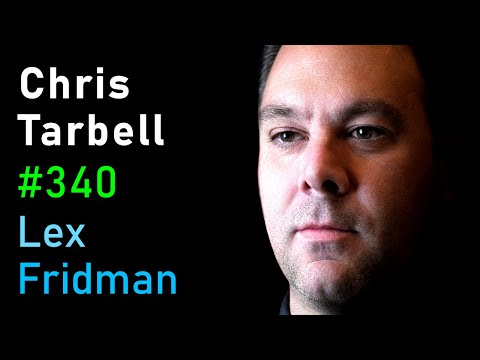
Chris Tarbell: FBI Agent Who Took Down Silk Road | Lex Fridman Podcast #340
Chris Tarbell (guest), Lex Fridman (host), Narrator
In this episode of Lex Fridman Podcast, featuring Chris Tarbell and Lex Fridman, Chris Tarbell: FBI Agent Who Took Down Silk Road | Lex Fridman Podcast #340 explores ex–FBI Cyber Agent Reveals Hunt For Silk Road And LulzSec Lex Fridman interviews former FBI special agent Chris Tarbell about leading cybercrime investigations that brought down Silk Road founder Ross Ulbricht and LulzSec leader Hector Monsegur (Sabu).
Ex–FBI Cyber Agent Reveals Hunt For Silk Road And LulzSec
Lex Fridman interviews former FBI special agent Chris Tarbell about leading cybercrime investigations that brought down Silk Road founder Ross Ulbricht and LulzSec leader Hector Monsegur (Sabu).
They unpack how Tor, Bitcoin, and basic operational mistakes enabled and ultimately exposed Silk Road’s billion‑dollar dark‑web drug market, plus the internal law‑enforcement politics around the case.
Tarbell explains infiltrating Anonymous/LulzSec, flipping Sabu into a cooperating source, and the personal risks and ethical tensions of cyber investigations, from child exploitation to mass surveillance and whistleblowing.
The conversation broadens into cyberwarfare, personal and corporate security hygiene, and Tarbell’s evolving view of criminals as complex human beings rather than one‑dimensional villains.
Key Takeaways
Cyber investigations succeed as much on human error as on technical wizardry.
Silk Road’s core protections were Tor and Bitcoin, but Ulbricht reused a Gmail address, left verbose chat logs and diaries, and hosted backups in the U. ...
Get the full analysis with uListen AI
Tor and encryption strongly protect anonymity, but operational mistakes break it.
Tarbell describes Tor’s onion‑routing and why brute‑forcing it is practically impossible; in practice, agents focus on misconfigurations, side channels (like time zones), and infiltrating human networks rather than ‘cracking’ Tor itself.
Get the full analysis with uListen AI
Hacktivist culture blends real grievances, ego, and ‘for the lulz’ chaos.
Groups like Anonymous and LulzSec were nominally anti‑corruption, but targets often followed opportunity more than principle, and the drive for attention, reputation, and amusement frequently eclipsed coherent ethics.
Get the full analysis with uListen AI
Effective cybersecurity hinges on boring basics, not magic tools.
For companies and individuals, measures like strong unique passwords, two‑factor authentication, timely patching, segmented networks, and controlled access dramatically reduce risk, yet most breaches still exploit these missing fundamentals.
Get the full analysis with uListen AI
Mass surveillance and big‑tech data collection both threaten privacy in different ways.
Tarbell is wary of tools that can facilitate child exploitation yet acknowledges the civil‑liberties danger when governments (or aligned tech platforms) can monitor and shape speech, especially in moments of political crisis.
Get the full analysis with uListen AI
Attribution in cyber conflict is murky, raising escalation risks.
Unlike kinetic attacks where perpetrators often claim responsibility, cyberattacks can be routed and staged to obscure origin, giving states both plausible deniability and dangerous leeway to blame convenient adversaries.
Get the full analysis with uListen AI
Seeing criminals as humans can change how justice and prevention are approached.
Working closely with Sabu and confronting extreme cases like child exploitation shifted Tarbell from viewing offenders as statistics to understanding their backstories and capacities for change—though he draws a hard line on certain harms.
Get the full analysis with uListen AI
Notable Quotes
“The real tech‑savvy ones we don’t arrest. We don’t get to them.”
— Chris Tarbell
“If you’re running a criminal enterprise, please don’t keep a diary.”
— Chris Tarbell
“People don’t think they’re a target, and that message has to get out there.”
— Chris Tarbell
“Anything that helps facilitate the exploitation of children fucking pisses me off.”
— Chris Tarbell
“I arrested one of my closest friends.”
— Chris Tarbell
Questions Answered in This Episode
Did shutting down Silk Road ultimately reduce harm, or just decentralize and multiply dark‑web markets?
Lex Fridman interviews former FBI special agent Chris Tarbell about leading cybercrime investigations that brought down Silk Road founder Ross Ulbricht and LulzSec leader Hector Monsegur (Sabu).
Get the full analysis with uListen AI
Where should society draw the line between necessary surveillance for security and intolerable violations of civil liberties?
They unpack how Tor, Bitcoin, and basic operational mistakes enabled and ultimately exposed Silk Road’s billion‑dollar dark‑web drug market, plus the internal law‑enforcement politics around the case.
Get the full analysis with uListen AI
How can law enforcement and tech companies collaborate against cybercrime without creating new avenues for abuse and censorship?
Tarbell explains infiltrating Anonymous/LulzSec, flipping Sabu into a cooperating source, and the personal risks and ethical tensions of cyber investigations, from child exploitation to mass surveillance and whistleblowing.
Get the full analysis with uListen AI
What does a realistic ‘cyberwar’ scenario between major powers look like, and how prepared are critical infrastructures for it?
The conversation broadens into cyberwarfare, personal and corporate security hygiene, and Tarbell’s evolving view of criminals as complex human beings rather than one‑dimensional villains.
Get the full analysis with uListen AI
How should we ethically evaluate and treat highly skilled hackers who pivot from serious crime to meaningful defensive work?
Get the full analysis with uListen AI
Transcript Preview
... you could buy literally whatever else you wanted. You could post things-
Drugs.
Drugs. You could buy heroin right from Afghanistan, the good stuff. Uh, hacking tools, you could hack for hire. You could buy murders for hire.
The following is a conversation with Chris Tarbell, a former FBI special agent and cyber crime specialist who tracked down and arrested Russ Ulbricht, the leader of Silk Road, the billion dollar drug marketplace, and he tracked down and arrested Hector Monsegur, AKA Sabu of LulzSec and Anonymous, which are some of the most influential hacker groups in history. He is co-founder of Naxo, a complex cyber crime investigation firm, and is a co-host of a podcast called The Hacker & the Fed. This conversation gives the perspective of the FBI cyber crime investigator, both the technical and the human story. I would also like to interview people on the other side, the cyber criminals who have been caught and perhaps the cyber criminals who have not been caught and are still out there. This is a Lex Fridman podcast. To support it, please check out our sponsors in the description and now, dear friends, here's Chris Tarbell. You are one of the most successful cyber security law enforcement agents of all time. You tracked and brought down Russ Ulbricht, AKA Dread Pirate Roberts who ran Silk Road and, uh, Sabu of LulzSec and Anonymous, who was one of the most influential hackers in the world. So first, can you tell me the story of tracking down Russ Ulbricht and Silk Road? Let's start from the very beginning. And maybe let's start by explaining what is the Silk Road.
It was really the first, uh, dark market website. Um, you literally could buy anything there. Uh, I'll take that back. You couldn't... there's two things you couldn't buy there. You couldn't buy guns because that was a different website. Uh, and you couldn't buy fake degrees, so no one could become a doctor, um, but you could buy literally whatever else you wanted. You could post things-
Drugs.
Drugs. You could buy heroin right from Afghanistan, the good stuff. Uh, hacking tools, you could hack for hire. You could buy murders for hire if you wanted someone killed. Now, so when I was an FBI agent, I had to kinda sell some of these cases and this was a, a big drug case, you know, that's the way people saw Silk Road. So internally to the FBI how I had to sell it, I had to find the worst thing on there that I could possibly find, uh, and I think one time I saw a posting for, uh, baby parts. So let's say that you, you know, had a young child and that needed a liver, you could literally go on there and ask for a six-month-old liver, uh, if you wanted to.
For, like, surgical operations versus something darker?
Yeah, I never saw anything that dark as far as people, like, wanting to eat body parts.
Install uListen to search the full transcript and get AI-powered insights
Get Full TranscriptGet more from every podcast
AI summaries, searchable transcripts, and fact-checking. Free forever.
Add to Chrome