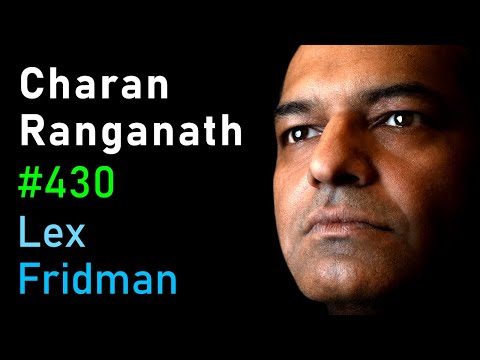
Charan Ranganath: Human Memory, Imagination, Deja Vu, and False Memories | Lex Fridman Podcast #430
Charan Ranganath (guest), Lex Fridman (host), Narrator, Lex Fridman (host), Lex Fridman (host), Lex Fridman (host)
In this episode of Lex Fridman Podcast, featuring Charan Ranganath and Lex Fridman, Charan Ranganath: Human Memory, Imagination, Deja Vu, and False Memories | Lex Fridman Podcast #430 explores how Memory Shapes Reality: Bias, Stories, Learning, and Identity Lex Fridman and neuroscientist Charan Ranganath explore how human memory actually works: not as a replay of the past, but as a biased, reconstructive system optimized for present and future needs.
How Memory Shapes Reality: Bias, Stories, Learning, and Identity
Lex Fridman and neuroscientist Charan Ranganath explore how human memory actually works: not as a replay of the past, but as a biased, reconstructive system optimized for present and future needs.
They discuss the distinction between the experiencing self and the remembering self, how prediction errors drive learning, and why the brain selectively encodes surprising, meaningful moments rather than continuous experience.
The conversation covers false memories, déjà vu, the role of attention, sleep, and brain networks such as the hippocampus and default mode network, as well as life-span changes in memory from infancy through old age.
They also examine practical tools (like spaced repetition and memory palaces), the dangers of propaganda and interrogation, the promise and risk of brain–computer interfaces, and how nostalgia and heartbreak reveal memory’s deep link to identity and time.
Key Takeaways
Memory is a biased reconstruction, not a replay of the past.
We remember peaks, beginnings, endings, and meaning, not full timelines. ...
Get the full analysis with uListen AI
The brain encodes most strongly at moments of surprise and change.
Hippocampal activity spikes at “event boundaries” (surprises, room changes, shifts in context), suggesting it’s optimal to store snapshots at points of maximum prediction error rather than continuously.
Get the full analysis with uListen AI
Attention is a gatekeeper for what we remember, and it can be trained.
Focusing attention on what matters—through mindfulness, deliberate practice, or structured work habits—improves encoding; expertise largely consists of learning what to attend to and what to ignore.
Get the full analysis with uListen AI
Testing and spacing are far more powerful than re-reading for durable learning.
Actively retrieving information (testing yourself) and spacing practice over time create beneficial error signals and diversify context, strengthening content while loosening attachment to a specific situation.
Get the full analysis with uListen AI
Remembering changes memories and makes us vulnerable to false memories.
Each recall is a reconstruction that can incorporate misinformation from others or imagination; over time, stories we tell and retell can become detached from the original event and feel equally real.
Get the full analysis with uListen AI
Our memories—and how we frame them—shape identity and decisions.
Narratives built from early and emotionally significant memories guide major life choices and self-concept; reframing past hardship as meaningful or growth-enhancing can alter present behavior and resilience.
Get the full analysis with uListen AI
Different life stages have different ‘optimal’ memory profiles.
Children’s highly plastic brains favor exploration over precise episodic storage; young adults optimize focused goal pursuit; elders shift toward preserving and transmitting semantic, cultural knowledge.
Get the full analysis with uListen AI
Notable Quotes
“We feel like our memory is a record of what we've experienced, but it's not. It's this kind of very biased sample.”
— Charan Ranganath
“There's no point in suffering unless you get a story out of it.”
— Charan Ranganath
“Memory is all about the present and the future. The past is done, so biologically speaking, it's not important unless there's something from the past that's useful.”
— Charan Ranganath
“We don't replay the past, we imagine how the past could have been by taking bits and pieces that come up in our heads.”
— Charan Ranganath
“You don't want to remember more. You want to remember better.”
— Charan Ranganath
Questions Answered in This Episode
If our remembering self is so biased, how should we make major life decisions that usually rely on memory of past experiences?
Lex Fridman and neuroscientist Charan Ranganath explore how human memory actually works: not as a replay of the past, but as a biased, reconstructive system optimized for present and future needs.
Get the full analysis with uListen AI
Where is the line between healthy reframing of painful memories and dangerously rewriting history for oneself or others?
They discuss the distinction between the experiencing self and the remembering self, how prediction errors drive learning, and why the brain selectively encodes surprising, meaningful moments rather than continuous experience.
Get the full analysis with uListen AI
How could education systems change if they fully embraced spacing, testing, and event-based learning rather than cramming and rote repetition?
The conversation covers false memories, déjà vu, the role of attention, sleep, and brain networks such as the hippocampus and default mode network, as well as life-span changes in memory from infancy through old age.
Get the full analysis with uListen AI
Given how easily social contagion and misinformation can reshape collective memory, what concrete safeguards should societies build into media and politics?
They also examine practical tools (like spaced repetition and memory palaces), the dangers of propaganda and interrogation, the promise and risk of brain–computer interfaces, and how nostalgia and heartbreak reveal memory’s deep link to identity and time.
Get the full analysis with uListen AI
As brain–computer interfaces improve, who should control access to neural data and the ability to read or alter memories, and under what ethical constraints?
Get the full analysis with uListen AI
Transcript Preview
... the act of remembering can change the memory. If you remember some event and then I tell you something about the event, later on when you remember the event, you might remember some original information from the event as well as some information about what I told you. And sometimes, if you're not able to tell the difference, that information that I told you gets mixed into the story that you had originally. So now I give you some more misinformation, or you're exposed to some more information somewhere else, and eventually your memory becomes totally detached from what happened.
The following is a conversation with Charan Ranganath, a psychologist and neuroscientist at UC Davis specializing in human memory. He's the author of Why We Remember: Unlocking Memory's Power to Hold On To What Matters. This is the Lex Fridman Podcast. To support it, please check out our sponsors in the description. And now, dear friends, here's Charan Ranganath. Danny Kahneman describes the experiencing self and the remembering self, and that happiness and satisfaction you gain from the outcomes of your decisions did not come from what you've experienced, but rather from what you remember of the experience. So, uh, can you speak to this interesting difference that you write about in your book of the experiencing self and the remembering self?
Danny really impacted me 'cause I was an undergrad at Berkeley and I got to take a class from him long before he won the Nobel Prize or anything, and it was just a mind-blowing class. But this idea of the remembering self and the experiencing self, I got into it because it's so much about memory, even though he doesn't study memory. So we're right now having this experience, right?
Mm-hmm.
And people are, can watch it presumably on YouTube or listen to it on audio. But if you're talking to somebody else, you could probably describe this whole thing in 10 minutes, but that's going to miss a lot of what actually happened. And so the idea there is, is that the way we remember things is not the replay of the experience. It's something totally different, and it tends to be biased by the beginning and the end. And he talks about the peaks. There's also the, you know, the, the best parts, the worst parts, et cetera. And those are the things that we remember. And so when we make decisions, we usually consult memory, and we feel like our memory is a record of what we've experienced, but it's not. It's this kind of very biased sample, but it's biased in an interesting and I think biologically relevant way.
So in the way we construct a narrative about our past, you say that, uh, it gives us an illusion of stability. Can you explain that?
Basically, I think that a lot of learning in the brain is driven towards being able to make sense... I mean, really memory is all about the present and the future. The past is done, so biologically speaking, it's not important unless there's something from the past that's useful. And so what our brains are really optimized for is to learn about the stuff from the past that's going to be most useful in understanding the present and predicting the future, right? And so cause-effect relationships, for instance. That's a big one. Now, my future is completely unpredictable in the sense that, like, you could r- you know, in the next 10 minutes pull a knife on me and slit my throat, right?
Install uListen to search the full transcript and get AI-powered insights
Get Full TranscriptGet more from every podcast
AI summaries, searchable transcripts, and fact-checking. Free forever.
Add to Chrome