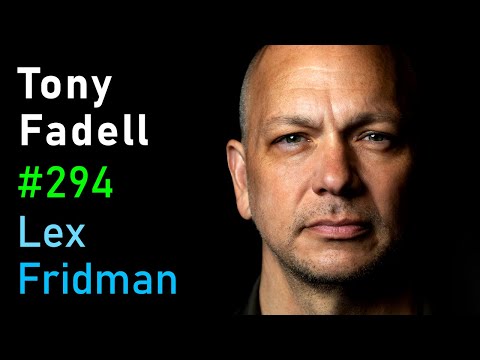
Tony Fadell: iPhone, iPod, Nest, Steve Jobs, Design, and Engineering | Lex Fridman Podcast #294
Tony Fadell (guest), Lex Fridman (host)
In this episode of Lex Fridman Podcast, featuring Tony Fadell and Lex Fridman, Tony Fadell: iPhone, iPod, Nest, Steve Jobs, Design, and Engineering | Lex Fridman Podcast #294 explores tony Fadell on building revolutionary products, teams, and personal resilience Tony Fadell retraces his journey from falling in love with early computers to co-creating the iPod, iPhone, and Nest, unpacking how great products, teams, and stories are built. He describes the technical and emotional realities behind Apple’s iconic devices, including opinion-driven decisions with Steve Jobs and the importance of pain-killing products that deliver emotional “superpowers.” Fadell explains why design is everyone’s job, how to align engineering, product, and marketing around a shared “press release,” and why leadership must balance bold vision with empathy. He also reflects on failure (General Magic), the Nest acquisition, mentors, work–life boundaries, and what it means for your “soul” to live on through the people you’ve helped grow.
Tony Fadell on building revolutionary products, teams, and personal resilience
Tony Fadell retraces his journey from falling in love with early computers to co-creating the iPod, iPhone, and Nest, unpacking how great products, teams, and stories are built. He describes the technical and emotional realities behind Apple’s iconic devices, including opinion-driven decisions with Steve Jobs and the importance of pain-killing products that deliver emotional “superpowers.” Fadell explains why design is everyone’s job, how to align engineering, product, and marketing around a shared “press release,” and why leadership must balance bold vision with empathy. He also reflects on failure (General Magic), the Nest acquisition, mentors, work–life boundaries, and what it means for your “soul” to live on through the people you’ve helped grow.
Key Takeaways
Great products start from real pain and end in emotional ‘superpowers.’
Fadell emphasizes that successful ideas begin by solving a visceral, often habituated pain (e. ...
Get the full analysis with uListen AI
Define the story first: write the ‘press release’ before you build.
He argues that teams should collaboratively define a fictional press release at the start—who it’s for, what pain it solves, why it matters—then use it as a north star so engineering and marketing co-create a non-fiction story that the product actually delivers.
Get the full analysis with uListen AI
V1 decisions are mostly opinion-driven; leaders must own them.
For truly new products like the iPhone, there is no data to lean on; critical choices (e. ...
Get the full analysis with uListen AI
Design is not a department; every discipline is a form of design.
Fadell rejects the myth of a lone, mountaintop designer; he frames electrical engineers, AI researchers, data scientists, and mechanical engineers as designers too, each shaping details that collectively create the feel and magic of the final product.
Get the full analysis with uListen AI
The best ‘assholes’ are mission-driven, not ego-driven.
He distinguishes destructive, ego-based assholes (status, politics, belittling people) from mission-driven intensity that critiques work, not people, and pushes teams past self-imposed limits; the latter can be uncomfortable but often produces growth and better products.
Get the full analysis with uListen AI
Marketing done right is inseparable from product and rooted in ‘why.’
Instead of bolting on marketing at the end, Fadell says product marketing should be the voice of the customer from day one, shaping features and messages, while comms/PR should amplify authentic stories rather than sand them down into safe blandness.
Get the full analysis with uListen AI
Your career should be guided by what you want to learn and who from.
He suggests choosing roles, companies, and teams like you’d choose a graduate program—prioritizing learning, mentors, and missions over salary or brand name—then iterating through ‘version 1, 2, 3’ of yourself based on what you discover by doing.
Get the full analysis with uListen AI
Notable Quotes
“Start with the pain, give them a painkiller, and if you do it right, you give them a superpower.”
— Tony Fadell
“Most companies build the ‘what’ and only later ask marketing to invent a ‘why.’ That’s how you end up telling a fictional story.”
— Tony Fadell
“When you’re doing something no one’s ever done before, I don’t want experts. We’re all beginners together.”
— Tony Fadell
“The way you find out what you want to do in life is by figuring out what you don’t want to do—and the only way you find that out is by doing a bunch of stuff.”
— Tony Fadell
“I’m an atheist, but I believe in the soul. It’s what you instill in others that lives on in the stories they tell.”
— Tony Fadell
Questions Answered in This Episode
How do you practically distinguish between a mission-driven ‘hard ass’ leader and a toxic, ego-driven one when you’re inside a company?
Tony Fadell retraces his journey from falling in love with early computers to co-creating the iPod, iPhone, and Nest, unpacking how great products, teams, and stories are built. ...
Get the full analysis with uListen AI
In a world increasingly dominated by giant platforms, what kinds of zero-to-one products still have a real shot at evolving into new platforms?
Get the full analysis with uListen AI
How should a young engineer or designer decide when they’ve learned enough inside big companies to make the leap and start their own venture?
Get the full analysis with uListen AI
What specific habits or tools does Fadell use to prevent work from consuming his mental health, given his experience at General Magic?
Get the full analysis with uListen AI
If you were designing the ‘iPhone moment’ for a new frontier today (e.g., AR, AI hardware, climate tech), what pain and superpower would you start from?
Get the full analysis with uListen AI
Transcript Preview
It wasn't just a one-on-one. It could be Steve against the team, going, "We need glass instead of plastic on the front face of the iPhone, and we're going to do this." And we're like, "God dam-" you know? And so we did it, and he pushed us because he didn't know all the details, but he could see in our minds that we're like, "Yeah, we could probably... Yeah, we could probably," but man, it's really putting us in risk, and we- we laid out the risks for him. And he's like, "I'm willing to take those risks."
The following is a conversation with Tony Fadell, engineer and designer, co-creator of the iPod, the iPhone, and the Nest Thermostat. And he's the author of the new book, BUILD: An Unorthodox Guide to Making Things Worth Making. More than almost any human ever, he knows what it takes to create technology ideas, designs, products, and companies that revolutionize life for huge numbers of people in the world. So, it truly is an honor and pleasure to sit down with Tony for a time and look back at one heck of an amazing life. This is the Lex Fridman Podcast. To support it, please check out our sponsors in the description, and now, dear friends, here's Tony Fadell. When did you first fall in love with computers? Or let's say computer engineering and design?
I first fell in love, um, with computers and programming, was at a summer school class in fifth grade in Grosse Pointe Farms, Michigan. Um, it was a simple basic programming class, but the basic programming class was not like you might think it was. It was bubble cards, so literally it was, you know, uh, the- the cards to stack up cards, and you would use a number two pencil, and you would put in, um, your program line by line, and you'd have to make sure it was perfectly stacked, and no errors, and what have you. And you would take that set of cards and you'd put it on this reader, and it was zuh-zuh-zuh, and it would go off to an IBM microcomputer somewhere in the... uh, back then, the cloud. (laughs)
(laughs)
And then, uh, you would sit on a Texas Instruments paper terminal, and it would just... literally, I was just... I could write things, and it would... the- I could program this machine to do stuff, and it was, you know, it was nowhere near sexy. There was no graphics, right? (laughs) Oregon Trail was all in text, right? (laughs) The cards were so cumbersome that if you got one thing wrong or out of order, it- i- y- or a disaster, or you dropped one card, it would all fall apart. So, um, w- just doing that, you know, printf, or w- was it? I can't even remember what that was. It was, uh, you know, what the- what the basic commands were, but-
Install uListen to search the full transcript and get AI-powered insights
Get Full TranscriptGet more from every podcast
AI summaries, searchable transcripts, and fact-checking. Free forever.
Add to Chrome