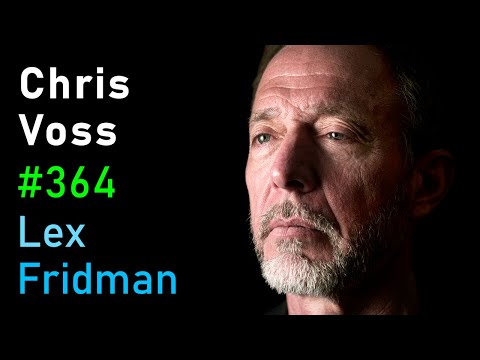
Chris Voss: FBI Hostage Negotiator | Lex Fridman Podcast #364
Chris Voss (guest), Lex Fridman (host), Narrator
In this episode of Lex Fridman Podcast, featuring Chris Voss and Lex Fridman, Chris Voss: FBI Hostage Negotiator | Lex Fridman Podcast #364 explores chris Voss Explains Tactical Empathy: Emotions, Negotiation, and Conflict Resolution Chris Voss, former FBI hostage negotiator, joins Lex Fridman to unpack how high‑stakes negotiation principles apply to everyday life, business, and geopolitics. He argues that all decision-making is fundamentally emotional and that “tactical empathy” — deeply understanding another’s perspective without agreeing — is the core tool of effective negotiation. They discuss kidnapping and terrorism cases, geopolitical conflicts like Ukraine and Israel–Palestine, the dynamics of difficult conversations, and the neuroscience behind feeling understood. Voss emphasizes integrity, setting boundaries without aggression, and practicing empathy in low‑stakes situations to prepare for high‑stakes moments.
Chris Voss Explains Tactical Empathy: Emotions, Negotiation, and Conflict Resolution
Chris Voss, former FBI hostage negotiator, joins Lex Fridman to unpack how high‑stakes negotiation principles apply to everyday life, business, and geopolitics. He argues that all decision-making is fundamentally emotional and that “tactical empathy” — deeply understanding another’s perspective without agreeing — is the core tool of effective negotiation. They discuss kidnapping and terrorism cases, geopolitical conflicts like Ukraine and Israel–Palestine, the dynamics of difficult conversations, and the neuroscience behind feeling understood. Voss emphasizes integrity, setting boundaries without aggression, and practicing empathy in low‑stakes situations to prepare for high‑stakes moments.
Key Takeaways
Emotions, not logic, drive all decisions — negotiate feelings first.
Voss stresses that even in kidnapping cases, outcomes hinge on when kidnappers *feel* they’ve gotten enough; reason is built on what people care about emotionally, so effective negotiation must address those feelings before facts or numbers.
Get the full analysis with uListen AI
Tactical empathy is understanding, not agreeing or sympathizing.
Drawing on FBI work and Harvard research, Voss defines empathy as accurately articulating the other side’s perspective without signaling agreement or shared values, which disarms defensiveness and builds trust even with adversaries like terrorists or hostile witnesses.
Get the full analysis with uListen AI
“That’s right” is the negotiation milestone you’re aiming for.
When someone responds to your summary of their view with “That’s right,” it usually signals a deep sense of being understood; Voss links this to oxytocin and serotonin hits that increase bonding, honesty, and satisfaction while lowering their demands.
Get the full analysis with uListen AI
Name negative emotions to deactivate them, instead of denying them.
Labeling feelings (“You sound angry,” “You probably feel abandoned”) tends to reduce their intensity, whereas denials (“I don’t want you to be offended…”) raise defenses; this applies from terrorist cases and grieving families to everyday disputes.
Get the full analysis with uListen AI
Sequence empathy before assertiveness to create real influence.
Voss argues there’s no real tension between empathy and being firm if you get the order right: first demonstrate deep understanding, then assert your boundaries or position; done in reverse, it triggers resistance rather than collaboration.
Get the full analysis with uListen AI
Silence and calibrated questions create the illusion of control and deeper thinking.
Techniques like strategic silence and “what”/“how” questions make people feel in control and push them into effortful, reflective thinking, which often leads them to reveal information, soften positions, and help design the implementation of agreements.
Get the full analysis with uListen AI
Practice empathy skills in low-stakes settings to prepare for high-stakes negotiations.
Voss recommends using labeling, mirroring, and perspective-taking with cashiers, TSA agents, or rideshare drivers (“Tough day? ...
Get the full analysis with uListen AI
Notable Quotes
“The key to kidnapping negotiations are the feelings of the bad guys.”
— Chris Voss
“There’s no such thing as reason. Your reason is based on what you care about from the beginning.”
— Chris Voss
“Empathy is not agreeing or even liking the other side. It’s just understanding where they’re coming from and articulating it.”
— Chris Voss
“Yes is nothing without how. At its very best, yes is only temporary and aspirational.”
— Chris Voss
“It’s not a sin to not get the deal. It’s a sin to take a long time to not get the deal.”
— Chris Voss
Questions Answered in This Episode
How can individuals apply tactical empathy in political or ideological disagreements that feel morally charged or zero-sum?
Chris Voss, former FBI hostage negotiator, joins Lex Fridman to unpack how high‑stakes negotiation principles apply to everyday life, business, and geopolitics. ...
Get the full analysis with uListen AI
What practical steps can leaders take to embed these negotiation principles into organizational culture, not just individual behavior?
Get the full analysis with uListen AI
Where is the line between skillful influence and unethical manipulation in negotiation, and how do you recognize when you’re crossing it?
Get the full analysis with uListen AI
Could AI systems ever genuinely perform tactical empathy, or is a human capacity for inner conflict and self-awareness essential?
Get the full analysis with uListen AI
In protracted conflicts like Israel–Palestine or Ukraine–Russia, what concrete, empathy-based structures (e.g., dialogue formats, rules) could realistically be implemented to move parties toward peace?
Get the full analysis with uListen AI
Transcript Preview
... the crazy thing in the kidnap business. We used to get asked by FBI leadership, "When is this gonna be over?" And the answer would be, "When the bad guys feel like they've gotten everything they can." Now, dissecting that statement, you're talking about when they feel like they got everything they can. So the key to kidnapping negotiations are the feelings-
(laughs)
... of the bad guys. We're talking about feelings, kidnappers' feelings.
Yeah.
Which drives everything. Doesn't matter what human endeavor it is.
The following is a conversation with Chris Voss, former FBI hostage and crisis negotiator, and author of Never Split the Difference: Negotiating as if Your Life Depended on It. This is the Lex Fridman Podcast. To support it, please check out our sponsors in the description, and now, dear friends, here's Chris Voss. What is it like negotiating for a hostage with a kidnapper? What is the toughest part of that process?
The toughest part is if it looks bad from the beginning, and you gotta en- engage in a process anyway.
What are the factors that make it bad? What... That- that makes you nervous that if you were to observe a situation where there's general negotiation or it's a hostage negotiation, what makes you think that this is going to be difficult?
If they wanna make it look like they're negotiating but they're not. Like, in the 2004 timeframe, um, Al-Qaeda in Iraq was, uh, executing people on camera for the publicity, and they wanted to make it look like they were negotiating. So, they'd come on and they'd say, "If you don't get all the women out of... uh, Iraqi women out of the- the jails in Iraq in 72 hours, we're gonna kill the hostage." That was one of the demands in one of the cases in that timeframe. Now, first of all, even if we'd have been willing... the US government, the coalition would have been willing to do that, it wouldn't have been able to happen in 72 hours. So, it was an impossible ask from the beginning. And so then- then that looks really bad. Like, they're- they're trying to make it- they're trying to make it look like they're talking reasonably, uh, but they're not. So, your hostage is in bad shape there if they've made a demand that you just... even if you wanted to do, you couldn't do. Uh, so then what makes that very difficult is, in kidnappings especially, you're working with family members. You're coaching people. Bad guys are in touch with family members, or if they're not directly in touch with family members, the other thing that Al-Qaeda was doing at that time was they didn't give us a way to talk to them. They're make- they're making statements in the media, but then not leaving their phone number, if you will.
Yeah.
So, that's one more thing, like, they're intentionally blocking you. They're asking you to do something you can't do. They're not giving you a way to talk to them. So, you gotta get with the family and discuss with the family how you're gonna approach things. Now, the family definitely wants to know, is this gonna help? There's a bunch of cases like that in that timeframe. And you gotta be honest with them. It's a long shot. Our chances here are slim or none. And when it's slim or none, I'll take slim, but it's still very, very slim. And there were a number of people that were killed in that timeframe before the tide finally got turned, and it was- it was hard dealing with the families at the time.
Install uListen to search the full transcript and get AI-powered insights
Get Full TranscriptGet more from every podcast
AI summaries, searchable transcripts, and fact-checking. Free forever.
Add to Chrome