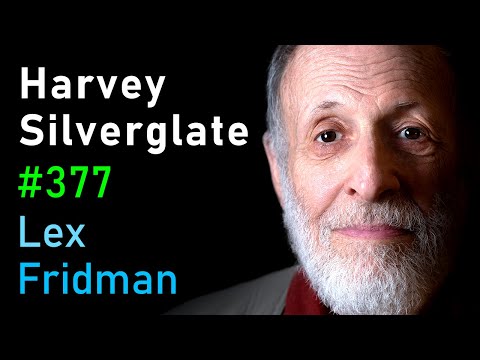
Harvey Silverglate: Freedom of Speech | Lex Fridman Podcast #377
Harvey Silverglate (guest), Lex Fridman (host)
In this episode of Lex Fridman Podcast, featuring Harvey Silverglate and Lex Fridman, Harvey Silverglate: Freedom of Speech | Lex Fridman Podcast #377 explores free Speech, Campus Censorship, and Power: Harvey Silverglate Unfiltered Harvey Silverglate, co‑founder of FIRE and lifelong civil liberties lawyer, argues for near‑absolutist free speech, especially on university campuses where he believes censorship and administrative bloat are undermining education and democracy.
Free Speech, Campus Censorship, and Power: Harvey Silverglate Unfiltered
Harvey Silverglate, co‑founder of FIRE and lifelong civil liberties lawyer, argues for near‑absolutist free speech, especially on university campuses where he believes censorship and administrative bloat are undermining education and democracy.
He insists that even hate speech must be protected, both to surface dangerous ideas and to preserve the clash of views that produces better decisions and intellectual growth.
Silverglate criticizes DEI-driven affirmative action, public‑sector teachers’ unions, and overreaching law enforcement and surveillance, arguing these systems entrench inequality and erode constitutional protections.
Throughout, he connects these themes to his run for the Harvard Board of Overseers, proposing to slash administration, abolish speech codes, and restore academic freedom as a model for higher education nationwide.
Key Takeaways
Hate speech must remain legal to preserve honest discourse and reveal real dangers.
Silverglate argues that knowing who hates you is practically and morally important; suppressing hateful speech only drives it underground and distorts one’s understanding of reality and human nature.
Get the full analysis with uListen AI
Academic freedom is most crucial on campuses, yet is being strangled by administrators.
He claims universities have been overtaken by risk‑averse bureaucracies that enforce speech codes, run ‘kangaroo courts,’ and prioritize comfort over intellectual challenge, thereby turning education into indoctrination.
Get the full analysis with uListen AI
Living in a free society requires tolerating emotional discomfort, not outlawing offense.
Silverglate insists that insults and emotional pain are the acceptable cost of liberty; the proper remedies are counterspeech, rebuttal and thicker skins, not censorship regimes.
Get the full analysis with uListen AI
Affirmative action and DEI initiatives mask, rather than fix, failures in public education.
He predicts the Supreme Court will abolish race‑based affirmative action and argues the real solution to inequality is radically improving K‑12 schools, which he believes requires dismantling public‑sector teachers’ unions.
Get the full analysis with uListen AI
Administrative bloat inflates tuition and suppresses free expression; it should be slashed.
In his Harvard Overseers campaign, Silverglate proposes firing about 95% of administrators, eliminating speech codes, and using the savings to cut tuition by ~40%, positioning Harvard as a national model.
Get the full analysis with uListen AI
Universities should not run moral litmus tests on donors, but can restrict naming rights.
Using Epstein, Sackler, and DARPA as examples, he warns that policing donor morality is a slippery slope, yet sees refusing certain naming rights as a pragmatic boundary short of full ‘purity’ tests.
Get the full analysis with uListen AI
The U.S. criminal justice system is structurally dangerous, yet the jury remains a key safeguard.
He contends federal law is so broad that ‘everyone’ is indictable, the FBI culture is irredeemably corrupt, and surveillance is overused, but that unanimous juries of ordinary citizens are a vital protection against abusive prosecutions.
Get the full analysis with uListen AI
Notable Quotes
“Hate speech is much more important than love speech.”
— Harvey Silverglate
“Living in a free society requires that you expose yourself to some discomfort… Nobody ever promised us a rose garden.”
— Harvey Silverglate
“There’s something wrong when you can say something with complete abandon in Harvard Square, whereas on the other side of the fence you can’t say it in Harvard Yard.”
— Harvey Silverglate
“Universities have decided that the clash of ideas is not such a good idea because some people’s feelings will be hurt.”
— Harvey Silverglate
“If you can’t have freedom of thought on the college campuses, where can you? Then we’re lost as a society.”
— Harvey Silverglate
Questions Answered in This Episode
Where should the legal line be drawn between protected hate speech and genuinely dangerous incitement in a digital age?
Harvey Silverglate, co‑founder of FIRE and lifelong civil liberties lawyer, argues for near‑absolutist free speech, especially on university campuses where he believes censorship and administrative bloat are undermining education and democracy.
Get the full analysis with uListen AI
Is it realistic—or desirable—to eliminate most university administration without creating new risks for students and faculty?
He insists that even hate speech must be protected, both to surface dangerous ideas and to preserve the clash of views that produces better decisions and intellectual growth.
Get the full analysis with uListen AI
How can K‑12 education be reformed in practice if public‑sector unions remain politically powerful and deeply entrenched?
Silverglate criticizes DEI-driven affirmative action, public‑sector teachers’ unions, and overreaching law enforcement and surveillance, arguing these systems entrench inequality and erode constitutional protections.
Get the full analysis with uListen AI
Should universities ever refuse donations on moral grounds, and who, if anyone, is qualified to make that judgment?
Throughout, he connects these themes to his run for the Harvard Board of Overseers, proposing to slash administration, abolish speech codes, and restore academic freedom as a model for higher education nationwide.
Get the full analysis with uListen AI
Does giving high‑profile platforms to deeply controversial figures educate the public or risk normalizing harmful ideologies—and how should interviewers navigate that tension?
Get the full analysis with uListen AI
Transcript Preview
It is the most important right that Americans have. It's not a coincidence or an accident that it's named in the First Amendment to the Constitution. Without it, no democratic society can be democratic for long. And I'm an absolutist. That is, um, I believe that, for example, people say to me, "But what about hate speech?" Well, hate speech is much more important than love speech, and the reason is, I'm much more interested in knowing wh- whom I should not turn my back on, than I am interested in f- figuring out who loves me.
The following is a conversation with Harvey Silverglate, a legendary free speech advocate, co-founder of FIRE, the Foundation for Individual Rights and Expression, and the author of several books on the freedom of speech and criminal justice, including The Shadow University: The Betrayal of Liberty on America's Campuses. Harvey is running to be on the Harvard Board of Overseers this year with a write-in campaign, so you have to spell his name correctly, Silverglate, promising to advocate for free speech and to push for reducing the size of Harvard's administration bureaucracy. Election is over this Tuesday, May 16th, at 5:00 PM Eastern. To vote, you have to be Harvard alumni, so if you happen to be one, please vote online. It's a good way to support freedom of speech on Harvard campus. Instructions how to do so are in the description. As a side note, please allow me to say that since there are several controversial conversations coming up, I tried to make sure that this podcast is a platform for free discourse, where ideas are not censored but explored, and if necessary, challenged in a thoughtful, empathetic way. It's by having such difficult conversations, not by avoiding them, that we can begin to heal divides and to shed light on the dark parts of human history and human nature. This is the Lex Fridman Podcast. To support it, please check out our sponsors in the description. And now, dear friends, here's Harvey Silverglate. You co-founded the Foundation for Individual Rights and Expression, also known as FIRE, a legendary organization that fights for the freedom of speech for all Americans, in our courtrooms, on our campuses, and in our culture. So let's start with the big question. What is freedom of speech?
First of all, the or- organization, when I co-founded it in 1999, was called the Foundation for Individual Rights in Education.
Mm-hmm.
It focused on free speech issues on college campuses in academia, and only earlier this year did we decide to expand our reach beyond the campuses, which is why the name, although the acronym FIRE remains, it's now the Foundation for Individual Rights and Expression.
The E used to be education.
The E used to be education. It's now expression. And we basically do a lot of the cases the ACLU used to do. The ACLU now more is, is the... they're a p- a progressive organization rather than a civil liberties organization. And, um, and we've taken the, um, the, the role of dealing with free speech in, in the society generally in... and now this is a particularly, um, uh, uh, an era prone to censorship. Um, e- everybody thinks they're right and that, uh, people who disagree with them should not be able to voice their views. It's a very difficult period right now, both on campus and off campus. Um, it's about as, as intolerant an era as I can remember in... I'm, I'm gonna be 81 May 10th. I was born on Mother's Day, 1942. And, uh, I can't remember it being this bad. I was born during the McCarthy era. Um-
Install uListen to search the full transcript and get AI-powered insights
Get Full TranscriptGet more from every podcast
AI summaries, searchable transcripts, and fact-checking. Free forever.
Add to Chrome