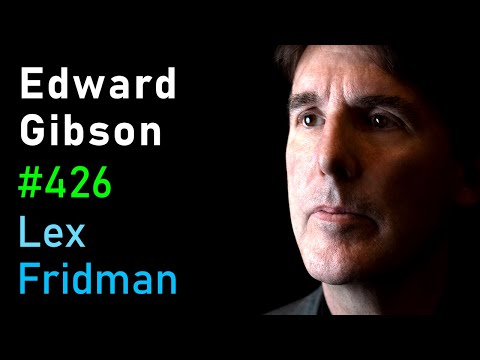
Edward Gibson: Human Language, Psycholinguistics, Syntax, Grammar & LLMs | Lex Fridman Podcast #426
Edward (Ted) Gibson (guest), Lex Fridman (host), Narrator, Narrator
In this episode of Lex Fridman Podcast, featuring Edward (Ted) Gibson and Lex Fridman, Edward Gibson: Human Language, Psycholinguistics, Syntax, Grammar & LLMs | Lex Fridman Podcast #426 explores mIT linguist dissects language, thought, LLMs, and why legalese fails Lex Fridman interviews MIT psycholinguist Edward (Ted) Gibson about how human language is structured, processed, and learned, and how this contrasts with large language models. Gibson argues for a dependency-grammar view of syntax and shows that across languages, people strongly prefer short dependencies because long-distance links are cognitively costly. He distinguishes language (a communication system) from thought, citing brain-imaging and neuropsychology showing that high-level language and non‑linguistic reasoning use different neural systems. The conversation ranges from Pirahã number words and Amazonian color terms to the pathology of legalese, the limits of LLM “understanding,” and speculative ideas about communicating with animals and aliens.
MIT linguist dissects language, thought, LLMs, and why legalese fails
Lex Fridman interviews MIT psycholinguist Edward (Ted) Gibson about how human language is structured, processed, and learned, and how this contrasts with large language models. Gibson argues for a dependency-grammar view of syntax and shows that across languages, people strongly prefer short dependencies because long-distance links are cognitively costly. He distinguishes language (a communication system) from thought, citing brain-imaging and neuropsychology showing that high-level language and non‑linguistic reasoning use different neural systems. The conversation ranges from Pirahã number words and Amazonian color terms to the pathology of legalese, the limits of LLM “understanding,” and speculative ideas about communicating with animals and aliens.
Key Takeaways
Human languages strongly minimize dependency length.
Across ~60 typologically diverse languages with parsed corpora, actual sentences consistently have much shorter word-to-word dependency distances than randomized but grammatically plausible alternatives, indicating a universal pressure to keep related words close for easier production and comprehension.
Get the full analysis with uListen AI
Center-embedding is universally hard for humans and LLMs.
Nested structures like “The boy who the cat that the dog chased scratched cried” massively increase dependency distances and working-memory load; both humans and large language models struggle to complete or process such sentences, suggesting shared constraints on processing form.
Get the full analysis with uListen AI
Legalese is difficult primarily because of extreme center-embedding, not jargon or passives.
Corpus and behavioral studies on contracts show unusually high rates of center-embedded clauses (e. ...
Get the full analysis with uListen AI
Language and thought are neurally dissociable systems.
fMRI work (Fedorenko et al. ...
Get the full analysis with uListen AI
Words people invent reflect communicative needs, not perceptual limits.
Groups like the Tsimane and Pirahã see the same colors and numerosities we do but have far fewer basic color terms and lack exact number words (even for ‘one’); experiments show they use approximate quantifiers (‘few/some/many’) and can match sets perceptually but can’t perform exact counting tasks, highlighting that lexical systems track what must be talked about, not what can be perceived.
Get the full analysis with uListen AI
Movement-based syntactic theories are harder to learn than lexicalized, dependency-based ones.
Chomsky’s classic movement analyses (e. ...
Get the full analysis with uListen AI
Current LLMs model form extremely well but show brittle grasp of meaning.
They approximate construction-grammar-like patterns and even internally recover something akin to dependency structure, yet fail on small semantic twists (e. ...
Get the full analysis with uListen AI
Notable Quotes
“Language is an invented system by humans for communicating their ideas.”
— Edward Gibson
“I don’t see any limits to their form. Their form is perfect.”
— Edward Gibson (on large language models)
“We don’t think in language.”
— Edward Gibson
“Legalese is massively center-embedded. About 70 percent of sentences have a center-embedded clause.”
— Edward Gibson
“Naively, I certainly thought that all humans would have words for exact counting. And the Pirahã don’t.”
— Edward Gibson
Questions Answered in This Episode
If language and thought are distinct systems in the brain, what exactly are the representations and mechanisms that underlie non-linguistic thought?
Lex Fridman interviews MIT psycholinguist Edward (Ted) Gibson about how human language is structured, processed, and learned, and how this contrasts with large language models. ...
Get the full analysis with uListen AI
How far can large language models go toward genuine understanding if they are only ever directly trained on form—do we eventually need grounded perception and action?
Get the full analysis with uListen AI
Could we quantify a ‘cognitive cost function’ for dependency length well enough to automatically simplify complex legal or technical texts without changing their meaning?
Get the full analysis with uListen AI
What social, economic, or technological conditions tend to trigger the invention of exact number systems and other major lexical innovations in a culture?
Get the full analysis with uListen AI
If we eventually decode whale or bird communication, what criteria should we use to decide whether what they have counts as ‘language’ in the human sense?
Get the full analysis with uListen AI
Transcript Preview
Naively, I certainly thought that all humans would have words for exact counting.
Mm-hmm.
Uh, and the Piraha don't, okay?
Oh, wow.
So they don't have any words for even one. There's not a word for one in their language. And so there's certainly not a word for two, three or four, and so that kind of blows people's minds often. (laughs)
Yeah, that's blowing my mind.
(laughs) That's pretty weird, isn't it?
How are you, how are you gonna ask, "I want two of those?"
You just don't. And so that's just not-
(laughs)
... a thing you can possibly ask in the Piraha. It's not possible. That is, there is no words for that.
(logo whooshing)
The following is a conversation with Edward Gibson, or Ted, as everybody calls him. He is a psycholinguistics professor at MIT. He heads the MIT Language Lab that investigates why human languages look the way they do, the relationship between culture and language, and how people represent, process and learn language. Also, he should have a book titled Syntax: A Cognitive Approach published by MIT Press coming out this fall. So look out for that. This is the Lex Fridman Podcast. To support it, please check out our sponsors in the description. And now, dear friends, here's to Edward Gibson. When did you first become fascinated with human language?
As a kid in school when we had to structure sentences in English grammar. I, I, I found that process interesting. I found it confusing (laughs) as to what it was I was told to do. I didn't, didn't understand what the theory was behind it, but I found it very interesting.
So when you look at grammar, you were almost thinking about it like a puzzle, like almost like a mathematical puzzle?
Yeah. I think that's right. I didn't know I was gonna work on this at all at that point. I was really just ... I was kind of a math geek person-
Mm-hmm.
... a computer scientist. (laughs) I really liked computer science, and then I found language is a, a neat puzzle to work on from, uh, an engineering perspective, actually. That's what I ... It ... And as a ... I, I sort of accidentally (laughs) fi- ... I decided after I finished my undergraduate degree, which was computer science and math in Canada, in Queen's University, I decided to go to grad school. It's like, that's what I always thought I would do, and I went to, to Cambridge, where they had a master's in, a master's program in computational linguistics. And I hadn't taken a single language class before. All I'd taken was CS, computer science, math classes, pretty much, mostly, as an undergrad, and I just thought, well, this was an interesting thing to do for a year, (laughs) 'cause it was a single-year program. And, um, then I ended up spending my whole life (laughs) doing it.
Install uListen to search the full transcript and get AI-powered insights
Get Full TranscriptGet more from every podcast
AI summaries, searchable transcripts, and fact-checking. Free forever.
Add to Chrome