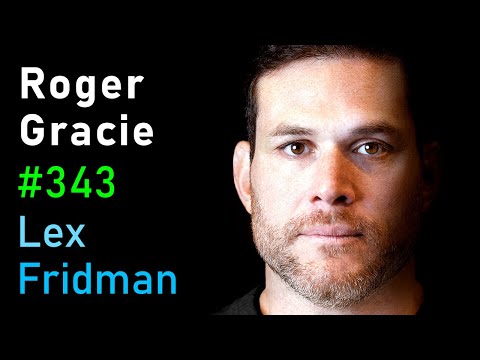
Roger Gracie: Greatest Jiu Jitsu Competitor of All Time | Lex Fridman Podcast #343
Roger Gracie (guest), Lex Fridman (host)
In this episode of Lex Fridman Podcast, featuring Roger Gracie and Lex Fridman, Roger Gracie: Greatest Jiu Jitsu Competitor of All Time | Lex Fridman Podcast #343 explores roger Gracie Reveals Mental Game Behind Jiu-Jitsu Greatness and Legacy Lex Fridman speaks with Roger Gracie, widely regarded as the greatest jiu-jitsu competitor ever, about the technical, mental, and emotional foundations of his success.
Roger Gracie Reveals Mental Game Behind Jiu-Jitsu Greatness and Legacy
Lex Fridman speaks with Roger Gracie, widely regarded as the greatest jiu-jitsu competitor ever, about the technical, mental, and emotional foundations of his success.
Roger dissects his legendary rematch with Buchecha, explaining mindset, strategy, and how he manages fear, adrenaline, and exhaustion before and during high‑stakes matches.
He emphasizes complete technical development—especially defense and bad positions—relentless fundamentals like mount and collar chokes, and training intentionality over “just getting tough.”
The conversation broadens to duty vs. passion in his MMA career, the evolution of no‑gi and leg locks, Gordon Ryan and John Danaher, and life lessons on self-belief, failure, and never quitting.
Key Takeaways
Emptying the mind controls fear and performance under pressure.
Roger walks to the mat in a state of deliberate ‘blankness,’ having learned that thinking about possibilities and outcomes only increases anxiety and never helps performance; instead, he focuses on clearing thoughts to regulate adrenaline and access instinctive reactions.
Get the full analysis with uListen AI
Train defense and bad positions as much as offense.
His confidence in never being submitted at the elite level comes from systematically starting in terrible positions—side control, mount, back, tight submissions—and repeating escapes and defenses until he had reliable answers everywhere, not just from his favorite positions.
Get the full analysis with uListen AI
Mastery of ‘basic’ positions is extremely complex and takes years.
Roger’s famous mount and cross‑collar choke are not simple tricks but multi‑step systems refined over years: precise weight distribution, posture, grip depth, timing of the second hand, and continuous adaptation to an opponent’s defenses—far beyond what most black belts practice.
Get the full analysis with uListen AI
Winning by submission, not points, was his personal standard.
He never chased medals for their own sake; he felt that only dominating and submitting opponents proved he was truly better, while winning narrowly on points or advantages left too much doubt and didn’t satisfy his internal competitive standard.
Get the full analysis with uListen AI
Most people train to get ‘tough,’ not to get ‘good.’
Roger criticizes common training where athletes just spar hard from neutral positions; this builds grit but leaves huge technical gaps. ...
Get the full analysis with uListen AI
True self-belief can exist before external validation.
As an out‑of‑shape, late‑starting, ‘chubby’ kid getting smashed by everyone, Roger quietly decided he would become the best in the world and never needed anyone to believe him; he warns that seeking approval or listening to fearful people often kills ambition.
Get the full analysis with uListen AI
Failure and not quitting are prerequisites for greatness.
Roger views failure as unavoidable and necessary; what matters is never mentally breaking, even when exhausted or outmatched. ...
Get the full analysis with uListen AI
Notable Quotes
“The fight starts way before the referee says go.”
— Roger Gracie
“Winning is not enough. I have to tap everybody else.”
— Roger Gracie
“Most people train to get tough, not to get good.”
— Roger Gracie
“To be a complete martial artist, you should have no weakness.”
— Roger Gracie
“Without failing, there is no success. The only way to succeed is failing.”
— Roger Gracie
Questions Answered in This Episode
How can an everyday practitioner realistically integrate Roger’s approach to training bad positions and defense into a limited weekly schedule?
Lex Fridman speaks with Roger Gracie, widely regarded as the greatest jiu-jitsu competitor ever, about the technical, mental, and emotional foundations of his success.
Get the full analysis with uListen AI
Is it possible to achieve a Roger‑style level of mastery in a ‘basic’ technique outside of combat sports—like programming, music, or business—and what would that daily practice look like?
Roger dissects his legendary rematch with Buchecha, explaining mindset, strategy, and how he manages fear, adrenaline, and exhaustion before and during high‑stakes matches.
Get the full analysis with uListen AI
How should competitors balance the desire to win at all costs with Roger’s more demanding internal standard of winning by clear dominance and submission?
He emphasizes complete technical development—especially defense and bad positions—relentless fundamentals like mount and collar chokes, and training intentionality over “just getting tough.”
Get the full analysis with uListen AI
What are the psychological and ethical trade‑offs in pursuing greatness when family, teachers, or peers actively discourage ambitious goals?
The conversation broadens to duty vs. ...
Get the full analysis with uListen AI
In a sport increasingly dominated by leg locks and no‑gi systems, how much of Roger’s gi‑based positional philosophy (mount, collar chokes, complete defense) will still matter in 20 years?
Get the full analysis with uListen AI
Transcript Preview
In my mind, I have to top everybody else. Winning is not enough.
The following is a conversation with Roger Gracie, widely considered to be the greatest jujitsu competitor of all time. This is the Lex Friedman Podcast. To support it, please check out our sponsors in the description, and now, dear friends, here's Roger Gracie. Let's start with possibly the greatest match in jujitsu history, your second match against Buchecha. Let's go through the details. Let's go through the whole thing. So the walk leading up to it, you always do this walk-
(laughs)
... this epic walk. You posted on Instagram, Renzo posted on Instagram.
Yeah.
This calm walk towards the mat. Well, let's- let's go to that match in particular. What was going through your mind? You'd been away from competition, facing probably one of the greatest, and at- at that time, many people considered the greatest jujitsu competitor of all time in Buchecha. Uh, here's the old man-
(laughs)
... the old-timer getting back at, uh, out there. What were you thinking?
Yeah. Uh, I think that's the first time since probably I got my black belt that I wasn't the favorite walking into a fight, I have to say. Like, a lot of people thought, considered him the favorite. I mean, understandable, you know, I was out of competition for a while, and he was just winning everything. So, you know, you're saying about the walk. Like, for me, you know, the fight starts way before the referee say go, you know? It's the, it's all the focus and concentration that I think is very important for me to start before, like, you know, I almost walk blind to the match. Many times I passed, like, great friends and I couldn't see anyone, you know? They're trying to talk to you, and I'm like, I'm 100% focused on my opponent already, even though that I cannot even see him in front of me. So I think that for me was always, uh, very important to try to clear my mind out from everything.
Are you visualizing the opponent or are you just clearing-
Not at, not at that much, not at that time.
Right. Is there, what's- what's in your head? Is it like a calm river with birds chirping? What? (laughs)
It's blank, just-
Blank.
... just blank.
Darkness.
Yeah. Darkness.
Okay. And that's what we see in that calmness, is just blankness.
Yeah.
How hard is it to achieve that blankness?
It's difficult to say because I think I don't remember when, I'll say probably as a black belt, I tried to focus like that, not to think, because, uh, it's probably something you learn, is the more you think, the more nervous you get. And there's nothing that you're gonna gain by thinking of the fight or the possibilities what, you know, what you can do, what can go wrong, what can go right because it's unpredictable. You- you have absolutely no idea. It's impossible to predict the fight.
Install uListen to search the full transcript and get AI-powered insights
Get Full TranscriptGet more from every podcast
AI summaries, searchable transcripts, and fact-checking. Free forever.
Add to Chrome