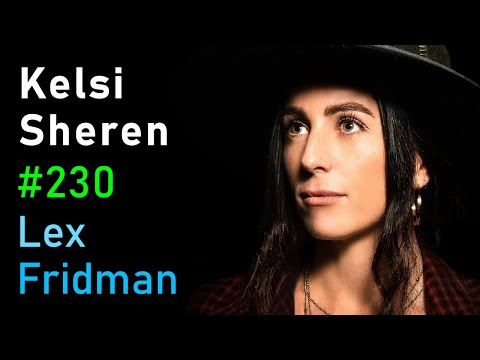
Kelsi Sheren: War, Artillery, PTSD, and Love | Lex Fridman Podcast #230
Lex Fridman (host), Kelsi Sheren (guest), Guest (brief aside) (guest), Guest (brief aside) (guest), Guest (very brief interjection) (guest), Guest (very brief interjection) (guest), Guest (very brief interjection) (guest)
In this episode of Lex Fridman Podcast, featuring Lex Fridman and Kelsi Sheren, Kelsi Sheren: War, Artillery, PTSD, and Love | Lex Fridman Podcast #230 explores afghanistan Gunner Confronts War’s Trauma, Healing, and Hard Questions Lex Fridman speaks with Canadian veteran and former artillery gunner Kelsi Sheren about her deployment to Afghanistan at 19, the brutality of modern war, and the lasting impact of severe PTSD. They explore historical evil in World War II, the psychology of following dictators, and contemporary atrocities in places like North Korea and under the Taliban. Kelsi gives detailed, visceral accounts of artillery operations, IED attacks, the death of a fellow soldier, and how those experiences shattered her sense of humanity. She then describes her long road through medication, depression, psychedelics, and building her company Brass & Unity to support veterans as a way to reclaim purpose, love, and mental health.
Afghanistan Gunner Confronts War’s Trauma, Healing, and Hard Questions
Lex Fridman speaks with Canadian veteran and former artillery gunner Kelsi Sheren about her deployment to Afghanistan at 19, the brutality of modern war, and the lasting impact of severe PTSD. They explore historical evil in World War II, the psychology of following dictators, and contemporary atrocities in places like North Korea and under the Taliban. Kelsi gives detailed, visceral accounts of artillery operations, IED attacks, the death of a fellow soldier, and how those experiences shattered her sense of humanity. She then describes her long road through medication, depression, psychedelics, and building her company Brass & Unity to support veterans as a way to reclaim purpose, love, and mental health.
Key Takeaways
Sharing family war stories strengthens identity and resilience.
Kelsi and Lex argue that when older generations withhold their World War II and survival stories to protect descendants from pain, they also deprive them of vital lessons and a sense of strength rooted in their lineage.
Get the full analysis with uListen AI
Ordinary people can be drawn into evil through fear, grievance, and charisma.
Their discussion of Hitler and Stalin emphasizes that large-scale atrocities emerge not just from singular monsters, but from social conditions—economic anger, propaganda, group belonging—that make following dangerous leaders feel rational and even noble.
Get the full analysis with uListen AI
Modern conflicts blur the line between combatant and civilian, intensifying moral injury.
Kelsi describes the Taliban’s use of IEDs, suicide bombers, women, children, and civilian spaces to mask attacks, making everyone in the environment feel like a potential enemy and leaving soldiers with profound guilt and confusion afterward.
Get the full analysis with uListen AI
PTSD is compounded when institutions medicate, isolate, and silence rather than prepare and support.
She says pre-deployment mental training was minimal, culturally specific stressors weren’t explained, and her post-trauma experience was dominated by heavy medication, procedural interviews, and poor communication—conditions that worsened depression and suicidal thoughts.
Get the full analysis with uListen AI
Psychedelics can catalyze healing, but only with structure and integration.
Through Heroic Hearts’ ayahuasca retreat, Kelsi experienced powerful symbolic visions that reframed her identity and pain; she stresses that ongoing integration work, journaling, and peer support—not just the ceremonies—made it transformative rather than destabilizing.
Get the full analysis with uListen AI
Purpose-driven work is a powerful counterweight to despair.
Founding Brass & Unity gave Kelsi a mission larger than herself—raising money and awareness for vetted veteran charities through jewelry and sunglasses—which helped redirect anger and survivor’s guilt into tangible support for others.
Get the full analysis with uListen AI
If you suspect someone is struggling, small, direct questions matter.
Kelsi recommends noticing changes in sleep, drinking, and behavior, and then asking one more sincere follow-up question (“Why aren’t you sleeping? ...
Get the full analysis with uListen AI
Notable Quotes
“He was just going to clear the road for the rest of us, and in one second he was gone.”
— Kelsi Sheren
“I lost all humanity. I lost all hope for humanity. The Taliban are evil, but I’ve had to fight to get my humanity back.”
— Kelsi Sheren
“This isn’t it. This isn’t the end-all, be-all. Where you are right now in this life is a blip.”
— Kelsi Sheren (describing what ayahuasca ‘told’ her)
“Older men declare war, but it is the youth that must fight and die.”
— Herbert Hoover (quoted by Lex Fridman at the end)
“There are times for missiles and double taps to the face, but there needs to be more time to educate.”
— Kelsi Sheren
Questions Answered in This Episode
How should militaries balance building mental toughness with providing genuine psychological preparation and post-combat care?
Lex Fridman speaks with Canadian veteran and former artillery gunner Kelsi Sheren about her deployment to Afghanistan at 19, the brutality of modern war, and the lasting impact of severe PTSD. ...
Get the full analysis with uListen AI
Can a soldier maintain full recognition of the enemy’s humanity and still be effective in modern asymmetric warfare?
Get the full analysis with uListen AI
What safeguards and standards should govern the use of psychedelics like ayahuasca and psilocybin for treating PTSD in veterans?
Get the full analysis with uListen AI
In light of Afghanistan and other interventions, what would an ethically responsible foreign policy toward authoritarian regimes and extremist groups look like?
Get the full analysis with uListen AI
How can civilians better understand and support veterans without romanticizing war or reducing them to stereotypes of trauma?
Get the full analysis with uListen AI
Transcript Preview
The following is a conversation with Kelsey Sherron, Canadian Forces veteran, artillery gunner, who served in Afghanistan at 18 years old and came home with severe PTSD. She went on to found Brass and Unity, which creates unique jewelry, large part of the proceeds from which go to help rehabilitate the lives, limbs, and mental health of veterans and first responders. She has a big personality, big heart, and an intense passion for life. So when our paths happened to cross, I knew we needed to talk. This is the Lex Fridman Podcast. To support it, please check out our sponsors in the description, and now here's my conversation with Kelsey Sherron. You mentioned that studying history had a big impact on you, and that your grandfather was a World War II vet. So people that have gone through World War II, in my family too, they don't seem to talk about it much. Like, the worse the tragedy, the less they talk about it.
I mean, that's understandable. I can respect that. But I don't think people fully understood the value in human stories over, over time, and sharing that. That certain civilizations don't have written language. The value in that being passed down is, is extraordinary, but we didn't really have that with the World War II vets, it seems like.
Well, th- they kind of want to protect you from the pain. Like, my, my grandfa- my grandmother went through Holodomor, which is the Ukrainian starvation of millions of people, and then obviously, uh, went through World War II with the Nazi occupation, and, uh, same on the grandfather's side, who, uh, uh, on my dad's side, grandfather fought in World War II. And they seemed to not want to talk about those experiences to protect you from the suffering, to protect you from the evil that they've experienced. Which is, um, sad because the lessons from that history are not then propagated through you. And also, there's something about the strength you carry with you knowing that that's in your blood, those great heroes are in your blood, and that suffering, overcoming that suffering is in your blood.
I would argue that's exactly correct. If you, if you have someone you know that comes from your lineage that has done something super gnarly, that's just been a badass in, in so many different ways, you wanna know about that person. You have that person's blood in you. That's important to acknowledge. And when that isn't shared, I feel like it's just a detriment to that individual.
What do you make of World War II in terms of history? Do you think about, uh, those kinds of wars where, uh, two times more civilians died than the number of, um, military personnel? So most of the war is basically just the death of civilians and the invasion of homes, the burning of homes, the bombing of homes, all of that.
World War II for me, I find that was the first experience where I became just obsessed with history. World War II really did it for me. Um, I'm not sure if it's because of the dramatization of film and, and TV and the way that our generation has looked at it, but for me, it was more than that. I felt a deep connection to it, and I still can't figure out why. Like a pull almost. Uh, people joke around about those past lives and those things or those connections, and there's something deeper within me that feels a pull towards that. And I'm, I'm not quite sure if, um, it's because I had family that, you know, escaped hungry once the Soviets came in, so thanks for that, um, or if it was because my grandfather served in it, or for whatever reason, I just, I have this pull to it. And so when you think about the mass casualty of the civilian population, that's very difficult for me to wrap my brain around after being in a war and seeing when you have a small subset of civilians die, how much of an impact that has on that community right there in just, in just a tiny area. So to, to try to wrap my brain around what happened in Europe and all across and, and all that, I really struggle with that, because I don't know that I can comprehend what that would truly mean to somebody if I, if I didn't experience it or, or see it for what it is. Does that make sense?
Install uListen to search the full transcript and get AI-powered insights
Get Full TranscriptGet more from every podcast
AI summaries, searchable transcripts, and fact-checking. Free forever.
Add to Chrome