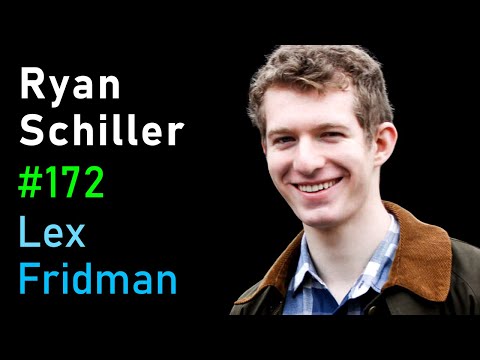
Ryan Schiller: Librex and the Free Exchange of Ideas on College Campuses | Lex Fridman Podcast #172
Lex Fridman (host), Ryan Schiller (guest), Narrator
In this episode of Lex Fridman Podcast, featuring Lex Fridman and Ryan Schiller, Ryan Schiller: Librex and the Free Exchange of Ideas on College Campuses | Lex Fridman Podcast #172 explores anonymous campus app Librex fights fear, censorship, and conformity Lex Fridman interviews Ryan Schiller, the 21‑year‑old founder of Librex, an anonymous discussion app built for verified college communities that began at Yale and has expanded to the Ivy League, MIT, and Stanford.
Anonymous campus app Librex fights fear, censorship, and conformity
Lex Fridman interviews Ryan Schiller, the 21‑year‑old founder of Librex, an anonymous discussion app built for verified college communities that began at Yale and has expanded to the Ivy League, MIT, and Stanford.
They discuss how fear of speaking openly on campuses and administrative risk‑aversion created demand for a bottom‑up, anonymous but verified space for difficult, long‑form conversations about politics, identity, mental health, and campus culture.
Ryan explains teaching himself to code to build a minimal viable app, his philosophy on anonymity, strict privacy (including a one‑tap “forget me” feature), moderation, and why he rejects selling user data despite investor pressure.
The conversation broadens into free speech, institutional cowardice, social‑media design, incentives for good behavior, personal struggle (Ryan’s near‑fatal heart condition), creative resistance, and the meaning found in building tools for honest discourse.
Key Takeaways
Anonymity plus verification can unlock honest but accountable discourse.
Librex requires a verified . ...
Get the full analysis with uListen AI
Campus speech is heavily chilled, and bottom‑up tools can counteract that.
Ryan cites polls suggesting around 60% of students feel afraid to voice their views; Librex’s rapid adoption at schools like Dartmouth shows a latent demand for spaces where students can test messy, imprecise ideas without fear of social or administrative punishment.
Get the full analysis with uListen AI
Build the smallest thing that works, then validate with real users.
With no coding background, Ryan learned Swift from YouTube and Stack Overflow, hacked together a crude MVP (login, posting, comments, basic backend), and literally walked around campus handing his phone to strangers and posting flyers to see if anyone actually cared.
Get the full analysis with uListen AI
Clear principles and human moderators are core to healthy anonymous communities.
Librex relies on volunteer moderators from each school, guided by a few simple rules (e. ...
Get the full analysis with uListen AI
Refusing to sell user data can be both an ethical stance and a differentiator.
Ryan declined pressure (e. ...
Get the full analysis with uListen AI
Infrastructure‑level censorship (e.g., AWS dropping Parler) is a dangerous precedent.
They argue that when foundational services like cloud providers behave like ideological gatekeepers, it undermines developers’ trust, chills innovation, and blurs the line between neutral “highway” and political actor, regardless of what one thinks of any specific client.
Get the full analysis with uListen AI
Creative and entrepreneurial work requires ignoring a lot of well‑credentialed advice.
Ryan emphasizes that young founders often understand emerging social behavior better than investors, administrators, or even parents; he credits his progress to trusting his own sense of what students needed, despite authoritative voices telling him it wouldn’t work.
Get the full analysis with uListen AI
Notable Quotes
“Anonymity is a tool for Librex; it’s not the purpose. The purpose is authentic conversation.”
— Ryan Schiller
“If they knew what they were doing, they would’ve built it themselves.”
— Ryan Schiller
“When you’re afraid to speak metaphorically, you’re afraid to think at all.”
— Ryan Schiller
“If you’re successful, you are going to have to do it for the next ten years.”
— Ryan Schiller
“If freedom of speech is taken away, then dumb and silent we may be led, like sheep to the slaughter.”
— George Washington (quoted by Lex Fridman)
Questions Answered in This Episode
How can anonymous platforms like Librex scale beyond elite universities without replicating the toxicity seen on earlier apps like Yik Yak?
Lex Fridman interviews Ryan Schiller, the 21‑year‑old founder of Librex, an anonymous discussion app built for verified college communities that began at Yale and has expanded to the Ivy League, MIT, and Stanford.
Get the full analysis with uListen AI
What specific incentive mechanisms could social platforms introduce to reliably reward thoughtful, long‑form contributions rather than outrage and performative signaling?
They discuss how fear of speaking openly on campuses and administrative risk‑aversion created demand for a bottom‑up, anonymous but verified space for difficult, long‑form conversations about politics, identity, mental health, and campus culture.
Get the full analysis with uListen AI
Where should the line be drawn between protecting users from harassment and preserving the right to hear and express deeply unpopular or offensive ideas?
Ryan explains teaching himself to code to build a minimal viable app, his philosophy on anonymity, strict privacy (including a one‑tap “forget me” feature), moderation, and why he rejects selling user data despite investor pressure.
Get the full analysis with uListen AI
At what point do infrastructure providers (cloud, payment processors, app stores) have a moral obligation to remain neutral, and how should society enforce or encourage that neutrality?
The conversation broadens into free speech, institutional cowardice, social‑media design, incentives for good behavior, personal struggle (Ryan’s near‑fatal heart condition), creative resistance, and the meaning found in building tools for honest discourse.
Get the full analysis with uListen AI
How might tools like Librex change the long‑term culture of universities that currently reward conformity and risk‑aversion over intellectual courage?
Get the full analysis with uListen AI
Transcript Preview
The following is a conversation with Ryan Schiller, creator of Librex, an anonymous discussion feed for college communities, starting at first with Yale, then the Ivy Leagues, and now adding Stanford and MIT. Their mission is to give students a place to explore ideas and issues in a positive way, but with much more personal and intellectual freedom than has defined college campuses in recent history. I think this is a very difficult, but worthy project. Quick thank you to our sponsors, Allform, Magic Spoon, BetterHelp, and Brave. Click their links to support this podcast. As a side note, let me say that Ryan, the young entrepreneur and genuine human being who quickly won me over, he's inspiring in many ways, both in the struggle he had to overcome in his personal life, but also in the fact that he did not know how to code, but saw a problem in this world and his community that he cared about, and for that, he learned to code and built a solution in the best way he knew how. That's an important reminder for us humans. Let us not only complain about the problems in the world, let us fix them. I also have to say that there's passion in Ryan's eyes for really wanting to make a difference in the world. His story, his effort gives me hope for the future. There is hate in this world, but I believe there's much more love, and I believe it's possible to build online platforms that connect us through our common humanity as we explore difficult, personal, even painful ideas together. This is the Lex Fridman podcast, and here is my conversation with Ryan Schiller. Let's start with the basics. What is Librex? What are its founding story and founding principles, and looking to the future, what do you hope to achieve with Librex?
Sure. Let me break that down. So what is Librex? Librex is an anonymous discussion feed for college campuses. It's a place where people can have important and unfettered discussions and open discourse about topics they care about, ideas that matter, and they can do all of that completely anonymously, with verified members of their college community. And we exist both on, uh, each Ivy League campus, and we have an inter-Ivy community, and actually this week, we just opened to MIT and Stanford. So now we have-
No, really? MIT? Yes.
And Stanford. So we have MIT and Stanford communities, and I expect you to-
(laughs)
... sign up for your MIT account-
That's great.
... and start posting.
What are, for people who are not familiar, like me actually, which are the Ivy Leagues?
Sure. So we started at Yale, which is my, I don't know, can you call it alma mater?
(laughs)
Because I haven't technically graduated.
Yeah.
Um, my home base.
What's that called when you're actually still there? My university?
Install uListen to search the full transcript and get AI-powered insights
Get Full TranscriptGet more from every podcast
AI summaries, searchable transcripts, and fact-checking. Free forever.
Add to Chrome