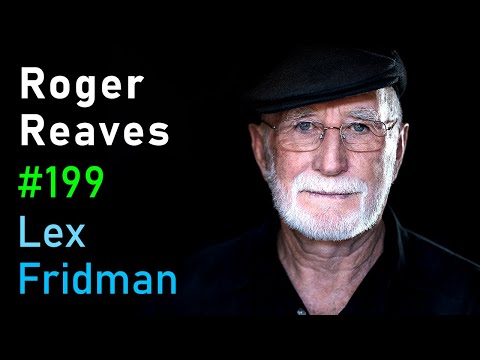
Roger Reaves: Smuggling Drugs for Pablo Escobar and the Medellin Cartel | Lex Fridman Podcast #199
Lex Fridman (host), Roger Reaves (guest), Lex Fridman (host), Narrator, Mari (Roger Reaves' wife) (guest)
In this episode of Lex Fridman Podcast, featuring Lex Fridman and Roger Reaves, Roger Reaves: Smuggling Drugs for Pablo Escobar and the Medellin Cartel | Lex Fridman Podcast #199 explores smuggler’s Tale: Roger Reaves on Escobar, Survival, Love, Regret Lex Fridman interviews Roger Reaves, one of history’s most prolific drug smugglers, who worked closely with Pablo Escobar, Jorge Ochoa, and employed Barry Seal. Reaves recounts the mechanics and psychology of large-scale smuggling, his dealings with the Medellín cartel, and the absence of betrayal within that world despite immense money and risk.
Smuggler’s Tale: Roger Reaves on Escobar, Survival, Love, Regret
Lex Fridman interviews Roger Reaves, one of history’s most prolific drug smugglers, who worked closely with Pablo Escobar, Jorge Ochoa, and employed Barry Seal. Reaves recounts the mechanics and psychology of large-scale smuggling, his dealings with the Medellín cartel, and the absence of betrayal within that world despite immense money and risk.
He describes being shot down twice, tortured in a Mexican prison, escaping from prisons five times, and spending 33 years incarcerated across multiple countries—experiences that reshaped his view of money, power, and happiness. The conversation also explores the Iran–Contra era, CIA and DEA involvement in the drug trade, and the failures and hypocrisies of the War on Drugs.
Reaves insists he never engaged in violence himself and questions how society defines a ‘bad man’ compared with politicians, corporations, and legal industries like tobacco. In the final segment, Roger and his wife Mari discuss the endurance of their love through decades of separation, the role of faith, and what they’d advise young people about building an honest, meaningful life.
Key Takeaways
Enormous illicit wealth and adventure do not compensate for lost years and relationships.
Reaves earned tens of millions, owned vast properties, ships, and planes, yet says he is happier now with little money and would never repeat his life given the 33 years he spent away from his family.
Get the full analysis with uListen AI
High-functioning criminal organizations can operate with strict internal honesty and reliability.
Reaves describes Escobar and the Ochoas as businesslike and impeccably reliable: loads were insured, weights and payments were exact, and he observed virtually no internal betrayal because the profits were so immense that skimming was unnecessary.
Get the full analysis with uListen AI
The War on Drugs often punishes individuals harshly while obscuring systemic and state-level culpability.
The conversation highlights the vast human and financial cost of prohibition, the relatively low direct death toll from illegal drugs compared with legal tobacco, and the alleged role of rogue CIA elements in using cocaine trafficking to fund covert operations.
Get the full analysis with uListen AI
Personal nonviolence does not erase participation in a violent system, but complicates moral judgment.
Reaves emphasizes he never ordered or committed violence and despised murder, yet acknowledges working for men like Escobar whose empire ran on terror—raising questions about complicity versus direct action.
Get the full analysis with uListen AI
Extreme adversity can be survived through stubbornness, purpose, and small routines.
He endured torture, solitary confinement, and brutal prisons by refusing to sign confessions, running daily, reading extensively, writing over a million words, and becoming a kind of jailhouse medic—choosing engagement over despair.
Get the full analysis with uListen AI
Long sentences can institutionalize people and fail to rehabilitate, suggesting a need for trade-based and therapeutic approaches.
Reaves portrays U. ...
Get the full analysis with uListen AI
Stable love and faith can sustain people through decades of chaos and incarceration.
Mari’s unwavering loyalty, their constant letters, and her religious faith anchored both of them; their relationship survived shootings, torture, and 35 years of on-and-off imprisonment, illustrating the power of emotional constancy amidst moral and legal turmoil.
Get the full analysis with uListen AI
Notable Quotes
“I had everything in the world I wanted before I did that. Nothing’s worth 33 years in prison away from my lovely family.”
— Roger Reaves
“You lay the truth out there in an envelope and let me open it. I was a tobacco farmer—tobacco kills 500,000 people a year. Marijuana doesn’t hurt anybody.”
— Roger Reaves
“Being a snitch is like being pregnant. You either are or you’re not.”
— Unnamed Miami lawyer, as quoted by Roger Reaves
“I’m not naive, but I’m also optimistic and have hope for humanity. That’s who I am and that’s what these conversations are.”
— Lex Fridman
“We all die. Life is short. And to live that kind of adventure… but nothing’s worth being away from Mari and the children.”
— Roger Reaves
Questions Answered in This Episode
To what extent can someone like Roger Reaves separate personal nonviolence from responsibility for the broader harm caused by the drug trade he enabled?
Lex Fridman interviews Roger Reaves, one of history’s most prolific drug smugglers, who worked closely with Pablo Escobar, Jorge Ochoa, and employed Barry Seal. ...
Get the full analysis with uListen AI
How credible are Reaves’ allegations about CIA involvement in cocaine trafficking during Iran–Contra, and what independent evidence supports or challenges his account?
He describes being shot down twice, tortured in a Mexican prison, escaping from prisons five times, and spending 33 years incarcerated across multiple countries—experiences that reshaped his view of money, power, and happiness. ...
Get the full analysis with uListen AI
What would an evidence-based, humane alternative to the current War on Drugs look like in practice, particularly for hard drugs and addicted users?
Reaves insists he never engaged in violence himself and questions how society defines a ‘bad man’ compared with politicians, corporations, and legal industries like tobacco. ...
Get the full analysis with uListen AI
How should we ethically portray figures like Barry Seal or Reaves in films and media—where is the line between humanizing and glamorizing criminal behavior?
Get the full analysis with uListen AI
What does Reaves’ enduring relationship with Mari suggest about the role of love and faith in sustaining people through extreme moral and physical adversity?
Get the full analysis with uListen AI
Transcript Preview
The following is a conversation with Roger Reeves, one of the most prolific drug smugglers in history. He worked for Pablo Escobar and Jorge Ochoa, the leaders behind the Medellín Cartel. Roger was the employer and close friend of Barry Seal, the infamous drug smuggler who was the main character in the movie American Made. Roger transported countless tons of cocaine and marijuana, covering six continents. He escaped prison five times, was shut down in both Mexico and Colombia, and was tortured nearly to death in a Mexican prison. Through all of this, his wife, Mari, the love of his life, was there with him and when he was in prison, she waited for him. He recently got out of prison where for many years he worked on his memoir called Smuggler. This podcast is an exploration of his story. Quick mention of our sponsors: Noom, Allform, ExpressVPN, Four Sigmatic, and Eight Sleep. Check them out in the description to support this podcast. Let me say a few words about Roger Reeves, Pablo Escobar, and the War on Drugs. This conversation with Roger is unlike any I've ever done. In the eyes of many, including the law, Roger is a criminal, a bad man who has added to the suffering in the world. But he never directly engaged or participated in the violence, unlike his bosses, Pablo Escobar and Jorge Ochoa. His crime was the transport of drugs. I thought about this and about Pablo Escobar, who was at once both a brutal murderer and a Robin Hood figure who helped the poor and was loved by thousands, if not millions. We sometimes idolize murderers and destroy good, honest men. We give power and money to corrupt politicians and dictators that starve and murder their own people. Given this, I think about what makes for a good man and what makes for a bad man, and who decides? Sitting across from Roger, I saw a complicated man, but one who has kindness in his heart, a love for money and adventure, and a disdain for violence. Again, his crime was the transport of drugs. Since 1971, the War on Drugs has cost US $1 trillion. Marijuana legalization alone would save and make $13.7 billion. That could send more than 650,000 students to public universities every year. Then there's the human stories of the 500,000 human beings sitting in prison for drug-related offenses, and the 1.1 million on probation and parole. Their life is damaged or ruined beyond repair due to the prohibition of drugs. There's a lot more to be said about the damage done by the War on Drugs. But when reading about Roger's story and talking to him, I couldn't escape the thought that while society wants to label him a criminal and a bad human being, there are much worse men out there who we give a pass to, even give power to, even men who hold political office or run companies. I also think about my role as an interviewer, sitting across a man like Roger. In these interviews, in life, in many ways, I continue to be myself. A person who, like Dostoevsky's the idiot, seeks the good in all people, but is hurt by it on occasion, and maybe is destroyed by it in the end. I'm not naive, but I'm also optimistic and have hope for humanity. That's who I am and that's what these conversations are. I hope you join me and I hope you understand that I come from a place of love. This is the Lex Fridman Podcast, and here's my conversation with Roger Reeves. You are one of the most prolific drug smugglers in history. What would you say motivated you? Money, power, the thrill, or was it something else?
Install uListen to search the full transcript and get AI-powered insights
Get Full TranscriptGet more from every podcast
AI summaries, searchable transcripts, and fact-checking. Free forever.
Add to Chrome