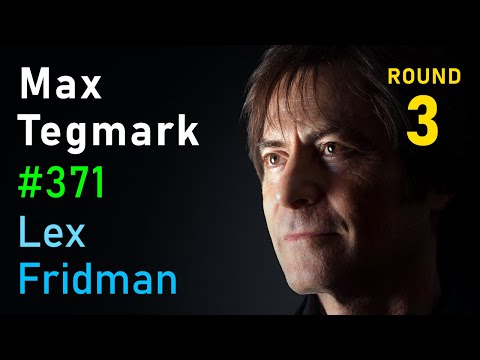
Max Tegmark: The Case for Halting AI Development | Lex Fridman Podcast #371
Max Tegmark (guest), Lex Fridman (host)
In this episode of Lex Fridman Podcast, featuring Max Tegmark and Lex Fridman, Max Tegmark: The Case for Halting AI Development | Lex Fridman Podcast #371 explores max Tegmark Urges Six‑Month Pause to Avert AI Suicide Race Max Tegmark argues that advances like GPT‑4 show AGI and superintelligence may be very near, and that humanity is in a “suicide race” where commercial and geopolitical pressures (Moloch) push labs to deploy ever‑more powerful systems faster than we can make them safe.
Max Tegmark Urges Six‑Month Pause to Avert AI Suicide Race
Max Tegmark argues that advances like GPT‑4 show AGI and superintelligence may be very near, and that humanity is in a “suicide race” where commercial and geopolitical pressures (Moloch) push labs to deploy ever‑more powerful systems faster than we can make them safe.
He defends an open letter calling for a six‑month pause on training systems more powerful than GPT‑4 to allow coordination on safety standards, regulatory guardrails, and deeper technical work on alignment rather than a blind capabilities race.
The conversation ranges from cosmic perspective and the rarity of intelligent life, to how AI will transform meaning, work, communication, and democracy, emphasizing that we must consciously choose to build AI “by humanity, for humanity,” not for narrow profit or power.
Tegmark remains cautiously optimistic that with time, coordination, and truth‑seeking AI systems, we can align superintelligence with human values and create a flourishing future, but warns that failing to slow down now could lead to human obsolescence or extinction.
Key Takeaways
Powerful AI development is outpacing safety and governance progress.
GPT‑4’s capabilities emerged faster and via simpler architectures than many expected, while alignment research, regulation, and public understanding have lagged, shortening the time available to make systems safe and controllable.
Get the full analysis with uListen AI
A coordinated pause can help break the AI race dynamic (Moloch).
Individual labs and CEOs may want to slow down but are trapped by shareholder and competitive pressures; a public call and regulation can create shared constraints so everyone pauses together instead of being undercut.
Get the full analysis with uListen AI
AGI is not a guaranteed win for its creators; it’s a shared existential risk.
Tegmark argues the common narrative—“whoever gets AGI first dominates the world”—is wrong: if any actor loses control of superintelligence, all humans lose, regardless of which country or company built it.
Get the full analysis with uListen AI
AI will profoundly reshape work, meaning, and education—not just “boring jobs.”
Systems like GPT‑4 already threaten creative and cognitively demanding roles (programming, journalism, art, design), eroding sources of human meaning and forcing a rethinking of curricula and what skills are worth developing.
Get the full analysis with uListen AI
We need AI designed for truth‑seeking and improving discourse, not manipulation.
Social media recommender systems were effectively our “first contact” with advanced AI and they optimized for engagement by amplifying outrage; Tegmark proposes prediction‑ and evidence‑based systems that earn trust, track forecasting accuracy, and reduce polarization.
Get the full analysis with uListen AI
Technical avenues exist for safer AI, but they require time and focus.
Ideas like provable safety (systems supplying formal proofs checked by simpler verifiers), inverse reinforcement learning, and mechanistic interpretability suggest we can build AIs that both do powerful things and remain aligned—if we invest heavily now.
Get the full analysis with uListen AI
Consciousness and subjective experience should factor into how we build AI.
Tegmark distinguishes intelligence from consciousness, worries about an unconscious “zombie” superintelligence future, and suggests research on which information‑processing patterns generate experience should guide which systems we build and how we treat them.
Get the full analysis with uListen AI
Notable Quotes
“We’re rushing towards this cliff, but the closer to the cliff we get, the more scenic the views are and the more money there is there.”
— Max Tegmark
“This isn’t an arms race, it’s a suicide race, where everybody loses if anybody’s AI goes out of control.”
— Max Tegmark
“AI should be built by humanity for humanity—not by humanity for Moloch.”
— Max Tegmark
“If there’s ever been a time when we want to pause a little bit, that time is now.”
— Max Tegmark
“Let’s not make the mistake of replacing ourselves by zombies.”
— Max Tegmark
Questions Answered in This Episode
If a six‑month pause were achieved, what concrete technical and policy milestones should the AI community reach before resuming large‑scale training?
Max Tegmark argues that advances like GPT‑4 show AGI and superintelligence may be very near, and that humanity is in a “suicide race” where commercial and geopolitical pressures (Moloch) push labs to deploy ever‑more powerful systems faster than we can make them safe.
Get the full analysis with uListen AI
How can we practically distinguish between helpful truth‑seeking AI systems and those subtly optimized for manipulation or ideological goals?
He defends an open letter calling for a six‑month pause on training systems more powerful than GPT‑4 to allow coordination on safety standards, regulatory guardrails, and deeper technical work on alignment rather than a blind capabilities race.
Get the full analysis with uListen AI
What specific alignment or safety techniques (e.g., proof‑checking, inverse reinforcement learning) seem most promising for near‑term integration into real systems like GPT‑5?
The conversation ranges from cosmic perspective and the rarity of intelligent life, to how AI will transform meaning, work, communication, and democracy, emphasizing that we must consciously choose to build AI “by humanity, for humanity,” not for narrow profit or power.
Get the full analysis with uListen AI
How should education systems be redesigned in a world where coding, writing, and many cognitive skills are heavily automated by AI?
Tegmark remains cautiously optimistic that with time, coordination, and truth‑seeking AI systems, we can align superintelligence with human values and create a flourishing future, but warns that failing to slow down now could lead to human obsolescence or extinction.
Get the full analysis with uListen AI
What empirical research program would you launch to rigorously investigate which kinds of information processing give rise to consciousness in machines?
Get the full analysis with uListen AI
Transcript Preview
A lot of people have said for many years that there will come a time when we want to pause a little bit. That time is now.
The following is a conversation with Max Tegmark, his third time on the podcast. In fact, his first appearance was episode number one of this very podcast. He is a physicist and artificial intelligence researcher at MIT, co-founder of Future Life Institute, and author of Life 3.0: Being Human in the Age of Artificial Intelligence. Most recently, he's a key figure in spearheading the open letter calling for a six-month pause on giant AI experiments, like training GPT-4. The letter reads, "We're calling for a pause on training of models larger than GPT-4 for six months. This does not imply a pause or ban on all AI research and development, or the use of systems that have already been placed in the market. Our call is specific and addresses a very small pool of actors who possesses this capability." The letter has been signed by over 50,000 individuals, including 1,800 CEOs and over 1,500 professors. Signatories include Yoshua Bengio, Stuart Russell, Elon Musk, Steve Wozniak, Yuval Noah Harari, Andrew Yang, and many others. This is a defining moment in the history of human civilization, where the balance of power between human and AI begins to shift. In Max's mind and his voice is one of the most valuable and powerful in a time like this. His support, his wisdom, his friendship has been a gift I'm forever deeply grateful for. This is the Lex Fridman Podcast. To support it, please check out our sponsors in the description. And now, dear friends, here's Max Tegmark. You were the first ever guest on this podcast, episode number one. So first of all, Max, I just have to say, uh, thank you for giving me a chance. Thank you for starting this journey. And it's been an incredible journey. Just thank you for, um, sitting down with me and just acting like I'm somebody who matters, that I'm somebody who's interesting to talk to. And, um, thank you for doing it. That meant a lot.
Oh, thanks to you for putting your heart and soul into this. I know when you delve into controversial topics, it's inevitable...
(laughs)
... to get hit by what, what Hamlet talks about, the slings and arrows and stuff, and I really admire this. It's in an era, you know, where YouTube videos are too long and now it has to be like a 20-minute TikTok, 20-second TikTok clip, it's just so refreshing (laughs) to see you going exactly against all of the advice...
(laughs)
... and doing these just really long-form things, and the people appreciate it, you know? Reality is nuanced, and, uh, thanks for sharing it that way.
Uh, so let me ask you again the first question I've ever asked on this podcast, episode number one, talking to you, do you think there's intelligent life out there in the universe? Let's revisit that question. Do you have any updates? What's your view when you look out to the stars?
Install uListen to search the full transcript and get AI-powered insights
Get Full TranscriptGet more from every podcast
AI summaries, searchable transcripts, and fact-checking. Free forever.
Add to Chrome