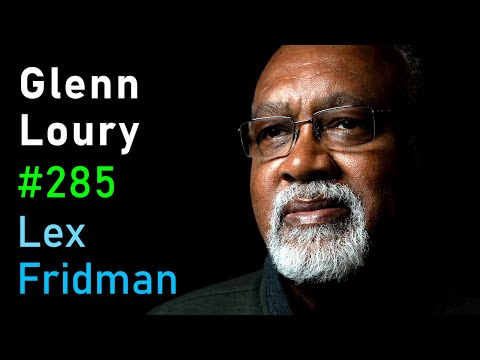
Glenn Loury: Race, Racism, Identity Politics, and Cancel Culture | Lex Fridman Podcast #285
Glenn Loury (guest), Lex Fridman (host), Narrator, Narrator, Narrator
In this episode of Lex Fridman Podcast, featuring Glenn Loury and Lex Fridman, Glenn Loury: Race, Racism, Identity Politics, and Cancel Culture | Lex Fridman Podcast #285 explores glenn Loury challenges racial dogma, merit, and modern victimhood culture Glenn Loury, economist and social commentator, uses history, economics, and personal experience to question prevailing narratives about race, equality, and victimhood in America. He distinguishes equality of status and opportunity from equality of outcomes, arguing that cultural patterns and human capital development matter as much as formal anti-discrimination law. Loury is sharply critical of affirmative action, contemporary anti-racism, and identity politics, which he sees as masking deeper problems in family structure, education, crime, and personal responsibility. Throughout, he defends free inquiry, colorblind civic patriotism, and the need for Black Americans to embrace strength, competence, and full American citizenship rather than grievance-based politics.
Glenn Loury challenges racial dogma, merit, and modern victimhood culture
Glenn Loury, economist and social commentator, uses history, economics, and personal experience to question prevailing narratives about race, equality, and victimhood in America. He distinguishes equality of status and opportunity from equality of outcomes, arguing that cultural patterns and human capital development matter as much as formal anti-discrimination law. Loury is sharply critical of affirmative action, contemporary anti-racism, and identity politics, which he sees as masking deeper problems in family structure, education, crime, and personal responsibility. Throughout, he defends free inquiry, colorblind civic patriotism, and the need for Black Americans to embrace strength, competence, and full American citizenship rather than grievance-based politics.
Key Takeaways
Equality of status is not the same as equality of outcomes.
Loury argues King’s vision is about equal citizenship and judging individuals by character, not guaranteeing group-level parity in wealth, professions, or test scores; in a diverse society with different cultures and norms, equal treatment will still yield unequal outcomes.
Get the full analysis with uListen AI
Affirmative action is a ‘band-aid’ that can weaken real development.
He contends that preference policies create a side door instead of building the skills, discipline, and educational foundations needed to compete at the highest levels, leaving Black Americans dependent on patronage rather than genuine excellence.
Get the full analysis with uListen AI
Cultural and developmental factors matter as much as systemic barriers.
Beyond discrimination, Loury emphasizes family structure, early childhood environments, peer norms, and attitudes toward education and effort as major drivers of racial disparities, arguing these internal factors are often ignored because they’re politically uncomfortable.
Get the full analysis with uListen AI
Weaponizing the label ‘racist’ shuts down debate but changes no minds.
He likens loose accusations of racism to calling someone a witch: it’s a power move to control conversation, not an argument; people simply go silent publicly while retaining or hardening their private views, fueling backlash politics.
Get the full analysis with uListen AI
Free inquiry on taboo topics like IQ, crime, and race is essential.
Loury believes suppressing research or discussion for fear of political misuse is dangerous, arguing that societies advance by confronting hard questions with data and argument, not by banning lines of inquiry or speech on platforms and campuses.
Get the full analysis with uListen AI
Black patriotism means embracing America, not standing apart from it.
He urges Black Americans to see themselves first as Americans, to claim the achievements of the republic—including the abolition of slavery and civil‑rights gains—and to work within its institutions rather than framing themselves as a separate people awaiting rescue.
Get the full analysis with uListen AI
Victimhood narratives undermine the strength needed in a competitive world.
Loury warns that constant emphasis on oppression, ‘white supremacy,’ and belonging rhetoric cultivates weakness and dependency just as global competition (e. ...
Get the full analysis with uListen AI
Notable Quotes
“I hate affirmative action… it is a band-aid, a substitute for the actual development of the capacities of our people to compete.”
— Glenn Loury
“Fair treatment doesn’t imply equal outcomes in a world in which the populations in question are themselves different with respect to their culture, their practices, their norms, their traditions.”
— Glenn Loury
“At the end of the day, nobody is coming to save us.”
— Glenn Loury
“Calling someone a racist is a lot like calling them a witch.”
— Glenn Loury
“We are African Americans and the emphasis should be on the American.”
— Glenn Loury
Questions Answered in This Episode
Where should policymakers draw the line between correcting historic injustice and incentivizing dependency or underdevelopment?
Glenn Loury, economist and social commentator, uses history, economics, and personal experience to question prevailing narratives about race, equality, and victimhood in America. ...
Get the full analysis with uListen AI
How can Black communities practically shift from grievance-focused politics toward the kind of ‘strength culture’ Loury describes without denying real discrimination?
Get the full analysis with uListen AI
What institutional safeguards would allow controversial research on intelligence, crime, and race while minimizing political misuse of the findings?
Get the full analysis with uListen AI
Are universities still capable of being genuine sites of free inquiry, or has identity politics fundamentally changed their mission?
Get the full analysis with uListen AI
If equality of outcome is unrealistic, what concrete metrics of ‘equality of opportunity’ should a pluralistic society actually aim to achieve and measure?
Get the full analysis with uListen AI
Transcript Preview
I hate affirmative action. I don't just disagree with it, I don't just think it's against the 14th Amendment, I hate it. The hatred comes from an understanding that it is a band-aid, that it is a substitute for the actual development of the capacities of our people to compete. They wanna tell African Americans, uh, pat us on the head, "Uh, we're gonna have a separate program for you, we're gonna give you a side door that you can come in to." That doesn't make us any smarter, uh, i- it doesn't make us any more creative, um, and it doesn't make us any more fit for the actual competition that's unfolding before us.
The following is a conversation with Glenn Loury, Professor of Economics and Social Sciences at Brown University. He is one of the great minds and communicators of our time, writing and speaking about race and inequality. I highly encourage you to listen to his show on YouTube and Substack, simply called The Glenn Show. This is the Lex Fridman Podcast. To support it, please check out our sponsors in the description, and now, dear friends, here's Glenn Loury. Martin Luther King, Jr.'s I Have a Dream speech I think is the greatest speech in American history. If I may, I'd like to read a few words of it.
Sure.
And, uh, ask you a question about this dream. "I have a dream that one day this nation will rise up and live out the true meaning of its creed: 'We hold these truths to be self-evident, that all men are created equal.' I have a dream that one day on the red hills of Georgia, the sons of former slaves and the sons of former slave owners will be able to sit down together at the table of brotherhood. I have a dream that one day even the state of Mississippi, a state sweltering with the heat of injustice, sweltering with the heat of oppression, will be transformed into an oasis of freedom and justice. I have a dream that my four little children will one day live in a nation where they will not be judged by the color of their skin, but by the content of their character. I have a dream today."
Mmm.
First of all, damn. I mentioned to you offline, I immigrated to, to America, and this is why I love this country. This is one of the great speeches that represents what this country is about.
Yeah.
So, what is this idea of equality, uh, that we should strive for as a nation, this, that all men are created equal? What does that mean to you, this equality?
Well, if we put this in historical context, King is speaking in 1963 when he gives that speech. It's exactly 100 years after Abraham Lincoln signs the Emancipation Proclamation declaring the enslaved people to be free. They're not yet citizens in 1863, but the end of slavery is, has become the position of the federal government when Lincoln issues that Emancipation Proclamation. So, putting it in context, enslaved people, 4 million or so African-descended enslaved people, how do they become citizens? How, how do they become, in this, uh, status of subjugation and domination and stigma and exclusion, how do they become citizens? Uh, it seems to me that that's the, that's the s- the heart of it. The, the equality that King is talking about is an equality of status as members of the nation, as free and equal citizens within the republic. Now, I think it's really important to understand that slavery was not merely a legal order, but it was also a social system that had the symbolism, uh, attached to it. They had a big journey to make from their subjugated status as serfs, as landless people, as uneducated, unfit for citizenship, really, in the minds of many. So, I think that's what, in 1963, 100 years later, that King is appealing to, this idea that when Thomas Jefferson, in the Declaration of Independence, writes these words, "All men are created equal and endowed by their creator with certain inalienable rights," he didn't, Thomas Jefferson, a slave owner, didn't have in mind when he wrote those words the people who were slaves. But by the time you get to 1963, King is invoking this idea, all men, and of course he means all persons, he doesn't only mean men, he means men and women are created equal. Um, h- he wants this idea to be embraced by the country in reference to the descendants of the African slaves. That's his dream. That's his idea. The legacy of slavery would be erased, uh, that, that the, uh, position of African Americans would be equalized within the political community which is the United States of America. Th- that's my sense of it in any case.
Install uListen to search the full transcript and get AI-powered insights
Get Full TranscriptGet more from every podcast
AI summaries, searchable transcripts, and fact-checking. Free forever.
Add to Chrome