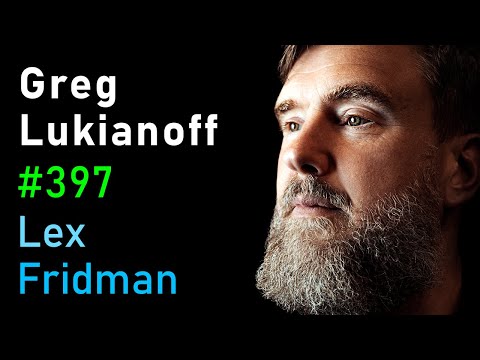
Greg Lukianoff: Cancel Culture, Deplatforming, Censorship & Free Speech | Lex Fridman Podcast #397
Greg Lukianoff (guest), Lex Fridman (host), Guest (guest), Narrator
In this episode of Lex Fridman Podcast, featuring Greg Lukianoff and Lex Fridman, Greg Lukianoff: Cancel Culture, Deplatforming, Censorship & Free Speech | Lex Fridman Podcast #397 explores greg Lukianoff Dissects Cancel Culture, Free Speech, and Academia’s Drift Greg Lukianoff, First Amendment lawyer and head of FIRE, argues that modern ‘cancel culture’—organized campaigns to punish people for protected speech—has reached a historic scale, especially on college campuses since 2014.
Greg Lukianoff Dissects Cancel Culture, Free Speech, and Academia’s Drift
Greg Lukianoff, First Amendment lawyer and head of FIRE, argues that modern ‘cancel culture’—organized campaigns to punish people for protected speech—has reached a historic scale, especially on college campuses since 2014.
He distinguishes between free speech as a broad cultural value and the First Amendment as a legal constraint on government, warning that legal protections will erode if the culture of free expression collapses in universities and law schools.
Lukianoff links censorship to epistemic failure: suppressing speech falsifies our picture of reality, fuels polarization, and undermines trust in expertise, as seen in COVID debates and ideological litmus tests like mandatory DEI statements.
He and Lex Fridman explore lazy rhetorical tactics on both left and right, the psychological toll of cancellation (including suicides), and possible paths forward: cultivating curiosity, viewpoint diversity, institutional integrity, and better online structures for truth‑seeking debate.
Key Takeaways
Cancel culture is real, large-scale, and historically comparable to the Red Scare.
FIRE has documented over 1,000 attempts to punish professors for speech since 2014, with about 190 firings—roughly double the best estimates from McCarthy-era academic purges—yet many still deny the phenomenon exists.
Get the full analysis with uListen AI
Censorship distorts reality and deepens polarization rather than changing minds.
Suppressing views causes ‘preference falsification’: people hide their true beliefs, talk only to like‑minded others, and move to more radical spaces (e. ...
Get the full analysis with uListen AI
Free speech law cannot survive without a supporting free speech culture.
First Amendment doctrine is built on norms; if elite institutions and law schools normalize shouting down, deplatforming, and viewpoint discrimination, future judges and lawyers will eventually weaken legal protections.
Get the full analysis with uListen AI
Low viewpoint diversity in academia produces dogma and intellectual fragility.
Many departments have virtually no conservatives; in such echo chambers, dissenters are cast as heretics rather than interlocutors, sacred ideas form around identity politics, and mechanisms like DEI statements become de facto political litmus tests.
Get the full analysis with uListen AI
Both left and right use ‘rhetorical fortresses’ to avoid engaging arguments.
On the left, labels like ‘conservative,’ ‘white,’ or ‘male’ are used to dismiss speakers; on the right, blanket distrust of liberals, experts, journalists, or non‑MAGA voices serves the same function, wasting time and blocking truth-seeking.
Get the full analysis with uListen AI
Cancel culture is psychologically brutal and can be literally life‑threatening.
Targets face dogpiles, professional ruin, and harassment that sometimes extends to families; Lukianoff describes cases of suicide, his own severe depression, and how mass cruelty online can carry a tacit ‘kill yourself’ message.
Get the full analysis with uListen AI
Healthier discourse requires structural innovations, not just moral appeals.
Lukianoff suggests creating alternative prestige pathways outside elite schools, building online ‘truth-focused’ streams with clear rules against lazy tactics, and educating children in curiosity, resilience, and cognitive behavioral skills.
Get the full analysis with uListen AI
Notable Quotes
“You cannot know the world as it is without knowing what people really think.”
— Greg Lukianoff
“Censorship doesn’t change their opinion. It just encourages them to not share it with people who will get them in trouble.”
— Greg Lukianoff
“Cancel culture is cruel, it’s merciless, it’s anti‑intellectual, and it will never get you anywhere near truth.”
— Greg Lukianoff
“If the goal is the project of human knowledge, we’re in an unavoidably anarchical period—like after the printing press—where we have to adapt culturally, not just try to put the genie back in the bottle.”
— Greg Lukianoff
“If you believe in freedom of speech, that means you’re in favor of freedom of speech precisely for views you despise.”
— Noam Chomsky (quoted by Lex Fridman at the end)
Questions Answered in This Episode
How can institutions practically distinguish between legitimate accountability for harmful conduct and illegitimate ‘cancel culture’ campaigns against protected speech?
Greg Lukianoff, First Amendment lawyer and head of FIRE, argues that modern ‘cancel culture’—organized campaigns to punish people for protected speech—has reached a historic scale, especially on college campuses since 2014.
Get the full analysis with uListen AI
What concrete policies should universities adopt to protect controversial speakers and faculty while still addressing genuine harassment or discrimination?
He distinguishes between free speech as a broad cultural value and the First Amendment as a legal constraint on government, warning that legal protections will erode if the culture of free expression collapses in universities and law schools.
Get the full analysis with uListen AI
How might social media platforms redesign incentives and interfaces to reward rigorous, steel‑manned argument rather than outrage and rhetorical shortcuts?
Lukianoff links censorship to epistemic failure: suppressing speech falsifies our picture of reality, fuels polarization, and undermines trust in expertise, as seen in COVID debates and ideological litmus tests like mandatory DEI statements.
Get the full analysis with uListen AI
To what extent do mandatory DEI statements and ideological litmus tests undermine trust in higher education and scientific research over the long term?
He and Lex Fridman explore lazy rhetorical tactics on both left and right, the psychological toll of cancellation (including suicides), and possible paths forward: cultivating curiosity, viewpoint diversity, institutional integrity, and better online structures for truth‑seeking debate.
Get the full analysis with uListen AI
How can individuals—students, faculty, or professionals—build psychological resilience against online mobs without becoming apathetic or cynical about genuine injustice?
Get the full analysis with uListen AI
Transcript Preview
If the goal is the project of human knowledge, which is to know the world as it is, you cannot know the world as it is without knowing what people really think, and what people really think is an incredibly important fact to know. So every time you're actually saying, "You can't say that," you're actually depriving yourself of the knowledge of what people really think. You're causing, uh, w- what Timur Kuran, who's, who's on our board of advisors, calls preference falsification. Um, you end up with an inaccurate picture of the world, which by the way, in a lot of cases, um, b- because there are activists who want to restrict more speech, they actually tend to think that people are more prejudiced than they might be. And actually, one very real practical way it makes things worse is when you censor people, it doesn't change their opinion. It just encourages them to not share it with people who will get them in trouble. So it leads them to talk to people who they already agree with, and group polarization takes off.
The following is a conversation with Greg Lukianoff, free speech advocate, First Amendment attorney, president and CEO of FIRE, the Foundation for Individual Rights and Expression, and he's the author of Unleashing Liberty, co-author with Jonathan Haidt of Coddling of the American Mind, and co-author with Rikki Schlott of a new book coming out in October, that you should definitely pre-order now, called The Canceling of the American Mind, which is a definitive accounting of the history, present, and future of cancel culture, a term used and overused in public discourse, but rarely studied and understood with the depth and rigor that Greg and Rikki do in this book and, in part, in this conversation. Freedom of speech is important, especially on college campuses, the very place that should serve as the battleground of ideas, including weird and controversial ones, that should encourage bold risk-taking, not conformity. This is a Lex Fridman podcast. To support it, please check out our sponsors in the description, and now, dear friends, here's Greg Lukianoff. Let's start with the big question. What is cancel culture? Now, you've said that you don't like the term as it's been, uh, quote, "dragged through the mud and abused endlessly by a whole host of controversial figures." Nevertheless, we have the term. What is it?
Cancel culture is the uptick of campaigns, especially successful campaigns, starting around 2014 to get people fired, expelled, deplatformed, et cetera, um, for speech that would normally be protected by the First Amendment. Um, and I say would be protected because we're talking about circumstances in which, um, it isn't necessarily where the First Amendment applies. But what I mean is, like, as an analog to, uh, say, things you couldn't lose your job as a public employee for, um, and also the climate of fear that's resulted from, uh, uh, from that phenomena, the fact that you can lose your job for having the wrong opinion. And it wasn't subtle that this, there was an uptick in this, particularly on, uh, on campus around 2014. Um, Jon Ronson wrote a book called So You've Been Publicly Shamed that came out in 2015, already documenting this phenomena. I wrote a book called Freedom From Speech in 2014 and, and but in, but it really was in 2017 when you started seeing this be directed at professors and th- when it comes to the number of professors that we've seen, you know, be, be targeted and lose their jobs, I've been doing this for 22 years and I've seen nothing like it.
Install uListen to search the full transcript and get AI-powered insights
Get Full TranscriptGet more from every podcast
AI summaries, searchable transcripts, and fact-checking. Free forever.
Add to Chrome