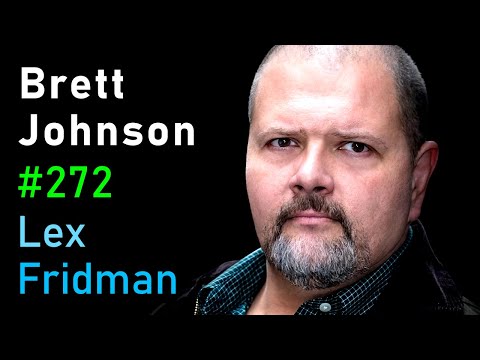
Brett Johnson: US Most Wanted Cybercriminal | Lex Fridman Podcast #272
Brett Johnson (guest), Lex Fridman (host), Lex Fridman (host), Narrator, Lex Fridman (host), Brett Johnson (guest)
In this episode of Lex Fridman Podcast, featuring Brett Johnson and Lex Fridman, Brett Johnson: US Most Wanted Cybercriminal | Lex Fridman Podcast #272 explores from Internet Godfather To Guide: Brett Johnson’s Cybercrime Reckoning Lex Fridman interviews Brett Johnson, once dubbed the “Original Internet Godfather” by the U.S. Secret Service, about his evolution from abusive childhood, to architect of ShadowCrew and massive online fraud, to imprisoned fugitive, and finally to cybercrime educator.
From Internet Godfather To Guide: Brett Johnson’s Cybercrime Reckoning
Lex Fridman interviews Brett Johnson, once dubbed the “Original Internet Godfather” by the U.S. Secret Service, about his evolution from abusive childhood, to architect of ShadowCrew and massive online fraud, to imprisoned fugitive, and finally to cybercrime educator.
Johnson details how trauma, early social engineering for survival, and a talent for systems-thinking led him into shoplifting, large-scale identity theft, credit card fraud, tax-refund scams, and the creation of the first major cybercrime marketplace.
He explains the technical and psychological mechanics of contemporary cybercrime—data theft, phishing, carding, money laundering, and nation‑state attacks—emphasizing that most exploits are not technically sophisticated but socially sophisticated.
The conversation closes on accountability, addiction to crime, the cost to victims, the people who took a risk on giving him a second chance, and his belief that the meaning of life is helping rather than hurting others.
Key Takeaways
Cybercrime is powered more by social engineering than technical genius.
Johnson stresses that about 90% of attacks use known exploits; what differentiates effective criminals is their ability to rapidly read people, manipulate trust, and push targets to act emotionally rather than rationally.
Get the full analysis with uListen AI
Trust is the core currency of both cybercrime communities and fraud schemes.
ShadowCrew’s real innovation was not technology but infrastructure for criminal trust—forums, reviews, vouching, and escrow—while scams themselves work by first establishing credibility through tools (spoofed numbers, domains) and then narrative.
Get the full analysis with uListen AI
Identity is the foundation of modern crime, and of its defense.
Johnson teaches that “all crimes should begin with identity theft” because using someone else’s identity adds a crucial buffer; conversely, organizations must treat identity data and verification flows as their most sensitive attack surface.
Get the full analysis with uListen AI
Most victims never report fraud, which fuels the ecosystem.
Embarrassment, jurisdictional confusion, small dollar amounts, and institutional blaming of victims mean many people quietly absorb losses, reducing deterrence and making certain schemes—like eBay and tax-refund fraud—high-yield and low-risk.
Get the full analysis with uListen AI
Prisons are run by inmates’ social orders, not guards.
Johnson describes racial hierarchies, informal rules (e. ...
Get the full analysis with uListen AI
Addiction—to crime, drugs, or anything—crowds out genuine love.
He argues you cannot truly love another person while addicted; the addiction always comes first, as illustrated by his lies to his wife, stripper girlfriend, and family, despite genuine feelings.
Get the full analysis with uListen AI
Redemption requires both personal accountability and others’ willingness to take a risk.
Johnson only left crime because he accepted full responsibility for his choices and because people—his sister, wife, a probation officer, an FBI agent, and companies—chose to trust and support him despite his past.
Get the full analysis with uListen AI
Notable Quotes
“If you’re addicted to something, you cannot love anything else except the addiction.”
— Brett Johnson
“The perception of truth is more important than the truth itself. It doesn’t matter what the facts are; it matters what I can convince you of.”
— Brett Johnson
“Why would I commit a crime under my name if I can do it under your name?”
— Brett Johnson
“A good act does not wash out the bad, nor a bad act, the good. Each should have its own reward.”
— George R.R. Martin (quoted by Lex Fridman)
“I am at a point in my life where I like who I am and I know that I am doing exactly what I’m supposed to be doing with my life.”
— Brett Johnson
Questions Answered in This Episode
How should society balance empathy for offenders’ traumatic backgrounds with accountability for the harm they cause?
Lex Fridman interviews Brett Johnson, once dubbed the “Original Internet Godfather” by the U. ...
Get the full analysis with uListen AI
If most cyberattacks use known exploits, what keeps organizations from addressing these basic vulnerabilities?
Johnson details how trauma, early social engineering for survival, and a talent for systems-thinking led him into shoplifting, large-scale identity theft, credit card fraud, tax-refund scams, and the creation of the first major cybercrime marketplace.
Get the full analysis with uListen AI
What practical signals can ordinary users watch for to avoid becoming victims of sophisticated social engineering that mimics trusted voices?
He explains the technical and psychological mechanics of contemporary cybercrime—data theft, phishing, carding, money laundering, and nation‑state attacks—emphasizing that most exploits are not technically sophisticated but socially sophisticated.
Get the full analysis with uListen AI
Should governments be allowed to mandate private identity-verification services (like ID.me) for citizens seeking public benefits?
The conversation closes on accountability, addiction to crime, the cost to victims, the people who took a risk on giving him a second chance, and his belief that the meaning of life is helping rather than hurting others.
Get the full analysis with uListen AI
Can someone who has built a life on manipulation ever fully trust others—or be trusted—again, and what does that rehabilitation process look like in practice?
Get the full analysis with uListen AI
Transcript Preview
I was on the run for four months, stole $600,000. I was in Las Vegas, Nevada. One day, I had stolen, the night before, I had stolen 160K out of ATMs. Went in the next, the next morning I woke up, signed on to cartersmarket.com, which was run by Max Butler, the Iceman. Um, and there's my name, US Most Wanted on it. And, uh, that gets your attention. It was my real name with US Most Wanted beside of it. Nobody knew my real name in that environment at all. But then they did, and it was talking about me being part of the Secret Service, Operation Anglerfish, everything else. So, of course, they're all out, they're all like-
So, everybody's after you.
They're like, "Oh yeah, we're gonna get this son of a bitch."
The following is a conversation with Brett Johnson, a former cyber criminal who built the first organized cyber crime community called ShadowCrew that is the precursor to today's Darknet and Darknet markets. He's referred to by the United States Secret Service as, quote, "The Original Internet Godfather." He has been the central figure in the cyber crime world for almost 20 years. Placed on the US Most Wanted List in 2006 before being convicted of 39 felonies for cyber crime, escaped from prison, and then eventually being locked up, served his time, and now is helping people understand and fight cyber crime. This was a raw, honest, emotional, and real episode. Brett has caused a lot of pain to a lot of people. And yet, his own story is full of trauma and pain, and also redemption and love. This is a good time to say that I have and I will talk to people who have served time in prison, and perhaps people who currently are in prison. I will try to do my best to both empathize with the person across from me and not let them sugarcoat, explain away, or dismiss the crimes they committed. This is a tough line to walk. Because if you close your heart to the other person, you'll never fully understand their mind and their story. But if you open the heart too much, you can be manipulated to where the conversation reveals nothing honest or real. This requires skill and willingness to take the risk. I don't know about the skill part, but I'd like to take the risk. I always wear my heart on my sleeve. If I get hurt for it, that's life. As I've said, I want to understand what makes a person do these crimes, the particular characteristics of their temporary or permanent madness, their justifications, but also their humanity. I believe each of us have the capacity to become both the criminal and the victim, the predator and the prey. It's up to us to avoid these paths or to find the path to redemption. It's on each of us. It's our responsibility and burden of being human in a complicated and dangerous world. This is the Lex Fridman Podcast. To support it, please check out our sponsors in the description. And now, dear friends, here's Brett Johnson. You were convicted of 39 felonies for cyber crime, placed on the US Most Wanted List in 2006, escaped from prison. You built the first organized cyber crime community called ShadowCrew that is the precursor to today's Darknet and Darknet markets. And for all this, the US Intelligence Service called you the Original Internet Godfather. So first question, how did your career as a cyber crime criminal begin?
Install uListen to search the full transcript and get AI-powered insights
Get Full TranscriptGet more from every podcast
AI summaries, searchable transcripts, and fact-checking. Free forever.
Add to Chrome