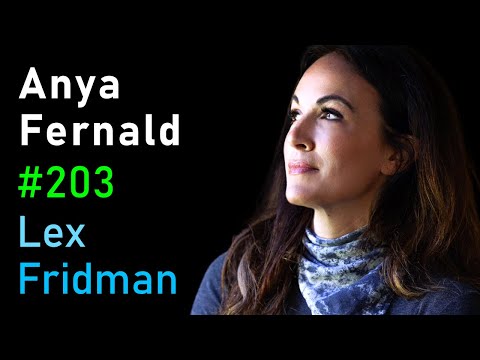
Anya Fernald: Regenerative Farming and the Art of Cooking Meat | Lex Fridman Podcast #203
Lex Fridman (host), Anya Fernald (guest)
In this episode of Lex Fridman Podcast, featuring Lex Fridman and Anya Fernald, Anya Fernald: Regenerative Farming and the Art of Cooking Meat | Lex Fridman Podcast #203 explores regenerative meat, ethical slaughter, and rediscovering food as soulful art Lex Fridman and Anya Fernald explore cooking as both art and service, emphasizing anticipation, simplicity, and the emotional dimension of food. They dive deeply into how meat should be raised, slaughtered, and cooked—contrasting regenerative, grass-fed systems with industrial, factory-farming practices. Anya explains the science of meat, fat, collagen, and heat, and how regenerative farming can improve animal welfare, human health, and carbon sequestration. They also discuss scaling regenerative agriculture, potential roles for AI, hunting, personal food journeys, and the broader questions of suffering, happiness, and meaning for both animals and humans.
Regenerative meat, ethical slaughter, and rediscovering food as soulful art
Lex Fridman and Anya Fernald explore cooking as both art and service, emphasizing anticipation, simplicity, and the emotional dimension of food. They dive deeply into how meat should be raised, slaughtered, and cooked—contrasting regenerative, grass-fed systems with industrial, factory-farming practices. Anya explains the science of meat, fat, collagen, and heat, and how regenerative farming can improve animal welfare, human health, and carbon sequestration. They also discuss scaling regenerative agriculture, potential roles for AI, hunting, personal food journeys, and the broader questions of suffering, happiness, and meaning for both animals and humans.
Key Takeaways
Treat cooking as an extended sensory journey, not just the final bite
The anticipation—shopping, smells, fire, conversation, and watching food transform—creates much of the joy and satiety we associate with meals; delivery and ultra-convenience strip away that crucial build-up.
Get the full analysis with uListen AI
Understand your meat’s muscle type and thickness to cook it properly
Tender, low-use muscles (e. ...
Get the full analysis with uListen AI
Regenerative grazing can simultaneously produce meat and sequester carbon
By cycling ruminants through pastures so they only take the top of grasses, trigger regrowth, and rebuild soil carbon, regenerative farms like Belcampo can become carbon-negative while improving biodiversity and long-term fertility.
Get the full analysis with uListen AI
Ethical meat depends on lifecycle conditions, not just a label
Truly humane systems consider evolutionary diet, outdoor access, low stocking density, social behavior, mother–young bonds, and stress-minimized slaughter; many common labels (including some ‘organic’ and ‘grass-fed’) can mask highly industrial practices.
Get the full analysis with uListen AI
Grass-fed, slow-grown animals produce measurably different nutrition and physiology
Regeneratively raised beef can approach wild game in omega-3:6 ratios (around 1:1 vs. ...
Get the full analysis with uListen AI
Simplicity and a limited flavor ‘vocabulary’ build real culinary mastery
Working repeatedly with a small set of ingredients, fats, and acids—rather than constantly switching cuisines and sauces—lets you deeply understand how to optimize each element, similar to a sushi master refining a narrow craft.
Get the full analysis with uListen AI
Curiosity-led, uncomfortable experiences drive growth—in food and in life
Anya’s path through rural Sicily, cheesemaking, and running a meat company shows that pursuing what deeply interests you, even when lonely, nonlinear, and difficult, builds resilience, insight, and the capacity to tackle complex problems like food systems reform.
Get the full analysis with uListen AI
Notable Quotes
“Cooking is art and service together—an expression of creativity and a way to support health, wellness, and the environment.”
— Anya Fernald
“If you have to put a bunch of sauce on your food to mask the flavor, you need to revisit what you’re starting from.”
— Anya Fernald
“Regenerative farming is how we used to farm—farming with an eye toward the long term, increasing soil fertility as you produce food.”
— Anya Fernald
“I realized I have not thought deeply enough about the ethics of my choices and the choices of human civilization with respect to animals.”
— Lex Fridman
“Growth comes from being cut down and beat down and having to regrow and double down.”
— Anya Fernald
Questions Answered in This Episode
How should we weigh the moral cost of killing animals for food against the environmental and health benefits of well-run regenerative systems?
Lex Fridman and Anya Fernald explore cooking as both art and service, emphasizing anticipation, simplicity, and the emotional dimension of food. ...
Get the full analysis with uListen AI
What concrete technological or AI tools could most realistically help farmers scale regenerative practices without losing nuance and animal welfare?
Get the full analysis with uListen AI
If regenerative and humane meat remains more expensive, how should societies encourage or structure ‘eat less but better’ behavior at scale?
Get the full analysis with uListen AI
How might our relationship to food, hunger, and fasting change if more people experienced slaughter and farming as directly as Lex did at Belcampo?
Get the full analysis with uListen AI
To what extent can the sensory, communal experience of cooking and eating together counteract the health and psychological downsides of ultra-convenient, hyper-processed foods?
Get the full analysis with uListen AI
Transcript Preview
The following is a conversation with Anya Fernald, co-founder of Belcampo Farms that was founded with the purpose to create meat that's good for people, the planet, and the animals, specifically treating their animals as ethically as possible. In this, she sought to revolutionize the meat industry from the inside out. She's also a scholar and practitioner of regenerative agriculture, and she's a chef who has appeared many times as a judge on Iron Chef. Plus, she has one of my favorite food-related Instagrams. On top of that, she's also a long-time friend of Andrew Huberman, which is how we first got connected. Quick mention of our sponsors: Gala Games, Athletic Greens, Four Sigmatic, and Fundrise. Check them out in the description to support this podcast. As a side note, let me say that I got the chance to visit and spend a few days with Anya at Belcampo Farms in Northern California. I met many animals there, from cows to pigs, and saw the amazing land on which they grazed. I butchered meat, I watched Anya cook many amazing meals, I ate raw meat and cooked meat, and spent long hours at the bonfire talking with friends and listening to the sounds of nature. I hiked, swam in a cold mountain lake, and slept in a tent underneath the stars. It was an amazing, eye-opening experience, especially in my first ever visit to a slaughterhouse. The term "slaughterhouse" is haunting in itself. The animals I met lived a great life, but in the end, they were slaughtered in the most ethical way possible, but slaughtered nevertheless. Seeing animals with whom just the day before I made a connection be converted to meat that I then consumed was deeply honest to me. This ethical farm, Belcampo, represents less than 1% of animals raised in the United States. The rest is factory farmed. I could not escape the thought of the 40 to 50 billion animals worldwide raised in terrible conditions on these factory farms. I've spent most of my life thinking about, and being in contact with, human suffering. But the landscape of suffering in the minds of conscious beings is much larger than humans. I must admit that I still am haunted by human suffering more than animal suffering. Perhaps I will one day see the wrong in me drawing such a line. Either way, the visit to Belcampo Farms made me realize that I have not thought deeply enough about the ethics of my choices and the choices of human civilization with respect to animals. And, more importantly, I have not thought or learned enough about large-scale solutions to alleviate animal suffering. Belcampo is paving the way on this, and is the reason I wanted to show my support for their and Anya's efforts in regenerative farming and ethical treatment of animals. This is the Lex Fridman Podcast, and here's my conversation with Anya Fernald. (footsteps crunching) If you're watching the video version of this and are asking yourself why we're in nature right now, there's actually-
Install uListen to search the full transcript and get AI-powered insights
Get Full TranscriptGet more from every podcast
AI summaries, searchable transcripts, and fact-checking. Free forever.
Add to Chrome