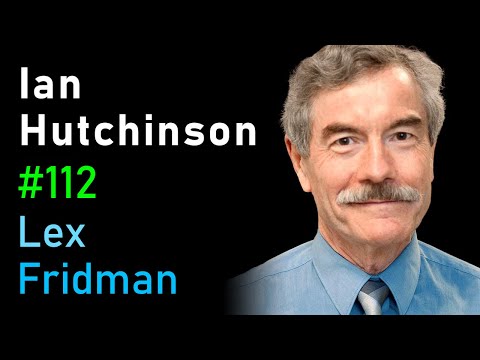
Ian Hutchinson: Nuclear Fusion, Plasma Physics, and Religion | Lex Fridman Podcast #112
Lex Fridman (host), Ian Hutchinson (guest), Lex Fridman (host), Lex Fridman (host), Lex Fridman (host)
In this episode of Lex Fridman Podcast, featuring Lex Fridman and Ian Hutchinson, Ian Hutchinson: Nuclear Fusion, Plasma Physics, and Religion | Lex Fridman Podcast #112 explores fusion Energy, Scientific Limits, and Christian Faith in One Conversation Ian Hutchinson, an MIT plasma physicist, explains the physics of plasmas, nuclear fission, and fusion, and outlines the technological and engineering challenges of creating practical fusion power on Earth. He contrasts fusion’s long‑term advantages with the near‑term utility and misunderstood risks of fission power, including nuclear accidents and weapons proliferation. The discussion then shifts to broader questions: population, climate, and why technology alone cannot solve humanity’s deepest problems, leading into Hutchinson’s critique of scientism—the idea that science is the only valid path to knowledge. He also describes his journey to Christian faith, how he reconciles science and religion, and offers reflections on suffering, morality, consciousness, AI, and the meaning of life grounded in love, trust, and relationship with God and other people.
Fusion Energy, Scientific Limits, and Christian Faith in One Conversation
Ian Hutchinson, an MIT plasma physicist, explains the physics of plasmas, nuclear fission, and fusion, and outlines the technological and engineering challenges of creating practical fusion power on Earth. He contrasts fusion’s long‑term advantages with the near‑term utility and misunderstood risks of fission power, including nuclear accidents and weapons proliferation. The discussion then shifts to broader questions: population, climate, and why technology alone cannot solve humanity’s deepest problems, leading into Hutchinson’s critique of scientism—the idea that science is the only valid path to knowledge. He also describes his journey to Christian faith, how he reconciles science and religion, and offers reflections on suffering, morality, consciousness, AI, and the meaning of life grounded in love, trust, and relationship with God and other people.
Key Takeaways
Fusion energy is fundamentally different from fission and offers long‑term advantages but is extremely hard to achieve.
Fusion fuses light nuclei (like deuterium and tritium) at tens of millions of degrees, requiring non‑material confinement (magnetic fields) and self‑sustaining ‘ignition’. ...
Get the full analysis with uListen AI
Tokamaks and the ITER experiment are humanity’s main near‑term path to demonstrating controlled fusion.
Tokamaks use strong toroidal magnetic fields and plasma currents to confine hot plasma in a donut-shaped chamber. ...
Get the full analysis with uListen AI
Modern nuclear fission is far cleaner and safer than public perception suggests.
Fission provides CO₂‑free baseload power; waste volumes are small and manageable though highly radioactive, and major accidents like Fukushima caused no direct radiation deaths in the context of a much larger natural disaster. ...
Get the full analysis with uListen AI
Energy and climate problems cannot be solved by technology alone; population and consumption patterns are central.
To stabilize climate and reduce inequity, rich countries would effectively need to cut per‑capita CO₂ emissions by orders of magnitude, which is unlikely through technology and fuel-switching alone. ...
Get the full analysis with uListen AI
Scientism—treating science as the only real source of knowledge—is a serious intellectual error.
Hutchinson distinguishes science from other valid ways of knowing, such as history, philosophy, ethics, and theology. ...
Get the full analysis with uListen AI
Faith, in his view, is more about trust and loyalty than blind belief without evidence.
He defines faith as a combination of belief, trust, and loyalty directed toward God, others, and commitments. ...
Get the full analysis with uListen AI
Meaning in life comes primarily from relationships—with God and with other people—rather than from achievement or progress.
Hutchinson locates meaning in love, loyalty, and service: to God, family, and community. ...
Get the full analysis with uListen AI
Notable Quotes
“Science is not all the knowledge there is.”
— Ian Hutchinson
“Fusion is very worthwhile and we should be doing it, but it isn’t going to be a magic bullet that somehow solves all the problems of energy.”
— Ian Hutchinson
“Most of the big challenges in our society are not scientific or technological challenges. They’re human sociological challenges.”
— Ian Hutchinson
“I became convinced that the evidence for the resurrection of Jesus Christ is actually rather good… It’s not scientific evidence by and large, it’s historical evidence.”
— Ian Hutchinson
“Love then brings you into service towards another… whose service is perfect freedom.”
— Ian Hutchinson
Questions Answered in This Episode
If ITER succeeds in demonstrating a burning plasma, what are the most significant remaining hurdles—technical, economic, and political—to building commercial fusion power plants?
Ian Hutchinson, an MIT plasma physicist, explains the physics of plasmas, nuclear fission, and fusion, and outlines the technological and engineering challenges of creating practical fusion power on Earth. ...
Get the full analysis with uListen AI
How should societies realistically balance near‑term investment in fission versus long‑term bets on fusion while also rapidly decarbonizing energy systems?
Get the full analysis with uListen AI
Where exactly should we draw the line between questions science can answer and questions better approached through history, philosophy, or theology?
Get the full analysis with uListen AI
If morality is grounded in a transcendent source, how should that influence pluralistic societies where people hold very different religious and non‑religious worldviews?
Get the full analysis with uListen AI
As AI systems grow more capable, how might religious and philosophical traditions help us think about personhood, responsibility, and what we should or should not build?
Get the full analysis with uListen AI
Transcript Preview
The following is a conversation with Ian Hutchinson, a nuclear engineer and plasma physicist at MIT. He has made a number of important contributions in plasma physics, including the magnetic confinement of plasmas, seeking to enable fusion reactions, which happens to be the energy source of the stars, to be used for practical energy production. Current nuclear reactors, by the way, are based on fission, as we discuss. Ian has also written on the philosophy of science and the relationship between science and religion, arguing in particular against scientism, which is a negative description of the overreach of the scientific method to questions not amenable to it. On this latter topic, I recommend two of his books, his new one, Can a Scientist Believe in Miracles?, where he answers more than 200 questions on all aspects of God and science, and his earlier book on scientism called Monopolizing Knowledge. As you may have seen already, I work hard on having an open mind, always questioning my assumptions, and in general, marvel at the immense mystery of everything around us and the limitations of at least my mind. I'm not religious myself in that I don't go to the synagogue, a church or mosque, but I see the beautiful bond in the community that religion at its best can create. I also see both in scientists and religious leaders signs of arrogance, hypocrisy, greed, and a will to power. We're human, whether Buddhist, Christian, Hindu, Jewish, Muslim, agnostic, or atheist. This podcast is my humble attempt to explore a complicated human nature, what Stanislaw Lem in his book Solaris called "our own labyrinth of dark passages and secret chambers." I ask that you try to keep an open mind as well and be patient with the limitations of mine. Quick summary of the ads. Two new amazing sponsors, Sun Basket and PowerDot. Please consider supporting this podcast by going to sunbasket.com/lex and use code LEX at checkout, and going to powerdot.com/lex and use code LEX at checkout as well. Click the links, buy the stuff if you like. Just visiting the site and considering the purchase is really the best way to support this podcast. It's how they know I sent you, and based on that, they might sponsor the podcast in the future. If you enjoy this thing, subscribe on YouTube, review it with five stars on Apple Podcasts, support on Patreon, or connect with me on Twitter @LexFridman. As usual, I'll do a few minutes of ads now and never any ads in the middle that can break the flow of the conversation. This show, sponsored by Sun Basket. Visit sunbasket.com/lex and use code LEX to get 35 bucks off your order and to support this podcast. Sun Basket delivers fresh, healthy, delicious meals straight to your door. As you may know, my diet is pretty minimalist, so it's nice to get some healthy variety into the mix. They make it super easy with, uh, everything pre-portioned and ready to prep and cook. You can enjoy a delicious healthy dinner in as little as 15 minutes. I just ordered my first set of meals. Haven't gotten them yet, but I can't wait. I just finished the, uh, six-mile run and 1,000 body weight reps, and I'm starving, but let me risk listing the actual menu items that I ordered 'cause they sound delicious. Italian sausages and vegetable skewers with two Romescos. I don't actually know what Romescos are, but the pictures looked awesome. And pork fried cauliflower rice with carrots and peas. By the way, cauliflower rice is one of my favorite things ever. Right now Sun Basket is offering $35 off your order when you go right now to sunbasket.com/lex. They told me to say right now with urgency, so pause this podcast and go to the website and make the purchase, or just go to the website and check it out, and enter promo code LEX at checkout. This show is also sponsored by PowerDot. Get it at powerdot.com/lex and use code LEX at checkout to get 20% off and to support this podcast. This thing is amazing. It's an e-stim, electrical stimulation device, that I've been using a lot for muscle recovery recently, mostly for my shoulders and legs as I've been doing the 1,000 body weight reps and six miles every day, as I just finished. They call it the smart muscle stimulator, which is true since the app that goes with it is amazing. It has 15 programs for different body parts and guides you through everything you need to do. I take recovery really seriously these days, and PowerDot has been a powerful addition to the whole regime of stretching, ice, massage, and sleep and diet that I do. It's used by professional athletes and by slightly insane, but mostly normal people like me. It's portable, so you can throw it in a bag and bring it anywhere. Get it at powerdot.com/lex and use code LEX at checkout to get 20% off on top of the 30-day free trial and to support this podcast. And now here's my conversation with Ian Hutchinson. Maybe it'd be nice to draw a distinction between nuclear physics and plasma physics. What is the distinction?
Install uListen to search the full transcript and get AI-powered insights
Get Full TranscriptGet more from every podcast
AI summaries, searchable transcripts, and fact-checking. Free forever.
Add to Chrome