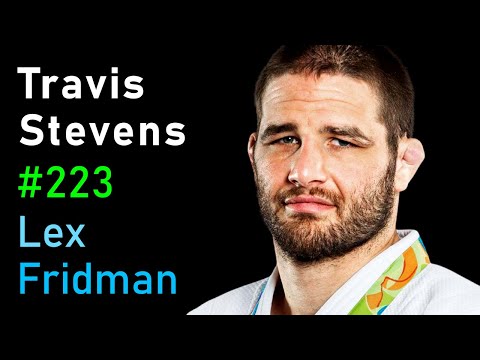
Travis Stevens: Judo, Olympics, and Mental Toughness | Lex Fridman Podcast #223
Lex Fridman (host), Travis Stevens (guest), Narrator
In this episode of Lex Fridman Podcast, featuring Lex Fridman and Travis Stevens, Travis Stevens: Judo, Olympics, and Mental Toughness | Lex Fridman Podcast #223 explores olympian Travis Stevens on suffering, strategy, and judo greatness Lex Fridman talks with Olympic silver medalist Travis Stevens about the technical beauty of judo, the brutality of elite competition, and the mental toughness required to pursue greatness across three Olympic cycles.
Olympian Travis Stevens on suffering, strategy, and judo greatness
Lex Fridman talks with Olympic silver medalist Travis Stevens about the technical beauty of judo, the brutality of elite competition, and the mental toughness required to pursue greatness across three Olympic cycles.
They break down core judo principles—off-balancing, gripping, throws, and groundwork—while dissecting legendary matches, including Stevens’ controversial 2012 loss and his redemption run to silver in 2016.
Stevens describes extreme weight cuts, severe injuries, and training camps in Japan, showing how accepting suffering, refusing excuses, and strategic thinking shaped his career.
They also discuss the failures of Olympic media policy, the culture of combat sports in places like Russia and Japan, and how true success is found less in medals than in who you become along the way.
Key Takeaways
Master principles, not just techniques.
Stevens emphasizes core judo laws—like off-balancing, controlling center of gravity, and combining grips with body position—over rote technique names, because these principles let you improvise and create your own effective style.
Get the full analysis with uListen AI
Gripping and strategy often matter more than raw offense.
At the highest level, winning is less about having a ‘favorite throw’ and more about using grips and body angles to give yourself weapons while denying your opponent theirs, and knowing when to push, stall, or drag a match into ‘deep waters.’
Get the full analysis with uListen AI
Accepting suffering makes weight cuts and injuries survivable.
Stevens never missed weight despite brutal three‑day cuts and multiple severe injuries because he fully accepted the reality and consequences of his choices instead of wasting energy on anger or self-pity.
Get the full analysis with uListen AI
Mental preparation means rehearsing feelings, not just outcomes.
His visualization shifted from imagining specific throws to replaying the physical and emotional sensations of matches—heart rate, sweat, grip breaks—so his body felt like it had already fought hundreds of Olympic bouts.
Get the full analysis with uListen AI
Perseverance after injustice can become your greatest asset.
The controversial 2012 Olympic semifinal loss nearly broke Stevens, but the anger and sense of being ‘robbed’ ultimately fueled the strategic and mental evolution that led to his 2016 Olympic medal.
Get the full analysis with uListen AI
Systems and culture shape greatness as much as individuals.
They highlight how regions like Japan, Russia, and Dagestan produce dominant grapplers through early immersion, shared culture, and unified systems—advantages the fragmented U. ...
Get the full analysis with uListen AI
True identity should rest on who you are, not what you won.
Stevens avoids post‑career depression by not identifying as ‘an Olympian’ but as someone who perseveres and accepts hard challenges; the medal is just luggage from one chapter, not the shrine of his life.
Get the full analysis with uListen AI
Notable Quotes
“I never identified as an Olympian. I identified as a person who perseveres, overcomes, and accepts challenges.”
— Travis Stevens
“My name is Travis Stevens. I’m an Olympic champion. I will not be denied.”
— Travis Stevens (on his pre‑match mantra in Rio 2016)
“The number one skillset that judo is going to teach you is the ability to give people false hope.”
— Travis Stevens
“Every problem has a solution—and if I can’t solve it, it’s not my problem.”
— Travis Stevens
“They’re not fighting me as a person. They’re fighting the idea, the persona I’ve built over the years.”
— Travis Stevens
Questions Answered in This Episode
How would judo—and combat sports in general—change if the IOC fully embraced open, permanent online access to Olympic footage?
Lex Fridman talks with Olympic silver medalist Travis Stevens about the technical beauty of judo, the brutality of elite competition, and the mental toughness required to pursue greatness across three Olympic cycles.
Get the full analysis with uListen AI
What specific mental skills or routines from judo could be most useful to people facing hard, non-sport challenges like career setbacks or illness?
They break down core judo principles—off-balancing, gripping, throws, and groundwork—while dissecting legendary matches, including Stevens’ controversial 2012 loss and his redemption run to silver in 2016.
Get the full analysis with uListen AI
Where is the ethical line between necessary self-harm (e.g., weight cuts, playing through injury) and destructive behavior in pursuit of greatness?
Stevens describes extreme weight cuts, severe injuries, and training camps in Japan, showing how accepting suffering, refusing excuses, and strategic thinking shaped his career.
Get the full analysis with uListen AI
How could the U.S. realistically build a judo culture and system to rival Japan, France, or Russia without losing the individuality Stevens values?
They also discuss the failures of Olympic media policy, the culture of combat sports in places like Russia and Japan, and how true success is found less in medals than in who you become along the way.
Get the full analysis with uListen AI
If you stripped away medals and titles, what concrete habits and mindsets from Stevens’ career are most worth copying in everyday life?
Get the full analysis with uListen AI
Transcript Preview
The following is a conversation with Travis Stevens, 2016 Olympic silver medalist in judo, and one of the greatest American judoka ever. But his story is inspiring, not because of that Olympic medal, but because of the decades of injury, hardship, incredible battles against the best in the world, wrapping up in close, heartbreaking losses at the 2008 and 2012 games, all of which eventually led to that very silver medal in 2016. As we talk about in the podcast, Travis is also someone who's largely responsible for me getting into judo, for which I will forever be grateful. He also happens to be now my judo coach and mentor. I'll release a video of Travis and I doing some judo in a few days. To support this podcast, please check out our sponsors in the description. As a side note, let me say a few words that I've written down about the Olympic Games and the International Olympics Committee. I'm visiting family, hence the T-shirt, but I had to pull away to write and to say these words because this very video was taken down by YouTube as per the request of the IOC. You know it's serious when a Russian takes time away from family, food, and drink. I'm heartbroken to see continued incompetence, greed, and corruption on the part of the IOC in failing to do as the Olympic Charter states to, quote, "Ensure the fullest coverage and the widest possible audience in the world for the Olympic Games," end-quote. I want to give you two facts. First, they do not make most of the videos of the games available for replay anywhere that is accessible, searchable, and discoverable, whether funded by ads or by subscriptions. For example, on YouTube or their own service, it is not available anywhere. Second, in the most absurd violation of the Olympic Charter, they've uploaded all of the videos of the 2012, 2016, and the 2020/21 Olympics to YouTube, and they set all of these videos to private. This results in a situation like my four-hour conversation that you're watching now with Travis Stevens being taken down due to us including a few seconds of a small video overlay of Travis's epic match against Oleh Bishov in 2012. This is done automatically as per the request of the IOC. I have the video due to having screen recorded it from 2012. Here you have Travis Stevens, an Olympic silver medalist, someone who spent his entire life overcoming injuries, losses, hard weight cuts, periods of no financial or psychological support, culminating in the biggest heartbreak of his career in this one match, and this match is available nowhere online, not for free, not for $1 million. Our showing short clips of it results in the IOC taking it down, not demonetizing it, taking it down, blocking it. The IOC silences this amazing story of Travis Stevens, of heartbreak that eventually led to triumph, and there are thousands of stories like it, stories that are supposed to inspire the world. To me and to billions of others, the Olympic Games give a chance to celebrate and to be inspired by the greatest stories of human flourishing in the face of hardship and incredibly long odds or dominance in the pursuit of perfection at levels previously thought to be impossible. The Olympic Games inspire kids like me to dream and to work hard to achieve in our own lives the same moments of magic and greatness, small or big, that the Olympic Games reveal. I believe the members of the IOC are good people, but people who forgot the dream, the fire that was sparked and burned in their hearts when they first saw the Olympics as kids. They've allowed the gradual corruption of their own human spirit, and thereby have robbed the world of this very fire, the fire of the Olympic torch, the fire that ought to burn in the eyes and hearts of kids watching the Olympics today, daring to dream, daring to be great. Please, please do better. The world needs you. The world needs the Olympic Games. This is the Lex Fridman Podcast, and here's my conversation with Travis Stevens. Judo is a martial art, a sport, a set of techniques, ideas and philosophies. Can we start by, uh, maybe you giving a big picture overview of what is judo to somebody who's like outside all the whole spectrum of grappling sports?
Install uListen to search the full transcript and get AI-powered insights
Get Full TranscriptGet more from every podcast
AI summaries, searchable transcripts, and fact-checking. Free forever.
Add to Chrome