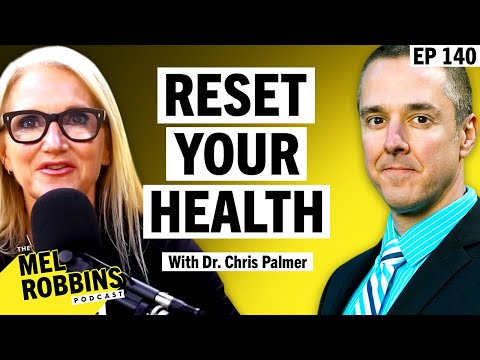
Reset Your Mental Health: The Diet & Nutrition Protocol From a Renowned Harvard MD
Dr. Chris Palmer (guest), Mel Robbins (host)
In this episode of The Mel Robbins Podcast, featuring Dr. Chris Palmer and Mel Robbins, Reset Your Mental Health: The Diet & Nutrition Protocol From a Renowned Harvard MD explores harvard psychiatrist links diet, metabolism, and remission of mental illness Harvard psychiatrist Dr. Chris Palmer argues that most mental disorders are, at root, metabolic disorders of the brain, driven by how our cells—especially mitochondria—process food, oxygen, stress, and substances.
Harvard psychiatrist links diet, metabolism, and remission of mental illness
Harvard psychiatrist Dr. Chris Palmer argues that most mental disorders are, at root, metabolic disorders of the brain, driven by how our cells—especially mitochondria—process food, oxygen, stress, and substances.
He shares his own history of OCD, depression, and metabolic syndrome, which dramatically improved after adopting a ketogenic (very low-carb, high-fat) diet, prompting him to rethink traditional psychiatry.
Palmer presents striking case studies, including a man with long‑term schizoaffective disorder and 17 failed medications who experienced major symptom reduction and life improvements after switching to a ketogenic diet.
He outlines a practical 90‑day lifestyle protocol—centered on ketogenic eating, sleep, exercise, and cutting alcohol/nicotine/THC—as a powerful, evidence‑informed adjunct to conventional care, while stressing the need for medical supervision.
Key Takeaways
Reframe mental illness as a metabolic brain disorder, not just a genetic fate.
Palmer’s Brain Energy Theory integrates genetics, trauma, hormones, inflammation, and lifestyle into one model: mental symptoms arise when brain metabolism and mitochondria are impaired, which means they are often modifiable, not fixed life sentences.
Get the full analysis with uListen AI
Assess metabolic red flags alongside mental health symptoms.
Conditions like obesity, prediabetes/diabetes, high blood pressure, abnormal lipids, and metabolic syndrome commonly co‑occur with depression, anxiety, bipolar disorder, and schizophrenia; viewing the psychiatric diagnosis as a symptom of broader metabolic dysfunction changes the treatment target.
Get the full analysis with uListen AI
Consider a medically supervised ketogenic diet for moderate to severe, treatment‑resistant conditions.
A well‑formulated ketogenic diet (very low carb, moderate protein, high fat) is an evidence‑based treatment for refractory epilepsy and, in Palmer’s clinical work, has led to major improvements and even remissions in chronic schizophrenia, bipolar disorder, and long‑standing depression.
Get the full analysis with uListen AI
Expect a difficult adaptation phase before mental benefits emerge.
The first 1–2 weeks of keto often bring “keto flu” (fatigue, irritability, dizziness) as the body switches from burning carbs to fat; after this, many notice antidepressant effects—more energy, clearer thinking, better sleep—typically within weeks to months.
Get the full analysis with uListen AI
Use a 90‑day lifestyle experiment to ‘give your brain a chance.’
Palmer suggests, for non‑acute cases, trying roughly three months of: ketogenic or whole‑food low‑sugar eating, modest regular exercise (even daily 10‑minute walks or 1 weekly resistance session to failure), prioritizing 7–8 hours of sleep, and eliminating alcohol, nicotine, vaping, marijuana, and CBD.
Get the full analysis with uListen AI
Tackle diet first to create momentum for other changes.
He finds that once patients feel even slightly better on a metabolic intervention (diet), they gain enough energy and hope to add exercise, improve sleep, and reduce substances—changes that would have felt impossible in a severe depressive state.
Get the full analysis with uListen AI
Recognize that improving brain metabolism can reduce long‑term physical risks too.
Because people with mental illness die on average 7–10 years earlier—usually from heart attacks and other metabolic diseases—addressing metabolic health is not only about mood and cognition, but also about extending lifespan and reducing dementia and cardiovascular risk.
Get the full analysis with uListen AI
Notable Quotes
“In a nutshell, mental disorders are metabolic disorders affecting the brain.”
— Dr. Chris Palmer
“The brain is an organ just like the heart is. It is being impacted by all of the same factors.”
— Dr. Chris Palmer
“I’m not saying that if people with schizophrenia just ate a little more broccoli, it would cure their schizophrenia.”
— Dr. Chris Palmer
“You’re not giving up weed or alcohol; you’re giving up depression.”
— Mel Robbins
“If I can get better, so can you.”
— Dr. Chris Palmer
Questions Answered in This Episode
How can standard psychiatric practice practically incorporate metabolic assessments and interventions without overwhelming already stretched clinicians?
Harvard psychiatrist Dr. ...
Get the full analysis with uListen AI
What criteria should determine when a ketogenic diet is appropriate versus when a less restrictive whole‑foods approach is sufficient for mental health?
He shares his own history of OCD, depression, and metabolic syndrome, which dramatically improved after adopting a ketogenic (very low-carb, high-fat) diet, prompting him to rethink traditional psychiatry.
Get the full analysis with uListen AI
How do we safely adapt Palmer’s 90‑day protocol for people on multiple psychiatric medications or those at risk of self‑harm?
Palmer presents striking case studies, including a man with long‑term schizoaffective disorder and 17 failed medications who experienced major symptom reduction and life improvements after switching to a ketogenic diet.
Get the full analysis with uListen AI
What social, economic, and environmental barriers (cost, food deserts, addiction, stress) most limit people’s ability to follow this protocol, and how can they be addressed?
He outlines a practical 90‑day lifestyle protocol—centered on ketogenic eating, sleep, exercise, and cutting alcohol/nicotine/THC—as a powerful, evidence‑informed adjunct to conventional care, while stressing the need for medical supervision.
Get the full analysis with uListen AI
If early life trauma damages mitochondrial function, can later metabolic interventions fully reverse that damage, or are there limits to how much the brain can heal?
Get the full analysis with uListen AI
Transcript Preview
50% of US adults currently has prediabetes or diabetes.
50%?
One in two. At the same time that the metabolic health of Americans is going down the toilet, so is their mental health. The brain is an organ just like the heart is.
This is personal for you.
When I was 12, my mother has a nervous breakdown. She loses everything as a result of her mental illness. Early on, I wanted nothing to do with the mental health field. I hated it. I was furious with it. When I got into medical school, my heart was breaking with every patient that I saw because I was thinking, "You deserve better. You deserve a better life." What I'm here to say is that we can in fact figure this out, and we can give people real solutions.
Hey, hey. How you doing? I'm so glad you're here. It's your friend Mel. Welcome to the Mel Robbins Podcast, and first of all, thank you for being here with me. And I also want to thank you for taking the time to listen to something that could improve your life. I think that's pretty cool. And whether you're a long-time listener or you're brand new, you are part of the Mel Robbins Podcast family, and we are a smart, empowering, positive group of people, and I'm glad that you're a part of us. I'm Mel Robbins. I'm a New York Times best-selling author and one of the world's leading experts on confidence and motivation, and I'm on a mission to inspire you, to empower you with tools and inspiration and the expert resources that you need to create a better life. And boy oh boy, are you in for a treat today. I am absolutely thrilled to welcome Dr. Chris Palmer to the podcast today, and let me tell you why I wanted him to be on the show. Dr. Palmer is a professor at Harvard Medical School, and he has spent almost 30 years at the number one psychiatric hospital in the nation. That is Harvard's teaching hospital, McLean Hospital right here in Boston. And based on his extensive clinical experience, Dr. Palmer wants to change the way mental health is discussed and treated. Today, he is here to explain to you his brain energy theory, which is a concept that many people in the medical field think is controversial. I personally do not, which is why I wanted you to hear it and know about it. Dr. Palmer believes that your diet can make you mentally ill, and for decades, he has been trying to help people with severe mental illnesses and treatment-resistant cases. And he grew frustrated with the very limited options that were available to him to help make people better, and he's obsessed with finding a way to help his patients and to help you achieve better outcomes and live the life that you deserve to live. Dr. Palmer's message is incredibly hopeful, and it's also tactical. You will learn about patient studies where the results are honestly shocking. He will explain how he believes that your diet and metabolic issues are causing your brain to misfire, which is why he also believes that simple changes to your diet and your lifestyle can help you heal your brain and improve your mental health. Now, I'm clearly excited that he's here, because I know that this is one of those episodes that's gonna either change your life or it will change the life of someone that you love. The information that Dr. Palmer is about to share with you, it could help someone you love finally start to climb out of their depression, or get their anxiety under control, or help loosen the grip of OCD or an eating disorder, or lessen the impact of PTSD, and even make a significant difference with a mood disorder. Now, before we jump into the research that connects every mental health issue with a metabolic disorder, we will begin with Dr. Palmer's personal story. You're about to learn that there's a deeply personal reason why Dr. Palmer is passionate about changing what he calls a deeply broken mental health system and why he's on a mission to find simple and accessible options that will help you and your loved ones. And after you hear his story, you'll also learn about a few case studies, and then he will unpack his brain energy theory, which is the connection between your metabolism, your brain functioning, and your mental health. And finally, Dr. Palmer, he will leave you in action, because I often say this is not just a listening podcast. This is a doing podcast, so we want you doing something at the end of this. He is gonna explain the exact plan that he uses as a starting point with his patients here in Boston. Now, I'm gonna underscore something that you will hear Dr. Palmer repeat throughout the episode, and it's this. If you are inspired to make any lifestyle or diet changes based on what you hear today, only do so after consulting with your own doctor. I am so thrilled to be able to bring you this world-class resource at absolutely zero cost. Dr. Palmer has changed my own understanding of my metabolism, my brain, my own mental health, and I am confident that he's gonna do the same for you. His research is so exciting and important that just a few weeks ago, Harvard University announced that Dr. Palmer is the founder and director of a brand-new metabolic and mental health program here at Harvard's teaching hospital in Boston, and it is such a gift that you and I are able to spend time with him. His practice has a wait list that is years long, but today, he's here for you and your loved ones. Now, let's jump into that conversation. You have something pretty exciting and revolutionary to share based on 30 years of research, personal experience treating patients. You have answers to those questions, and you're here with a really inspiring message. So what is it that you want the person to know at a high level about your work?
Install uListen to search the full transcript and get AI-powered insights
Get Full TranscriptGet more from every podcast
AI summaries, searchable transcripts, and fact-checking. Free forever.
Add to Chrome